Inside the seat math, the referendum promise parked until 2029, and the new balance of power in Quebec's National Assembly.
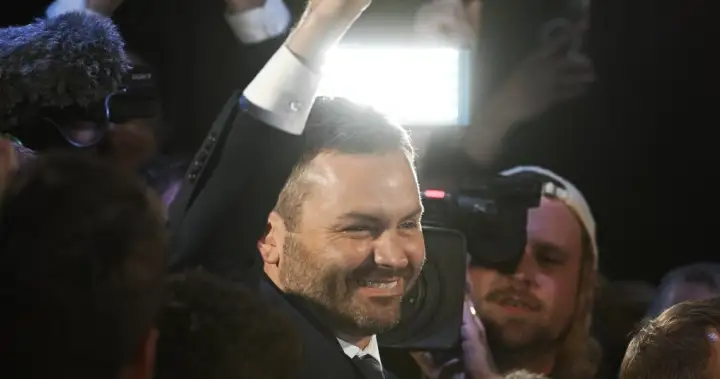
Quebec voters handed the Parti Québécois a minority government on Monday night, returning the sovereigntist party to power for the first time in more than a decade and erasing the Coalition Avenir Québec from the National Assembly entirely. The projected Parti Québécois minority government caps a campaign fought largely on the question of change — and it puts a promised third referendum on Quebec’s place in Canada back on the national agenda, even if not immediately.
Polls closed across the province at roughly 8:30 p.m. on Oct. 5, 2026. By 11:30 p.m., the PQ was leading in 59 of Quebec’s 127 ridings — a commanding plurality, but five seats short of the 64 needed for a majority. Party leader Paul St-Pierre Plamondon is the premier-designate.
The Night the CAQ Was Shut Out of the National Assembly
The most striking number of the evening was a zero. After eight years in power and two consecutive majority governments, the Coalition Avenir Québec was leading in no ridings at all as the late-night count firmed up.
That collapse reached the top of the party. Christine Fréchette, who became leader after former premier François Legault resigned earlier this year, failed to win a seat in her hometown riding of Trois-Rivières. She is a Trois-Rivières native who had been elected in the riding of Sanguinet and served first as immigration minister before moving to the energy and economy portfolio less than two years later.
Where the 127 Seats Landed
The reshuffling of the National Assembly was dramatic on every bench, not just the government side. The table below compares the standings when the election was called with the projected leads as of 11:30 p.m. on election night.

| Party | Seats when election was called | Leading at 11:30 p.m., Oct. 5 |
|---|---|---|
| Parti Québécois | 7 | 59 |
| Quebec Liberal Party | 18 | 40 |
| Conservative Party of Quebec | 1 | 19 |
| Québec solidaire | 11 | 9 |
| Coalition Avenir Québec | 79 | 0 |
| Independents | 9 | Not specified |
Readers who followed the closing days of the race will recognise the shape of the outcome: our coverage of how public opinion surveys kept the Parti Québécois in front through the campaign tracked a lead that held through to the ballot box, though the final result fell short of the majority some projections had contemplated.
“This Dream of Being a Nation Will One Day Be Realized”
Addressing a packed and loud room of supporters in Montreal, St-Pierre Plamondon framed the win as the opening of a new period in Quebec’s political life. “There is a new chapter in our nation that is starting over the next few years,” he said. “This dream of being a nation will one day be realized.”
He also acknowledged the limits voters had placed on him. “Quebecers have spoken tonight. They decided to elect a Parti Québécois government while also asking it to work with the other parties,” he said. “I understand that message perfectly, and I will do everything I can to live up to what Quebecers are asking of us.” Supporters in blue and white chanted “Quebec, a country” in French as he spoke.
St-Pierre Plamondon had spent the campaign on the attack, leaning into appetite for change after two straight CAQ majorities. Casting his own ballot in his eastern Montreal riding of Camille-Laurin, he told voters, “The change you are hoping for is in your hands,” and noted that the PQ was the only party to campaign in every region of the province. His final day was spent in Montreal, where the party was hunting for seats after a decade of weak support in the city.
Why the Referendum Promise Is Parked Until 2029
The detail that gives this result weight well beyond Quebec is the referendum timetable. Throughout the campaign, St-Pierre Plamondon pledged that a PQ government would launch a referendum on separating Quebec from Canada — but not before U.S. President Donald Trump leaves office in 2029.
That deferral means the question will shadow the federation for years rather than arriving as an immediate crisis, while placing a sovereignty vote on the political calendar of the next federal term. It is also a political constraint: a minority government must find allies for any such move, and the arithmetic on election night did not obviously supply them.
Carney Congratulates the Premier-Designate
Prime Minister Mark Carney congratulated the premier-designate in a public statement, signalling a working relationship focused on economic files rather than constitutional ones. “I look forward to working with you to support Québec’s businesses and workers impacted by tariffs, create more good jobs, work to end homelessness, and get more homes built across Québec,” he wrote.
Carney also thanked the outgoing premier, citing Churchill Falls and what he described as one of the largest infrastructure investments in Quebec’s history as joint accomplishments. “I wish you all the best in what comes next,” he said of Fréchette.
Fréchette Takes “Full Responsibility” for the Defeat
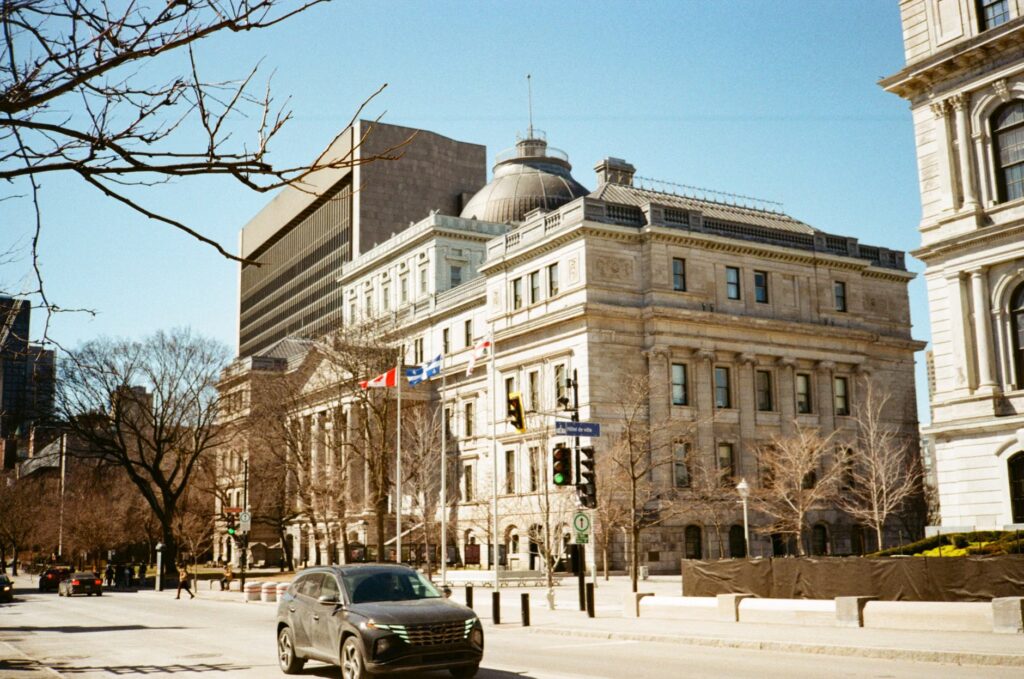
In her concession speech, Fréchette absorbed the loss personally. “Quebecers have spoken. Their choice is clear. I respect it. The result is clearly not the one we were hoping for. And as leader, I take full responsibility. Not our candidates, not our activists, not our volunteers. Me,” she said.
She had positioned the CAQ as the alternative to Quebec’s sovereigntist-federalist split, campaigning on nationalism and economic growth inside Canada, alongside affordability, health care, home care funding and help with school-related expenses for families and seniors. In the campaign’s final stretch, as our report on the leaders’ closing pitches before the Monday vote set out, she pressed voters to weigh a referendum campaign that “shakes up everything” against “a government that is betting on economic stability and improving services.”
Her party carried heavy baggage into the race: the SAAQclic fiasco, cost overruns on a Santé Québec IT project, the failed Northvolt venture, and — during the campaign itself — a controversy over unsubstantiated allegations of foreign interference. Fréchette said afterwards that she regretted not putting more emphasis on the referendum threat, arguing the consequences would not wait three years. “There will be impacts because uncertainty will become part of Quebec’s political and economic calendar,” she said. Former politicians and analysts have invoked the term “glass cliff” — a woman taking leadership when an organization is already at high risk of failure — to describe her position.
Duhaime’s Conservative Breakthrough After a Century
The other historic result of the night belonged to Éric Duhaime, who won a seat in a riding on the south shore of Quebec City and led a projected 19-member Conservative caucus. He is the first candidate elected under the Conservative banner in modern Quebec history; the party’s only recent legislative presence came from former CAQ member Maïté Blanchette Vézina, who crossed the floor.
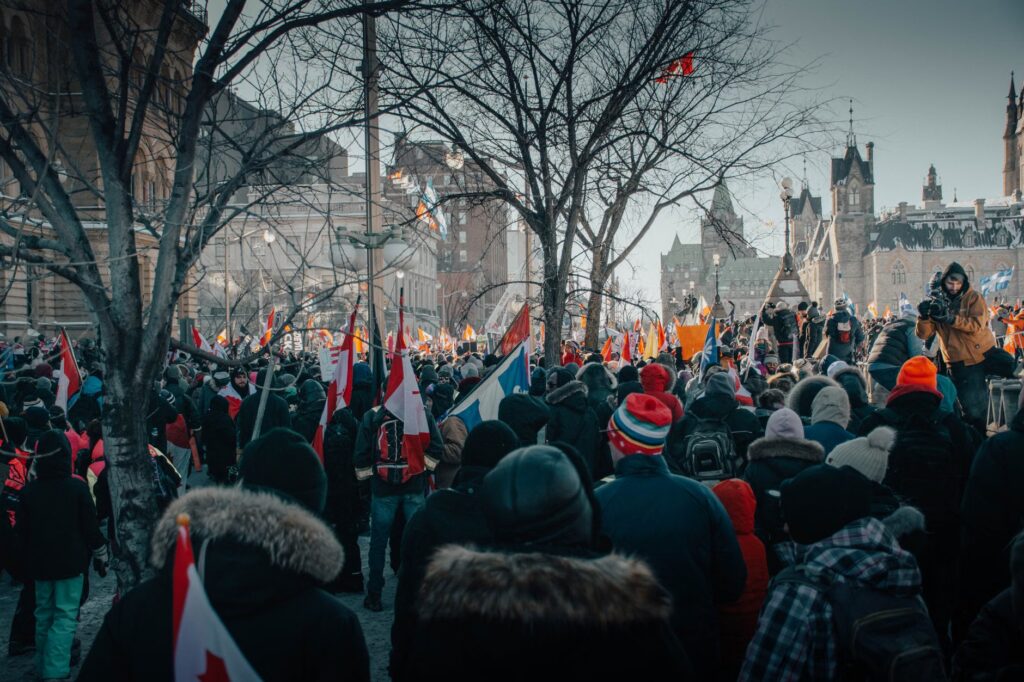
“Hope is being reborn in Quebec, because tonight we have just written a page of history,” Duhaime told supporters in Lévis. “For the first time in 100 years, Quebecers have decided to send a large caucus of Conservative MNAs to the National Assembly.” He had set a target of at least 12 seats and official party status, and promised to use his leverage as a “guard dog” for taxpayers and to try to block a referendum vote.
Milliard’s Liberals Say “No Way” on a Referendum
Quebec Liberal Party Leader Charles Milliard won his seat for the first time in North Hatley, in the Eastern Townships, and leads the official opposition-sized bloc of 40 projected seats. He drew an immediate line around the new government’s central ambition.
“The results mean that the Parti Québécois does not have all the powers to do whatever they want,” Milliard said. “We will be collaborating on many issues that actually matter to Quebecers but there is no way that we will collaborate on a potential referendum. No way.” During the campaign he had described his party as the only federalist option, urged strategic voting, and warned that a PQ minority would go shopping for referendum support among the other parties. “One party that Mr. St-Pierre Plamondon won’t be calling up is the Liberal Party of Quebec, because we’re proudly federalist and not ashamed to say it,” he said.
Québec solidaire Holds Its Ground as Ghazal and Zanetti Return
Québec solidaire co-spokespeople Ruba Ghazal and Sol Zanetti both held their seats. Ghazal was re-elected for a third time in the Montreal-area riding of Mercier, where she had told reporters at the polling station: “We’ve been talking about this for 40 days. Today, it is Quebecers who will have their say.”
Later, with the party down from 11 seats to nine, she rallied supporters on the strength of the fight rather than the count. “What a great campaign. We resisted. It felt like we were starting from pretty far behind. But damn, we fought like only the left knows how to fight,” she said. In the campaign’s final days she had appealed to progressive sovereigntists uncomfortable with what she called the austerity on offer from the PQ and the Conservatives, asking voters to “send a signal that not all of Quebec has swung to the right.”
The Arithmetic That Will Govern the Next Legislature
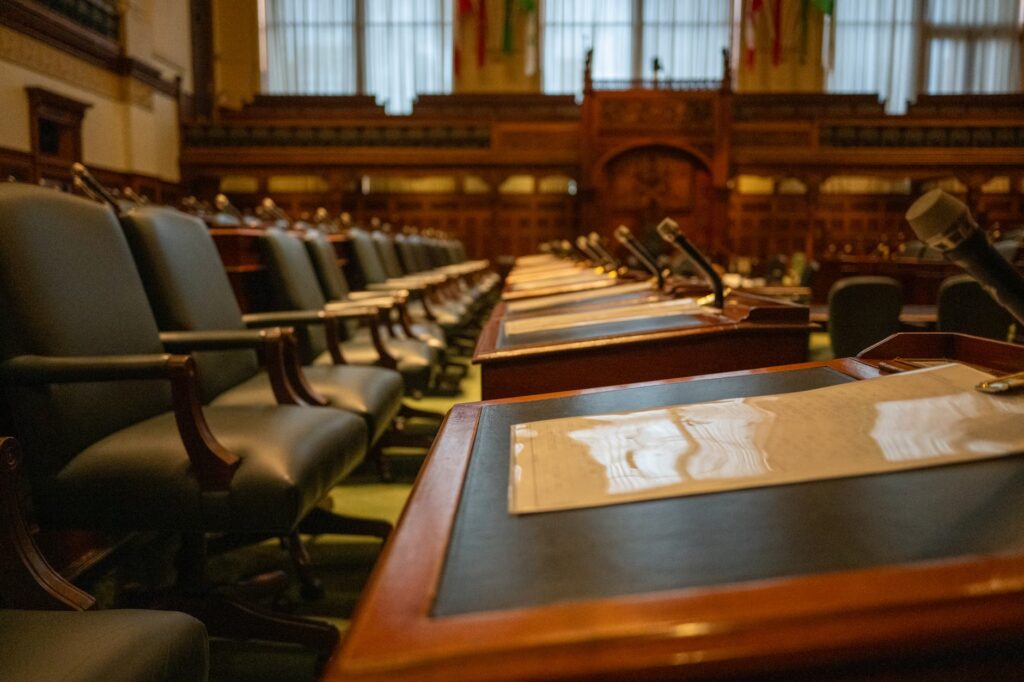
With 59 seats, the PQ needs partners for confidence votes and legislation. On the numbers available, the Liberals have ruled out any cooperation on a referendum, the Conservatives campaigned explicitly on blocking one, and Québec solidaire — sovereigntist but to the PQ’s left — is the only caucus ideologically aligned on the national question, with nine seats.
That leaves the sovereignty file arithmetically distant even before the 2029 condition is applied, and shifts the near-term agenda toward the economic and service-delivery issues every leader raised during the campaign. For Canadian business and markets, the signal is a province entering a period of minority bargaining at the same time as a tense federal economic backdrop — a theme that also runs through our reporting on rate-hike expectations ahead of the Bank of Canada’s October decision.
Seat counts reported here reflect projections and leads as of late election night and may shift as final results are confirmed by election officials.

The Brand Magazine Newsroom covers Canadian business, markets and policy news for brand builders and entrepreneurs. Newsroom reports are produced from published public sources such as company releases and government and regulator publications, and follow our Editorial Standards.