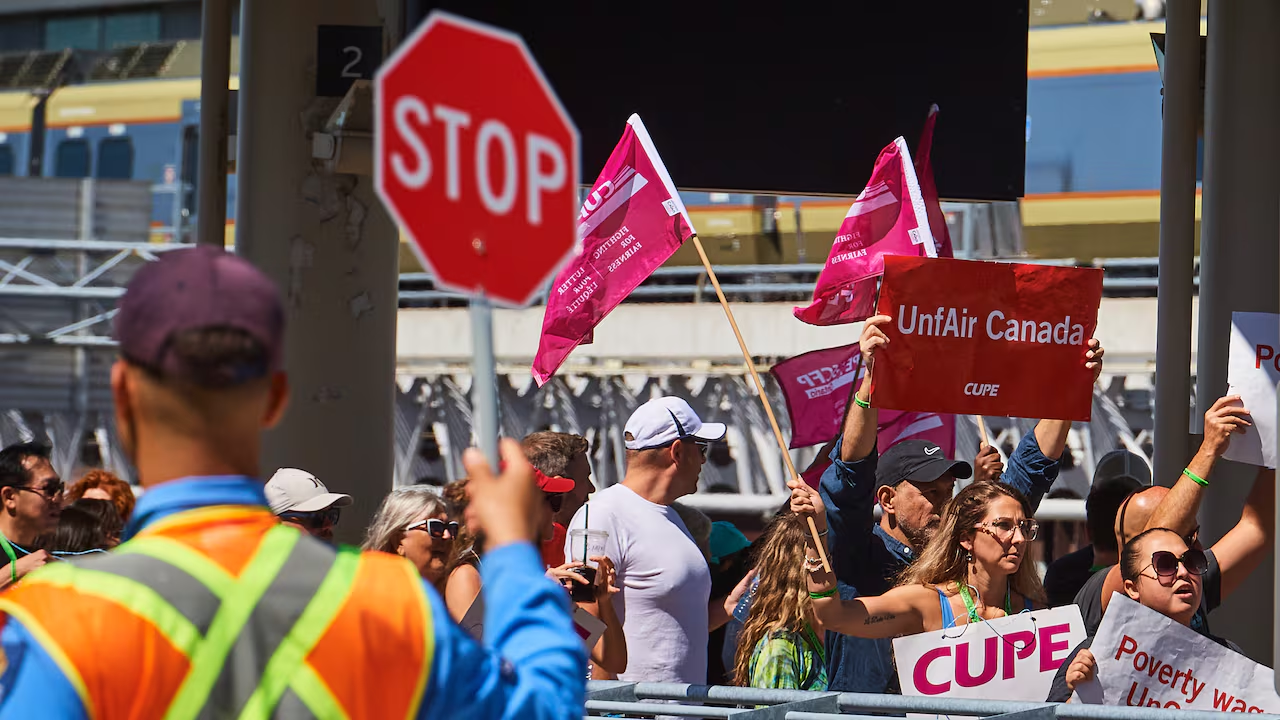
Inside the Section 107 changes buried in Bill C-39, why unions call them unconstitutional, and how the fight is likely to reach the Supreme Court.
Ottawa’s plan to rewrite Section 107 of the Canada Labour Code landed in the House of Commons on Monday inside a 246-page omnibus bill, and it has already reopened one of the sharpest disputes between the federal government and organized labour in years. Bill C-39 would require the labour minister to declare that a strike is harming the “national interest” and to weigh a report from a newly created special mediator before ordering workers back on the job.
Prime Minister Mark Carney said Tuesday the legislation “absolutely reinforces the right to strike.” Labour law specialists who spoke to reporters this week were far less certain, arguing the amended provision leaves the underlying constitutional question untouched and heading toward the Supreme Court of Canada.
What Bill C-39 Would Actually Change About Section 107
Section 107 has sat in the Canada Labour Code for decades. It grants the minister responsible broad authority to take steps the minister considers necessary to “maintain or secure industrial peace,” including directing the Canada Industrial Relations Board to end a work stoppage and impose binding arbitration.
The bill does not repeal that authority. Instead, it layers two procedural conditions on top of it:
- A national interest declaration: the minister would have to formally determine that a strike is adversely affecting the national interest before acting.
- A special mediator’s report: a new mediator role would be tasked with setting out where each side stands, and the minister would have to consider that report before intervening.
Jobs and Families Minister Patty Hajdu has described the package as putting “a guardrail” around the provision. Pressed by reporters on whether the omnibus bill weakens the right to strike, she said the legislation would “raise the bar around accountability” for both sides of the bargaining table.
Why the Air Canada Flight Attendants Dispute Still Shapes This Debate
The political temperature around Section 107 rose sharply after 2024, when the federal government began reaching for the provision to shut down high-profile work stoppages and push disputes into binding arbitration.
The most recent and most contentious use came last summer, when Hajdu ordered Air Canada flight attendants back to work. The Canadian Union of Public Employees defied the order outright, and a tentative agreement was reached within days. That sequence — a federal directive ignored, followed by a negotiated settlement — became the union movement’s central exhibit in arguing that ministerial intervention short-circuits bargaining rather than resolving it.
CUPE followed up with a series of court challenges to the government’s use of Section 107, including one that puts the constitutionality of the section itself in issue. Those cases are still live as Bill C-39 moves through Parliament.
Andrea Talarico on Why the Supreme Court Will Have to Weigh In
Andrea Talarico, a University of Ottawa law professor who specializes in labour law, said the amendments do not resolve the core problem. Asked whether the question of Section 107 overriding the right to strike would reach the country’s top court, she said it “absolutely” would.
“In this context where we have this major controversy, a major controversy that affects Charter rights, in a context of economically turbulent times, this is going to have to go all the way to the Supreme Court because we need clarity,” she said.
Her framing matters for readers tracking the broader economic file. Federal labour disputes at ports, railways and airlines have become a recurring variable in Canada’s growth and inflation outlook, alongside the data and commentary in the Bank of Canada’s summary of deliberations. A definitive constitutional ruling would tell Ottawa, employers and unions exactly how much room the federal government has when a strike starts to bite.
The Canadian Labour Congress Calls It a Charter Violation
The Canadian Labour Congress began denouncing the proposal before the text was even tabled. Mark Rowlinson, a lawyer working with the CLC, told reporters Tuesday that the bill is “the clearest possible violation” of the Charter and that it “circumvents” the court challenges already underway against Section 107.
CLC president Bea Bruske tied the issue to the trade environment, telling reporters that while Canada’s workers want to help in the U.S. trade war, “we cannot have our elbow up against Trump with our hands tied behind our backs at bargaining tables.” She said any new restrictions on the right to strike are unacceptable.
Bruske stopped short of committing to litigation. The organization, she said, is still weighing its options on whether to launch a legal challenge against the new legislation.
The Mootness Argument Ottawa Is Expected to Make
Brian Gottheil, a human resource adviser and lawyer, told CBC News that passage of the bill would likely prompt the government to argue that the pending challenges no longer matter.
“I expect that the government will try to make the argument that because they have changed Section 107 and the issues that are being challenged in the previous one are no longer there, they will say that this is all moot and those cases should get thrown,” he said.
Gottheil expects courts may accept that reasoning in cases attacking one specific back-to-work order. Broader Charter challenges, he said, are a different matter.
“Canadians have a constitutional right to freedom of association. That has been interpreted by the Supreme Court as including a right to collective bargaining and it’s been interpreted to include a right to strike,” he said. The live question, in his view, is whether “a fairly open-ended right for the minister to direct the federal labour board to end strikes and lockouts” violates the Constitution — and he argued the new legislation keeps that question open.
Why the Teamsters’ Damages Claim Is Harder to Dismiss
One case sits awkwardly with the mootness strategy. The Teamsters launched their own legal action after Ottawa used Section 107 to end the 2024 rail workers strike, and that claim seeks damages rather than a simple declaration.
Talarico said a mootness argument could fail there precisely because money is on the table. “The courts need to examine what happened to the unions and can those damages be given,” she said. In other words, amending the statute does not erase a claim rooted in what allegedly happened to workers under the old version.
Which Workers Section 107 Covers, and Why the Provinces Are Watching
The Canada Labour Code applies only to federally regulated industries. That is a narrow slice of the workforce, but an economically strategic one:

- Air transport: airlines and airport operations, the sector behind last summer’s flight attendant dispute.
- Rail: the national freight network, where a 2024 shutdown triggered the Teamsters’ damages claim.
- Ports and marine shipping: the chokepoints for import and export flows.
- Banking: federally chartered institutions, including the lenders now working on a shared digital deposits network for Canada.
Talarico argued that provincial governments are watching the Section 107 fight closely even though their own labour codes are untouched by Bill C-39. A ruling on how far a government can go in ending a legal strike would set the constitutional baseline that provincial back-to-work legislation is measured against.
Where Bill C-39 Goes From Here
The bill was introduced Monday as part of the government’s broader major projects legislation, and Carney has said he has a “very clear mandate” to push through significant economic changes. It now faces debate and committee study in the House of Commons, where the labour provisions are likely to draw amendment attempts and union testimony.
Three things will determine how this story develops: whether the Section 107 clauses survive committee in their current form, whether the CLC decides to litigate, and how courts handle the existing CUPE and Teamsters files once the statutory text changes underneath them. No hearing dates or timelines for those decisions have been announced.
Frequently Asked Questions
Does Bill C-39 remove the minister’s power to end a strike?
No. It keeps the power but adds two steps: a declaration that the strike is adversely affecting the national interest, and consideration of a report from a new special mediator.
Is the right to strike protected by the Charter?
The Supreme Court has interpreted the Charter’s freedom of association as including collective bargaining and the right to strike. Whether Section 107 can override that protection is the unresolved question at the centre of this dispute.
What happened when Section 107 was used against Air Canada flight attendants?
Labour Minister Patty Hajdu ordered the workers back on the job last summer. CUPE defied the order, and a tentative agreement followed within days.
Could the existing court challenges be thrown out if the bill passes?
Possibly in part. Lawyers expect the government to argue the cases are moot, and courts may accept that for challenges to specific orders, while broader Charter challenges and the Teamsters’ damages claim are more likely to proceed.
Do these rules apply to provincially regulated workplaces?
No. The Canada Labour Code covers only federally regulated sectors such as airlines, banks, ports and railways, though provinces are expected to watch the outcome closely.

The Brand Magazine Newsroom covers Canadian business, markets and policy news for brand builders and entrepreneurs. Newsroom reports are produced from published public sources such as company releases and government and regulator publications, and follow our Editorial Standards.