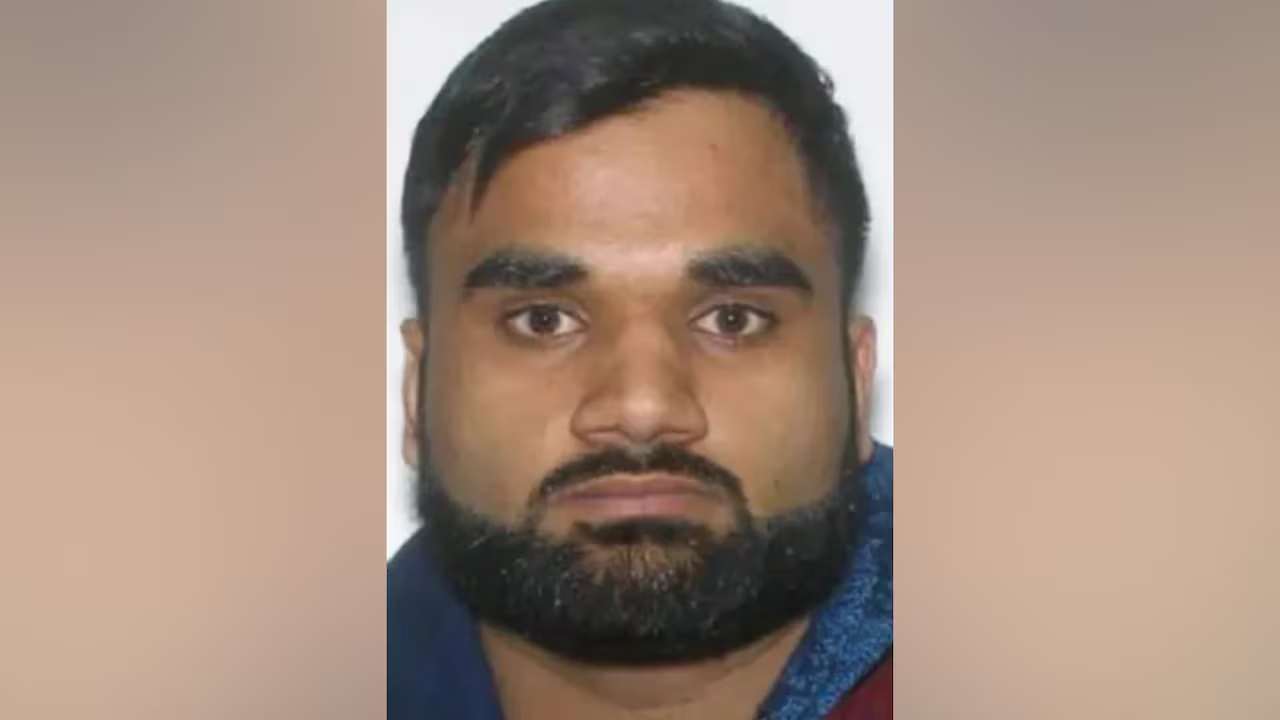
How a Surrey gurdwara shooting, a jailed gang boss in India and a cross-border racketeering indictment put a Canadian fugitive on America's Ten Most Wanted list.
The Goldy Brar FBI reward is now set at US$1 million, after American investigators placed the alleged Canadian-linked gang leader on the Ten Most Wanted Fugitives list on Monday, Sept. 28, 2026. Satinderjeet Singh, widely known as Goldy Brar, is accused of ordering the June 2023 killing of Sikh activist Hardeep Singh Nijjar outside a gurdwara in Surrey, B.C.
The announcement was made jointly at a news conference involving the FBI’s Los Angeles Field Office and the RCMP, underlining how far the Nijjar file has travelled from a suburban parking lot in British Columbia into a continent-wide organized crime investigation. The charges against Brar are allegations that have not been tested in court, and he remains at large.
Why the FBI Elevated Satinderjeet Singh to Its Top 10
Patrick Grandy, the FBI assistant director in charge of the Los Angeles Field Office, told reporters that Brar earned his spot on the list because he is regarded as extremely violent and a danger to the public. Grandy said apprehending him has become a priority for the bureau.
Placement on the Ten Most Wanted Fugitives list is not routine. Names are added only when the bureau believes broad public exposure could meaningfully improve the odds of an arrest, and the list has historically been reserved for fugitives considered particularly dangerous or difficult to locate.
The FBI describes Brar as armed, dangerous and known to have lived in California as well as in various parts of Canada — a description that puts the search squarely on both sides of the border rather than in a single jurisdiction.

The June 2023 Shooting Outside the Guru Nanak Sikh Gurdwara
Nijjar, a Sikh separatist leader, was shot and killed three years ago by masked gunmen in the car park of the Guru Nanak Sikh Gurdwara in Surrey. The killing shook British Columbia’s Sikh community and quickly became one of the most closely watched homicide investigations in the country.
Brar was charged in July of this year with ordering that assassination. The charge did not arrive in isolation: it was folded into a wider U.S. indictment unsealed over the summer that targets alleged racketeering, extortion and murder carried out by three India-linked criminal syndicates operating across North America.
What the Summer Indictment Alleges About the Bishnoi Network
According to the FBI, Lawrence Bishnoi runs his criminal organization from behind bars in India, using smuggled phones to issue instructions to trusted lieutenants who handle day-to-day operations of a global network. Brar is alleged to be Bishnoi’s right-hand man with responsibility for the North American side of that enterprise.
The alleged conduct attributed to Brar in the U.S. case spans a wide range of gang-linked crime, including:

- Murders and shootings: high-profile killings said to have been ordered or coordinated through the network.
- Kidnappings and assaults: violence allegedly used to enforce the group’s demands.
- Extortion and death threats: pressure campaigns directed at individuals and businesses.
- Arsons: property attacks described by the RCMP as part of the same pattern of intimidation.
- Drug trafficking: cross-border narcotics activity tied to the syndicate’s financing.
RCMP Deputy Commissioner Lisa Moreland said at the same news conference that Brar and his network have devastated countless lives and families over a period of years. His addition to the list, she said, means the world just became a great deal smaller for him.
How the Goldy Brar FBI Reward Is Meant to Produce an Arrest
The US$1-million reward is offered for information leading directly to Brar’s arrest, and the bureau has asked anyone with relevant information to call its tip line at 1-800-225-5324. Moreland framed the money as a deliberate wedge, telling reporters that Brar holds no loyalty to anyone and that no one should feel loyalty toward him.
That messaging is a standard feature of large fugitive bounties: the goal is less about attracting strangers with a chance sighting and more about giving people already inside or adjacent to a criminal network a financial reason to talk. Whether it works in this case will depend heavily on how insulated Brar is within the organization he allegedly helps run.
Canada’s 2025 Terrorist Listing of the Bishnoi Gang
Canada formally listed the Bishnoi gang as a terrorist organization in 2025, accusing the group of intimidating and targeting members of diaspora communities. That designation carries real legal weight in Canada, exposing anyone who knowingly supports or finances a listed entity to criminal liability and enabling asset freezes.
For Canadian readers, the listing helps explain why a gang whose leadership sits in India has become a domestic policing priority. Law enforcement has argued that extortion campaigns and threats against business owners in Canadian cities are not isolated incidents but the local expression of a transnational operation.
The Canada-India Rupture That Still Frames the Nijjar File
The Nijjar case has never been a purely criminal matter. Then prime minister Justin Trudeau said Canadian intelligence had linked agents of the Indian government to the killing, a statement that triggered a sharp diplomatic rupture between Ottawa and New Delhi. India has repeatedly denied the allegation.
The U.S. indictment and the FBI listing approach the same killing through an organized crime lens rather than a state-actor one, and nothing announced on Monday resolves the broader question Trudeau raised. The two threads remain distinct: one is a criminal prosecution of alleged gang figures, the other an unresolved intelligence allegation between two governments.
It also lands at a moment when Ottawa has been publicly recalibrating how it deals with larger powers. Foreign Affairs Minister Anita Anand’s recent United Nations address on strategic autonomy argued that middle powers need more independent capacity when the international order is under strain — a theme that resonates with a case in which Canada’s own allegations against a foreign government have gone unresolved for three years.
What the Ryan Wedding Case Suggests About the Odds
Moreland pointed to precedent in making the case that the list works. The last Canadian added to the FBI’s Ten Most Wanted Fugitives, Ryan Wedding, is now in custody.
That reference is doing specific work in a public-appeal strategy: it signals to potential informants that the designation is not symbolic and that fugitives on the list do get found. It also highlights how much of this enforcement now runs through joint Canada-U.S. channels rather than through either country acting alone.
Cross-border cooperation has become a recurring theme in Canadian security policy debates, including in recent discussion of how Ottawa plans around its relationship with Washington. The Brar file is a reminder that on transnational organized crime, the two countries are still operating as a single investigative unit.
Where the Investigation Stands Now
Brar has not been arrested, and no court has ruled on the allegations against him. With charges filed in July, a reward now attached and both the FBI and RCMP publicly committed to the search, the next verifiable development would be either an arrest or a formal court proceeding — neither of which has a date attached at this stage.
Authorities have not disclosed where they believe Brar currently is, beyond the general statement that he is known to have resided in California and in parts of Canada.
Frequently Asked Questions
Who is Goldy Brar?
Goldy Brar is the alias of Satinderjeet Singh, alleged by the FBI to be Lawrence Bishnoi’s right-hand man overseeing the gang’s North American operations. He was charged in July 2026 with ordering the killing of Hardeep Singh Nijjar.
How much is the reward and what does it cover?
The FBI is offering US$1 million for information leading to Brar’s arrest. Tips can be directed to the FBI tip line at 1-800-225-5324.
Has Goldy Brar been convicted of anything in this case?
No. He has been charged in a U.S. indictment and remains a fugitive; the allegations have not been proven in court.
Is this the same as the allegation that Indian government agents were involved?
No. The U.S. case treats the Nijjar killing as an organized crime matter. The separate allegation by then prime minister Justin Trudeau that Canadian intelligence linked Indian government agents to the killing has been denied by New Delhi and is not addressed by Monday’s announcement.
Why does Canada treat the Bishnoi gang as a terrorist entity?
Canada added the group to its terrorist listings in 2025, citing intimidation and targeting of diaspora communities. The designation allows for measures such as asset freezes and criminal liability for knowingly supporting the organization.

The Brand Magazine Newsroom covers Canadian business, markets and policy news for brand builders and entrepreneurs. Newsroom reports are produced from published public sources such as company releases and government and regulator publications, and follow our Editorial Standards.