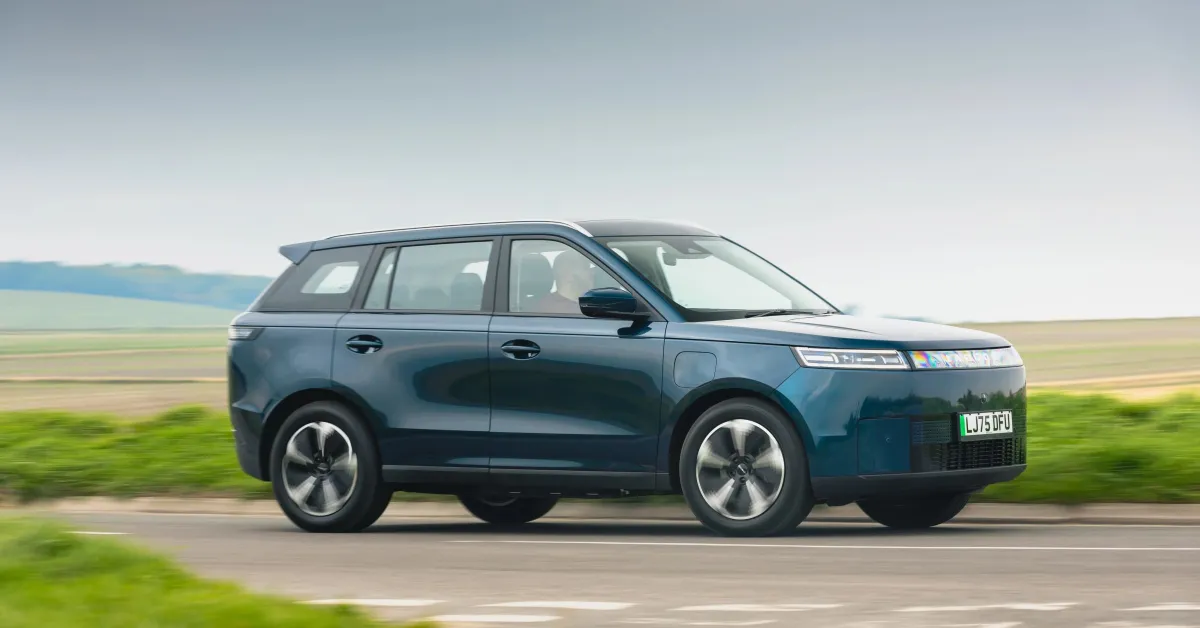
Chery's two export brands have opened a Canadian teaser site but named no models, prices or dealers — here's what the global lineup and Ottawa's new tariff quota tell us about what Canadians will actually be able to buy.
The Omoda & Jaecoo Canada launch is now official in timing if not in detail: Chery’s two export brands have switched on a Canadian website confirming that their “premium electric SUVs” will reach this market in late 2026. The page went live in late September 2026 and stops well short of naming a single model, price or retail location.
For Canadian buyers, the announcement matters less for what it says than for what it confirms. One of China’s largest vehicle exporters has formally put Canada on its calendar, and it is doing so through the narrow tariff opening Ottawa created earlier this year.
A Canadian Teaser Site With No Cars, No Prices and an Empty Dealer Locator
The new Omoda & Jaecoo Canada site is a placeholder in the most literal sense. It tells visitors “the wait is almost over,” states that the brands are “coming late 2026,” and offers a sign-up form for future updates. The retailer locator returns nothing.
The company says it is “building a network across Canada” and will announce locations ahead of launch. No dealer groups, provinces or launch cities have been identified, and no Canadian pricing has been published for any model.
One line of fine print does real work: the vehicles pictured on the site are intended for other markets, and some may not be available in Canada. In practical terms, Chery either has not finalised its Canadian range or is not ready to say what it is.

Why the Chinese EV Tariff Cut to 6.1% Made This Possible
The timing is not coincidental. In January, Canada cut its 100% tariff on Chinese-built electric vehicles to 6.1%, with the lower rate applying to a capped volume of imports. The quota allows up to 49,000 Chinese-made electrified vehicles a year at the reduced rate, rising to 70,000 by 2030. Anything beyond the cap still attracts the full 100% surtax.
Crucially for Chery, the quota is not restricted to battery-electric cars. It covers plug-in hybrids and conventional hybrids as well — which is exactly where the bulk of the Omoda and Jaecoo product range sits today.
That policy shift has already reshaped the market once. Tesla is using the same quota to sell a Shanghai-built Model 3 in Canada at a record-low C$39,490, and BYD has said it plans to open 20 Canadian dealerships in its first year, also targeting a late 2026 start. The competition for a limited pool of quota volume will be one of the defining commercial stories of the next 12 months.
Trademark Filings and Jaecoo E5 Prototypes on Ontario Plates
The groundwork has been visible for months. Chery filed Canadian trademarks for Omoda, Jaecoo and several other sub-brands earlier in 2026, and Jaecoo E5 prototypes were spotted testing in Ontario on manufacturer plates in May.

Test mules on local plates usually signal cold-weather validation, homologation work or both — a reasonable indicator that the E5 is being prepared for Canadian certification rather than simply passing through.
Globally, the group says it now sells in more than 75 countries and has exported more than 1.2 million vehicles in roughly three years. Its European push is the sharpest evidence of pace: in the United Kingdom alone, the company reports registering 6,238 vehicles in August for a 6.62% share of that market.
The Jaecoo E5 Is the Most Likely Model to Lead in Canada
Because it is the car caught testing in Ontario, the Jaecoo E5 (also sold as the J5 EV) is the logical opening act. It is a compact electric SUV with a 60.9 kWh battery, a 155 kW front motor, 399 km of WLTP range and a 0-100 km/h time of 7.7 seconds.
It is also priced aggressively abroad, starting at £27,505 in the UK and A$36,990 driveaway in Australia. Those are foreign-market figures and should be treated as general context only — no Canadian price has been confirmed, and tariffs, freight, certification and dealer structure all move the final number.

The weak point is DC charging. Jaecoo’s UK materials list an 80 kW peak with a 30-80% top-up taking 27 minutes, which is modest against what most 2026 entrants offer. In a country where winter charging stops are a real planning constraint, that specification will get scrutiny.
The Full Electrified Lineup Canada Could Draw From
None of the following models has been confirmed for Canada. This is the current electrified range the brands offer in markets such as the UK, Australia and Indonesia, based on their published specifications.
A few details are worth pulling out of that grid:
- Omoda E5: the sportier sibling to the Jaecoo on shared hardware, rated at 430 km WLTP with a 30-80% charge in 28 minutes.
- Omoda 4: the newest battery-electric model, launched in Indonesia in July with an LFP pack and a 119 kW DC peak that takes it from 20-80% in 22 minutes. Its 553 km figure uses the optimistic NEDC cycle, not WLTP.
- Jaecoo 7 SHS-P: the brand’s volume seller worldwide, pairing a 1.5-litre turbo engine with an 18.3 kWh battery. Australia now also receives an all-wheel-drive version with a second rear motor.
- Jaecoo 8 SHS-P: a three-row, six- or seven-seat plug-in hybrid with three motors, all-wheel drive and a 5.8-second 0-100 km/h time.
- Omoda 9 SHS-P: the flagship, quoted at 449 PS and 700 Nm with a 4.9-second sprint.
Chery also sells non-plug-in hybrid versions of several of these models, but those are not what the brands are marketing to Canadians under the “electric SUV” banner.

What a Plug-In-Heavy Range Means for Canadian Buyers
The composition of that lineup is the real story. Five of the seven electrified models above are plug-in hybrids, and the quota Ottawa negotiated happens to accommodate them. If Chery leads with PHEVs, Canadian shoppers are being offered something closer to a transitional product than a pure EV proposition.
That has knock-on effects. Plug-in hybrids sidestep the charging-speed limitations of the battery models, but they also sit differently under federal and provincial incentive rules, which vary by jurisdiction and change often. Buyers should verify current eligibility in their own province before assuming a rebate applies.
Affordability is the other variable. Vehicle financing costs remain tied to the rate path, and our reporting on the Bank of Canada’s next rate decision underlines how quickly monthly payment maths can shift between now and a late-2026 showroom date. Meanwhile, the policy rationale for widening EV supply sits alongside the warnings in Canada’s latest climate change assessments.
The Open Questions Between Now and Late 2026
Three things remain genuinely unknown: which models Chery will certify for Canada, what they will cost here, and where they will be sold. The company has committed only to announcing retail locations before launch.

Watch for Transport Canada certification filings, dealer-group announcements and any move by Chery to claim a share of the 49,000-unit quota, since that allocation is finite and BYD and Tesla are already drawing on it. As with other overseas brands testing Canadian appetite — a pattern also visible in recent consumer hardware launches timed for this market — the gap between a teaser page and a car on a lot is where the commitments actually get made.
Frequently Asked Questions
When will Omoda and Jaecoo vehicles actually go on sale in Canada?
The brands’ Canadian site says late 2026. No firmer date, launch event or order-opening timeline has been published.
Which models are confirmed for Canada?
None. The company has not named a single model, and its own fine print notes that vehicles shown online are intended for other markets and may not be offered here.
How much will they cost in Canada?
Not specified. The UK and Australian prices cited above are overseas reference points only and do not translate directly into Canadian pricing.
Why can Chinese-built EVs be sold here at all after the 100% tariff?
Canada reduced the tariff to 6.1% in January for a capped volume — up to 49,000 electrified vehicles a year, rising to 70,000 by 2030. Imports above the cap still face the 100% surtax.
Does the quota cover plug-in hybrids?
Yes. It applies to electrified vehicles including plug-in hybrids and hybrids, not only battery-electric models — which matters given how much of the Omoda and Jaecoo range is plug-in hybrid.
Where will these vehicles be sold?
Not specified. The retailer locator on the Canadian site is currently empty, and the company says dealer locations will be announced before launch.

The Brand Magazine Newsroom covers Canadian business, markets and policy news for brand builders and entrepreneurs. Newsroom reports are produced from published public sources such as company releases and government and regulator publications, and follow our Editorial Standards.