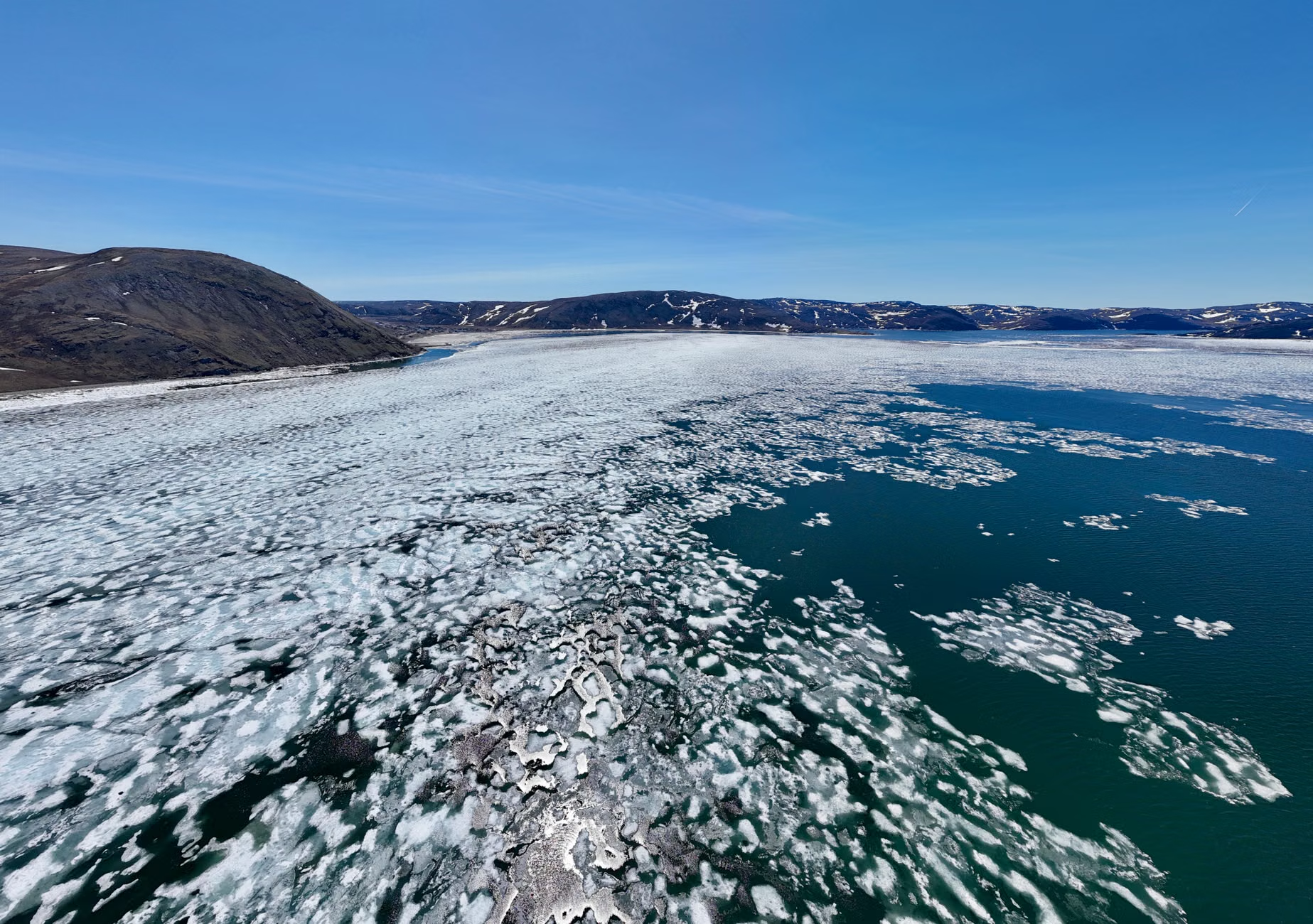
Two September assessments put a number on Canada's trajectory — and explain why the 1.5°C line is now expected to be crossed around 2030.
Two major climate assessments released in September 2026 have sharpened the Canada climate change picture in an uncomfortable way: global efforts to cut emissions have not been sufficient to hold warming below the 1.5°C threshold, warming is projected to pass that line around 2030, and on the current trajectory Canada itself could warm by roughly 5°C by the end of the century. The findings, published on 23 September 2026, restate a conclusion Canadian scientists have made for years — this country heats up faster than the global average — and attach fresh urgency to both emissions reduction and adaptation planning.
For readers who follow policy and markets rather than climate modelling, the significance is less about any single number and more about what the numbers do to planning assumptions. A 1.5°C world arriving in the early 2030s is not a distant scenario. It falls inside the lifespan of infrastructure being financed now, inside mortgage amortisation periods, and inside the depreciation schedules of plants and fleets already on order.
What the UNEP’s Limiting Overshoot Report Concludes
The assessment identified by name in the September analysis is the United Nations Environment Programme’s Limiting Overshoot report. Its central conclusion is blunt: worldwide mitigation effort — the actual, delivered reduction of greenhouse gas emissions, as opposed to pledged reduction — has been insufficient to keep global average warming under the 1.5°C mark set as the stretch goal of international climate diplomacy.
The report’s framing matters. “Overshoot” is the scientific term for a trajectory in which warming rises past a target threshold, remains above it for some period, and is then brought back down through deep emissions cuts and carbon removal. The title of the report signals that the debate among assessment bodies has shifted from whether overshoot happens to how large it gets and how long it lasts.
The second September assessment referenced in the analysis is not identified by title in the material available, and its specific findings are not specified here. What both are reported to share is a direction of travel: current policy and current emissions are not on a path consistent with the targets governments have publicly adopted.
Why 2030 Is the Date Attached to the 1.5°C Threshold
The projection that global warming exceeds 1.5°C around 2030 is the single most quotable figure in the September reporting, and it is worth being precise about what it means. It refers to the long-term global average temperature rise above pre-industrial levels — not to a single hot year, and not to the temperature in any one country.
That distinction is important because individual years have already brushed past 1.5°C without the threshold being formally considered crossed. Scientists assess the crossing on a multi-year average, precisely so that a strong El Niño or a volcanic cooling episode does not decide the answer. A projected crossing “around 2030” therefore describes a sustained state, not a headline for one summer.
General context: the 1.5°C figure originates in the Paris Agreement, which committed signatories to hold warming well below 2°C while pursuing efforts to limit it to 1.5°C. It was never a physical cliff edge — damages rise continuously — but it became the reference point against which national commitments are measured.
A Roughly 5°C Canada by 2100: What the Projection Actually Describes
The Canadian figure in the reporting — warming of approximately 5°C by 2100 on the current trajectory — is a national average under a continuation of present emissions behaviour. Two qualifications are essential to reading it correctly.
- It is conditional, not fixed: the projection describes where the country ends up if the present trajectory holds. Faster mitigation produces a lower number; slower mitigation produces a higher one.
- It is an average across a very large country: a national mean conceals wide regional variation, with northern regions historically warming considerably faster than southern ones.
Set against the global figure, the gap is the story. A world crossing 1.5°C around 2030 and a Canada approaching 5°C by 2100 are not contradictory statements — they are a restatement of the long-documented finding that this country warms at a faster clip than the planet as a whole.
Why Canada’s Climate Change Outlook Runs Hotter Than the Global Average
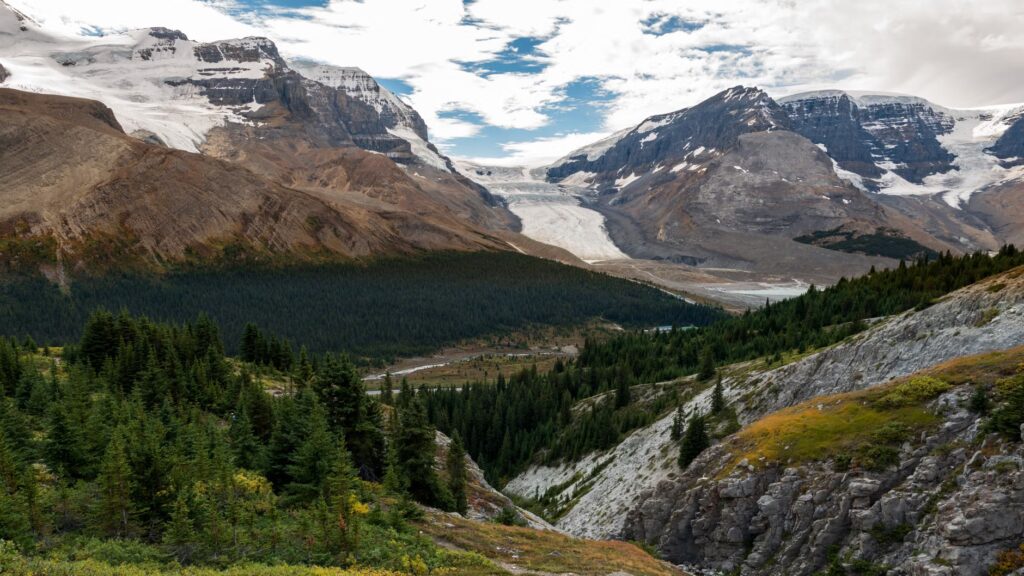
General scientific context, provided to help interpret the findings: the faster-than-average warming of Canada is driven largely by high-latitude and continental effects. Snow and sea ice reflect sunlight; as they retreat, darker land and open water absorb more of it, producing further warming — a reinforcing loop usually described as polar amplification. Land masses also warm faster than oceans, and Canada is a large landmass sitting at high latitude with a long Arctic coastline.
The practical consequence is that Canadian climate impacts tend to arrive earlier and register more sharply than global averages suggest: shorter and less reliable winter road seasons, permafrost degradation under northern infrastructure, shifting wildfire behaviour, and changes to the freeze-thaw cycles that road, rail and building standards were written around.
Mitigation and Adaptation Stop Being an Either/Or
The clearest policy implication in the September assessments is that the two halves of climate response can no longer be sequenced. Mitigation — cutting emissions — determines how bad the second half of the century gets. Adaptation — building for the climate that is already locked in — determines how well the next two decades are survived.
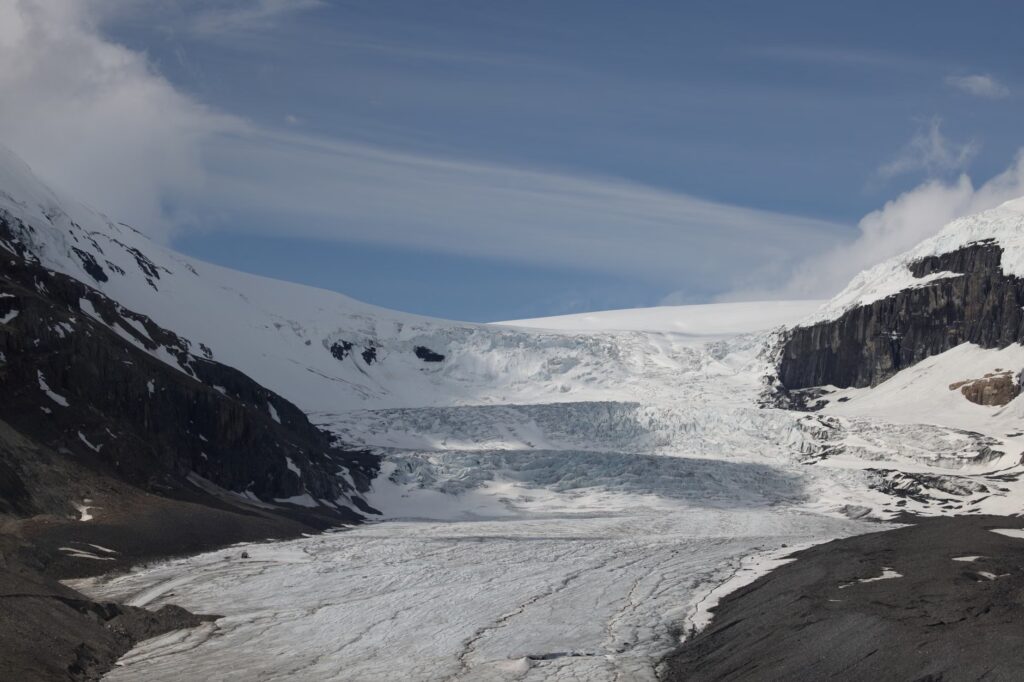
An overshoot framing makes this explicit. If warming passes 1.5°C around 2030 and is only later brought back down, there is a defined window during which societies experience conditions above the threshold they planned for. That window has to be engineered for, insured for, and budgeted for, regardless of how successful mitigation eventually proves.
Federal attention is, of course, contested territory. Ottawa has spent recent months fielding questions on everything from trade exposure to continental security contingency planning, and climate files compete for the same legislative calendar and the same fiscal room.
What the Canada Climate Change Warning Means for Business Planning
The following is general market and planning context rather than a finding of the reports themselves. For Canadian businesses, a credible projection of sustained warming touches ordinary commercial decisions well before it touches environmental policy teams.
- Asset life and siting: buildings, bridges and utility assets commissioned in the late 2020s will operate deep into a warmer climate regime, which puts design standards and location decisions under scrutiny.
- Insurance and reinsurance pricing: the cost and availability of property coverage in flood-, fire- and storm-exposed areas is among the first channels through which physical climate risk reaches balance sheets.
- Supply chain continuity: agriculture, forestry, fisheries and transport corridors all carry weather-dependent assumptions that the reports suggest are becoming less reliable.
- Cost-of-capital horizons: long-dated household and corporate assumptions — including multi-year interest rate and mortgage forecasts — increasingly sit alongside physical risk in the same planning documents.
- Disclosure expectations: investors and lenders continue to ask for climate-related risk reporting, and assessment findings of this kind form part of the evidence base those disclosures reference.
The Distinction Between a Missed Target and an Abandoned One
It is worth separating two messages that often get collapsed together. The reports conclude that effort to date has been insufficient for the 1.5°C goal — not that the difference between 1.6°C and 3°C has stopped mattering. In overshoot science, the depth and duration of the overshoot are the variables that determine how much damage is done and how much of it is reversible.
That is why assessment bodies keep publishing rather than declaring the question closed. Every increment of avoided warming changes the outcome, and the Canadian projection of roughly 5°C is explicitly described as a function of the trajectory now being followed rather than a settled destination.
A note on the figures: the temperature numbers cited here are model-based projections tied to emissions scenarios, not measurements. They should be read as conditional outlooks that shift with policy and emissions behaviour.
Frequently Asked Questions
Does crossing 1.5°C around 2030 mean the Paris Agreement has failed?
Not in the sense the reports describe. The assessments conclude that mitigation has been insufficient to hold the 1.5°C line, and frame the remaining question as how far and how long warming overshoots before it is brought back down.
Is the 5°C figure for Canada a forecast?
It is a projection based on the current trajectory rather than a fixed prediction. Stronger mitigation would lower it; weaker mitigation would raise it.
Why is Canada’s projected warming so much higher than the global number?
The global figure is an average across land and ocean and across all latitudes. Canada is a large, high-latitude landmass, and such regions have long been documented as warming faster than the planetary mean.
What were the two reports released in September 2026?
The UN Environment Programme’s Limiting Overshoot report is the assessment identified by name. The title and detailed contents of the second September assessment are not specified in the available material.

The Brand Magazine Newsroom covers Canadian business, markets and policy news for brand builders and entrepreneurs. Newsroom reports are produced from published public sources such as company releases and government and regulator publications, and follow our Editorial Standards.