
The federal elections agency has issued an open call for workers, and here is what the notice confirms, what it leaves unsaid, and where its mandate begins and ends.
The Elections Canada hiring call on the agency’s homepage is short and direct. As of Oct. 8, 2026, the independent federal body responsible for running national elections and referendums is telling Canadians that it is recruiting and inviting them to apply now.
The notice is brief, but it lands at a busy moment in Canadian democracy. Quebec has just gone through a closely watched provincial vote, municipalities are preparing ballots of their own, and federal politics remains unsettled. The recruitment message is a reminder that elections depend on a large, trained workforce long before any voter reaches a polling station.
What the Elections Canada Hiring Notice Confirms and Leaves Out
The agency’s message is a plain invitation to apply. Beyond that, the public notice gives few operational details. The key points are summarised below.
| Detail | What the notice says |
|---|---|
| Who is hiring | Elections Canada, the federal elections agency |
| Status | Actively recruiting, with an invitation to apply now |
| Positions and number of openings | Not specified |
| Pay | Not specified |
| Locations | Not specified |
| Qualifications | Not specified |
| Closing date | Not specified |
Because the notice does not list specific roles, wages or deadlines, readers should not assume any particular job, rate of pay or timeline. Full details will sit with the individual postings on the agency’s official channels.
An Independent, Non-Partisan Referee for Federal Votes
Elections Canada describes itself as independent and non-partisan. That description is central to how Canada’s federal system is designed. The agency runs the machinery of federal elections and referendums, but it has no stake in who wins.
General context: The agency operates under the Canada Elections Act and is led by the Chief Electoral Officer, who reports to Parliament rather than to the government of the day. That arm’s-length arrangement is meant to protect elections from partisan interference, including interference by whichever party holds power.
Its responsibilities go beyond counting ballots. The agency keeps the national list of electors, oversees the rules on campaign spending and political financing, and runs public education on how, when and where to vote. Enforcement of the election law is handled by a separate commissioner, which adds another layer of independence.
Why a Recruitment Drive Matters Between Federal Campaigns
Hiring by an elections agency can look like routine human resources news. For readers following politics, it also signals how the system prepares for the next national vote, whenever that comes.
General context: Federal law sets a fixed election date roughly four years after the previous general election. A minority Parliament, or a government that seeks an early vote, can still bring an election forward. Elections Canada therefore has to stay ready to run a national campaign at short notice.
That readiness depends on people. In a general election, the agency typically relies on a very large temporary workforce in every electoral district, alongside its permanent staff. The 2024 federal redistribution increased the House of Commons to 343 seats, and each of those ridings needs its own local election team.
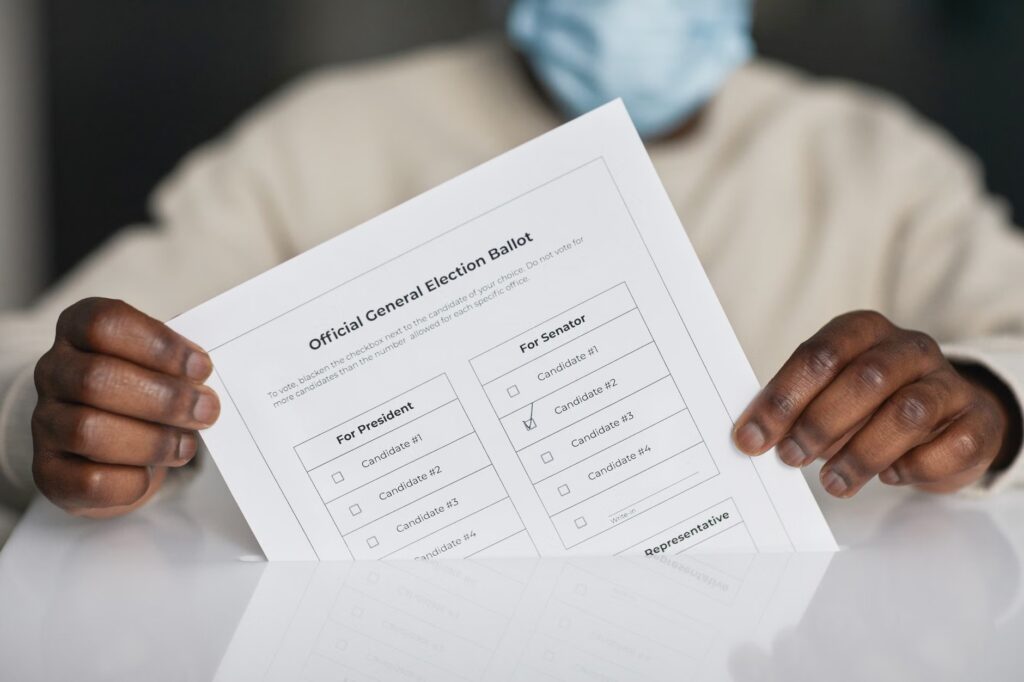
- Local election offices: Each riding typically has a returning office that handles candidate nominations, staffing and local logistics.
- Polling day staff: Workers at polling stations generally verify identity, issue ballots and help count votes once polls close.
- Advance and special voting: Advance polls, mail-in ballots and voting for Canadians living abroad or serving in the military all require dedicated staff.
- Year-round operations: Between elections, staff maintain the voters list, update systems and plan for future campaigns.
These are general descriptions of how federal elections usually work. They are not confirmation of the specific roles included in the current call.
Where Elections Canada’s Mandate Stops: Provincial and Municipal Votes
The agency is clear that it does not run municipal or provincial elections, and it does not run provincial referendums. That distinction matters right now, as several high-profile votes this fall fall outside federal jurisdiction.
The recent Quebec contest is one example. The results, including the Parti Québécois forming government as the CAQ lost every seat, were administered under Quebec’s own election law by the province’s election authority, not by Elections Canada.
The same applies to any future referendum on Quebec sovereignty. Talk of a third Quebec referendum returning to the agenda concerns a provincial vote. Under Elections Canada’s own description of its mandate, the federal agency would not organise it.
Local elections are separate again. Ontario municipalities, for example, set their own voting methods within provincial rules. Some offer online ballots, as in Oshawa’s municipal election, where internet voting opens October 13.
General context: The table below gives a simplified view of who usually runs which vote in Canada.
| Type of vote | Usually administered by | Elections Canada’s role |
|---|---|---|
| Federal general elections and byelections | Elections Canada | Responsible |
| Federal referendums | Elections Canada | Responsible |
| Provincial and territorial elections | Each province’s or territory’s election agency | Not responsible |
| Provincial referendums | The relevant provincial election agency | Not responsible |
| Municipal elections | Municipalities, under provincial rules | Not responsible |
For anyone thinking about election work, this division has a practical side. A job with Elections Canada involves federal votes only. People who want to work on a provincial or municipal election need to look to the body that runs that vote.
Federal Referendums Remain Part of the Agency’s Remit
The agency’s mandate includes federal referendums as well as elections. That role is rarely used, but it is not merely theoretical.
General context: Canada’s most recent national referendum took place in 1992, on the Charlottetown Accord’s proposed constitutional changes. Quebec held its own vote on the accord that year under provincial law. The split shows the same federal-provincial divide that Elections Canada continues to point out today.
No federal referendum has been announced. The point is that the agency’s capacity, including its staff, is meant to cover any national vote Parliament may call.
What Prospective Election Workers Should Check Before Applying
The notice does not list conditions, so anyone interested should check each posting carefully before applying. A few simple steps can help.
- Use official channels: Look for postings on Elections Canada’s own website, and be cautious with third-party messages that ask for personal or banking details.
- Read each posting in full: Pay, location, duration and requirements will be set out in individual job listings, not in the general hiring message.
- Confirm the level of government: Make sure the role is for a federal vote and not a provincial or municipal one, which other bodies run.
- Expect neutrality obligations: General context: Election work usually requires staff to stay politically neutral while on duty, in line with the agency’s non-partisan role.
The Workforce Behind Public Trust in Canada’s Federal Results
Coverage of election night tends to focus on leaders, seat counts and swings in the popular vote. Behind those results is a network of officials and temporary staff whose work largely determines whether Canadians trust the outcome.
Elections Canada’s open hiring call is a small item. Still, it reflects the steady preparation an independent, non-partisan agency needs so it can run a national vote fairly and on short notice. For readers who follow politics, it is a reminder that democracy depends on administrators as well as candidates. For readers looking for work, it is an invitation to see that system from the inside.
Frequently Asked Questions
Is Elections Canada currently hiring?
Yes. As of Oct. 8, 2026, the agency’s homepage says it is hiring and encourages people to apply now.
What jobs, pay and deadlines are included?
The general hiring notice does not specify roles, pay, locations or closing dates. Those details are expected to appear in the individual postings on the agency’s official channels.
Does Elections Canada run provincial or municipal elections?
No. The agency says it is not responsible for municipal or provincial elections, or for provincial referendums.
Would Elections Canada run a Quebec sovereignty referendum?
No. A sovereignty referendum would be a provincial vote, and provincial referendums fall outside the federal agency’s mandate.

The Brand Magazine Newsroom covers Canadian business, markets and policy news for brand builders and entrepreneurs. Newsroom reports are produced from published public sources such as company releases and government and regulator publications, and follow our Editorial Standards.