Ten days from the Oct. 5 vote, here is what the Montreal debate, the immigration fight and the sudden focus on artificial intelligence tell us about where this race is heading.
The Quebec election 2026 campaign closed out another week on Friday, Sept. 25, with the province’s five main party leaders back on the road after a crowded Montreal debate stage and with just over a week left before voters go to the polls on Oct. 5. Day 30 of the campaign found the parties still sorting out which of two issues — immigration or artificial intelligence — will define the closing stretch.
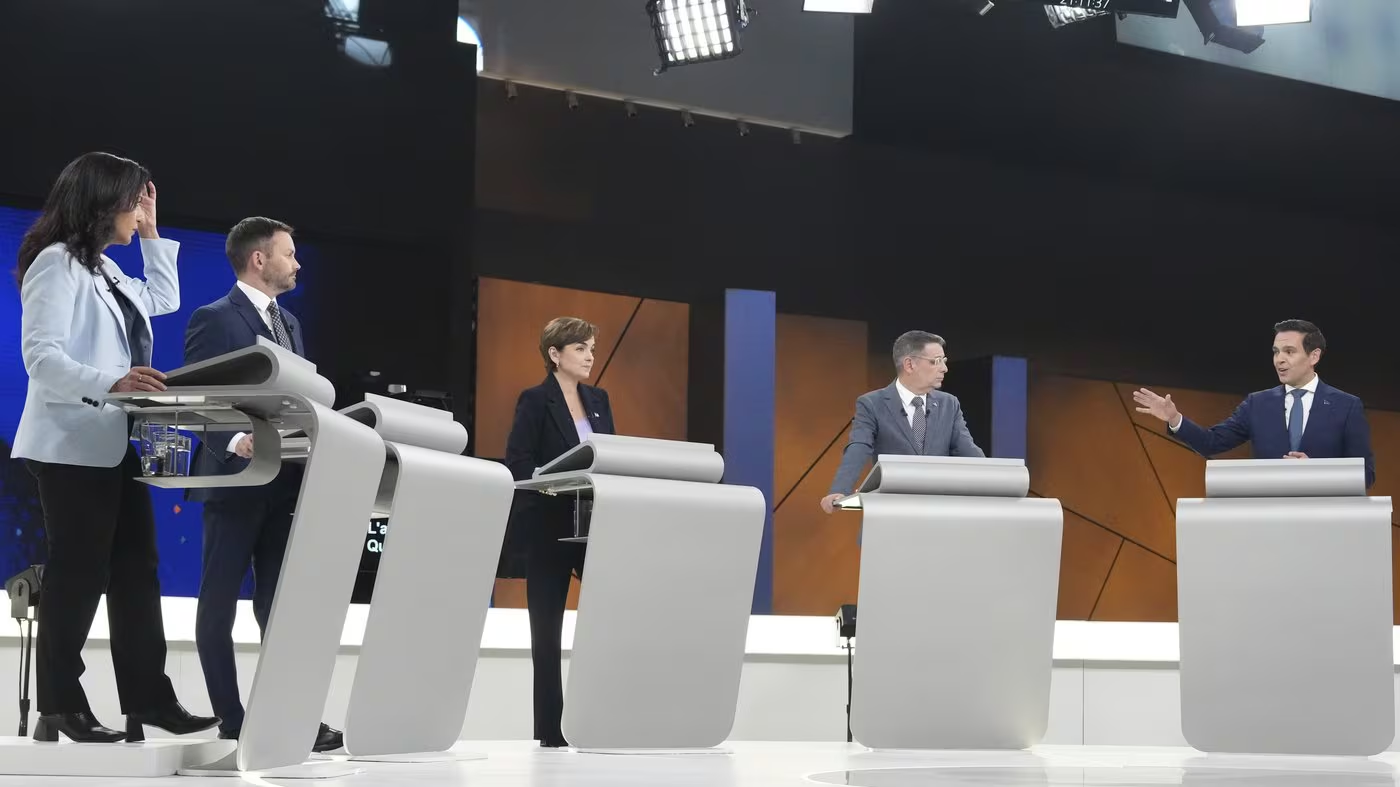
The week’s centrepiece was the leaders’ debate held in Montreal on Wednesday, Sept. 23, which brought Coalition Avenir Québec Leader Christine Fréchette, Quebec Liberal Leader Charles Milliard, Parti Québécois Leader Paul St-Pierre Plamondon, Québec Solidaire co-spokesperson Ruba Ghazal and Quebec Conservative Leader Éric Duhaime together in front of a provincewide audience. The exchanges there set the tone for the days that followed, with the Liberal leader continuing to hammer the PQ over its plan to sharply reduce immigration levels.
Five Leaders, One Stage: The Sept. 23 Montreal Debate
Debates in a five-party race are a different exercise from the two-way contests familiar to voters elsewhere in Canada. With Fréchette, Milliard, St-Pierre Plamondon, Ghazal and Duhaime all holding a podium, airtime is scarce and moments of clear contrast are valuable currency in the final days.
The Montreal event mattered for a second reason: it was one of the few scheduled moments in the campaign where all five leaders faced the same questions at the same time, rather than speaking to friendly rooms on separate tour stops. For undecided voters, that side-by-side comparison is often the single most useful piece of a campaign.
No party has claimed a decisive knockout from the night. What the debate did accomplish was to lock in immigration as the campaign’s most contested file, with artificial intelligence emerging as the unexpected second theme.
The Immigration Fight Between the Liberals and the PQ
The sharpest sustained conflict of the week was between the Quebec Liberals and the Parti Québécois. Milliard has attacked St-Pierre Plamondon’s commitment to cut immigration levels steeply, making the PQ’s numbers a recurring target on the trail rather than a one-day talking point.
Immigration has become a structural argument in Quebec politics rather than a seasonal one, touching French-language policy, housing pressure, health-care and school capacity, and the labour needs of employers outside Montreal. Each of those threads pulls a different voter coalition, which is why the parties are not converging on a single position.
Quebec is not the only jurisdiction where the file is being put directly to voters this season. Parallel votes: Albertans are also being asked to weigh in on immigration questions through a provincial referendum process, a reminder that the debate now runs well beyond one province’s borders.
Why Artificial Intelligence Turned Into a Ballot-Box Issue
The other theme that surfaced repeatedly this week was artificial intelligence — a subject that would have been a footnote in the 2022 campaign and is now a front-line question for a province that has spent years building out a research and data-centre economy.
For business readers, the practical questions behind the rhetoric are concrete: how AI deployment is regulated in the public sector, what it means for jobs in administration and services, how much electricity new computing capacity will consume, and whether Quebec’s research advantage translates into commercial ownership. None of the parties has been given a free pass on those points.
The AI conversation also intersects with the immigration debate in a way few campaign narratives do. Talent supply, credential recognition and the ability to recruit internationally are inputs to the same technology sector the parties are promising to grow — a tension the leaders have been asked to reconcile on the trail.
The 28 Toss-Up Ridings That Will Decide Oct. 5
Twenty-eight ridings have been identified as genuine toss-ups heading into the Oct. 5 general election, and those seats explain why the leaders’ tour schedules look the way they do. In a five-party race, vote splits of a few percentage points can flip a riding, and a national-style swing is far less predictive than local conditions.
A few practical consequences follow from that math:

- Tour routing is strategic: Leaders concentrate their final days in competitive regions rather than safe strongholds.
- Turnout matters more than persuasion: In close seats, mobilising existing supporters often outweighs converting opponents.
- Seat counts can diverge from vote share: With five parties competing, a modest popular-vote total can still produce an outsized or undersized caucus.
The exact composition of those 28 ridings and their historical results have not been detailed here, and voters checking their own riding should rely on official electoral information rather than provincewide trend lines.
A Legal Challenge Over English at Elections Quebec Polling Stations
Running alongside the campaign is a legal dispute over language at the ballot box. Lawyers are moving to challenge limits on the use of English at Elections Quebec polling stations, an issue that touches directly on how the Oct. 5 vote will be administered.
Details of the challenge, including the specific relief sought and any hearing schedule, were not specified. The timing matters regardless of outcome: administrative questions raised this close to voting day tend to draw attention from both language-rights advocates and election officials focused on a smooth count.
What a Quebec Election 2026 Result Means for Business and for Ottawa
Provincial elections rarely stay provincial. Quebec’s positions on immigration levels, energy allocation for data centres, and technology regulation feed directly into federal policy debates and into the planning assumptions of companies operating across provincial lines.
The result will also land in an already busy federal environment. Ottawa is managing trade and security pressures that have reached the point where the prime minister has been publicly questioned about contingency planning around risks from the United States, and Canada’s foreign policy posture has been framed on the world stage in Foreign Affairs Minister Anita Anand’s UN address on great-power disruption and strategic autonomy. A new or returning Quebec government becomes a partner or a friction point in both files.
For households, the campaign’s affordability subtext is inseparable from national borrowing conditions. Housing costs in particular are being shaped less by provincial platforms than by rate expectations, and the current Canadian mortgage rate outlook is a useful reference point for readers weighing what any government can realistically deliver on shelter costs.
The Final Ten Days Before the Oct. 5 Vote
With the campaign now past its 30th day, the parties enter the stretch where organisation usually beats improvisation. Expect concentrated leader travel through competitive ridings, continued sparring over immigration targets, and further attempts to convert the artificial intelligence discussion into something voters can picture in their own workplaces.
Voting day is Oct. 5, 2026. Electors with questions about where and how to vote, advance polling, or identification requirements should confirm details directly with Elections Quebec, which administers the process.
Frequently Asked Questions
When is the Quebec provincial election?
Quebecers go to the polls on Oct. 5, 2026.
Who took part in the Montreal leaders’ debate?
The Sept. 23, 2026 debate featured CAQ Leader Christine Fréchette, Quebec Liberal Leader Charles Milliard, PQ Leader Paul St-Pierre Plamondon, Québec Solidaire co-spokesperson Ruba Ghazal and Quebec Conservative Leader Éric Duhaime.
What are the main issues in the campaign?
Immigration and artificial intelligence have emerged as the leading themes, with the Liberals attacking the Parti Québécois over its plan to sharply cut immigration levels.
How many seats are genuinely in play?
Twenty-eight ridings have been flagged as toss-ups for the Oct. 5 vote, which is why leaders are concentrating their remaining tour days on competitive regions.
What is the dispute about English at polling stations?
Lawyers are preparing to challenge restrictions on the use of English at Elections Quebec polling stations. Further details of the challenge were not specified.

The Brand Magazine Newsroom covers Canadian business, markets and policy news for brand builders and entrepreneurs. Newsroom reports are produced from published public sources such as company releases and government and regulator publications, and follow our Editorial Standards.