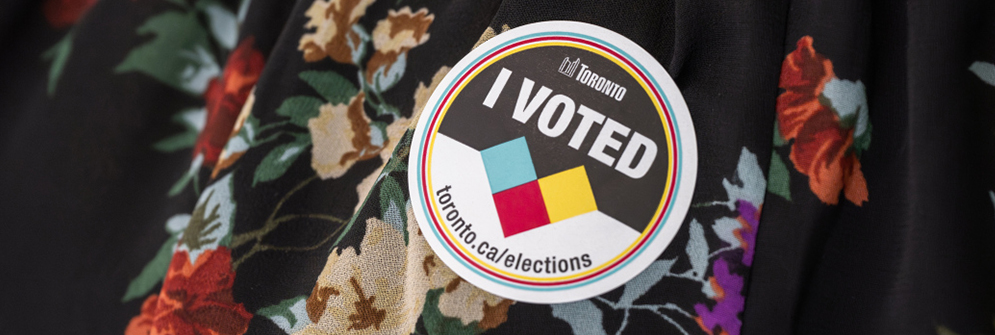
Toronto's 2026 municipal vote is now official, and voters can trace the outcome down to individual polling places, advance ballots and mail-in votes.
The Toronto election results for 2026 are now official. The City Clerk has certified the final count for the city’s municipal election, closing out the October campaign for mayor, city councillors and school trustees. A final Declaration of Results dated October 29 has been issued, and the city published the certified figures on its elections portal on October 30.
Alongside the headline totals, the city has released poll-by-poll results. These separate the votes cast during advance voting, by mail and at each individual voting place on election day.
For a city of Toronto’s size, that breakdown turns a single tally into a detailed map of how and where residents chose to vote.
What Certification of the Toronto Election Results Actually Means
Certification is the step that turns election-night numbers into the legal record. On election night, unofficial tallies come in as voting places report. The certified count follows once the Clerk’s office has completed its checks.
That distinction matters most in close contests. Candidates, campaign teams and voters following a tight ward race generally treat certification as the point at which the outcome is settled for administrative purposes.
The final document, titled the Declaration of Results for the 2026 Toronto municipal election, carries an October 29 date and is marked as final. The city’s announcement does not name individual winners, so readers checking a particular office or ward should refer to that declaration directly.
| Item | What the city has confirmed |
|---|---|
| Status of results | Certified by the Toronto City Clerk |
| Final declaration | Declaration of Results, dated October 29, marked final |
| Offices on the ballot | Mayor, councillor and school trustee |
| Poll-level data | Advance voting, mail-in and election-day votes by voting place |
| Advance voting weekend | Saturday, October 10 and Sunday, October 11 |
| Historical archive | General municipal election results from 2003 to 2026 |
| Individual winners and turnout | Not specified in the city’s announcement |
Poll-by-Poll Data Breaks Out Advance, Mail and Election-Day Ballots
The most useful part of this release for close observers is the poll-by-poll dataset. It goes beyond reporting who won. It shows how many votes came in through each of the three main channels:
- Advance voting: ballots cast before election day, including during the October 10 and 11 advance voting weekend.
- Vote by mail: ballots returned by mail rather than cast in person.
- Election-day voting places: votes recorded at each individual location on election day.
For campaigns, this data shows which neighbourhoods turned out and which voting methods residents favoured. For researchers and journalists, it offers a way to test claims about voter behaviour against actual figures instead of impressions.
For ordinary residents, it answers a simpler question: how did my own polling place vote? That local view often reveals a city far less uniform than the citywide totals suggest.
Mayor, Councillor and School Trustee: The Races on Toronto’s 2026 Ballot
Toronto voters filled three kinds of offices this fall. The mayor is elected citywide. Councillors represent individual wards, and school trustees sit on the boards that run the city’s public and Catholic schools in English and French.
General context: Toronto has elected councillors from 25 wards since the provincial government reduced the size of council in 2018. Ontario has also extended expanded authority, often called strong mayor powers, to Toronto’s mayor in recent years. That has raised the stakes of the mayoral vote compared with past cycles.
The city kept a public list of certified candidates throughout the campaign. That list remains available alongside the results, so residents can compare the full field in each race with the final outcome.
Third-Party Advertisers Get Their Own Public Record
The city also maintains a separate list of certified third-party advertisers for the 2026 election. These are individuals, businesses or groups that spend money promoting or opposing candidates or questions without running for office themselves.
Toronto published dedicated rules and resources for anyone who wanted to register as a third-party advertiser this year. Making the list public lets voters see who was trying to shape the debate from outside the candidate campaigns.
Interest in who funds election messaging has grown across Canadian politics. Municipal races, where budgets are smaller and local issues dominate, are no exception.
Kids Vote Weekend Put Toronto’s Tree of the Year on the Ballot
Not every vote this fall involved a politician. During the advance voting weekend on Saturday, October 10 and Sunday, October 11, the city ran a Kids Vote Weekend. It invited young Torontonians to choose the city’s Tree of the Year.
The initiative ran at the same time as advance voting. The aim was to give children a hands-on feel for casting a ballot while their parents and guardians voted. The city’s announcement does not report which tree won.
Programs like this are part of a broader civic-education effort. Toronto also offers educational resources and videos explaining how local elections work.
Two Decades of Results, From 2003 to 2026
The 2026 figures join an archive of general municipal election results dating back to 2003. That gives residents and researchers more than 20 years of comparable data on Toronto’s local races in one place.
The archive is useful for spotting long-term shifts in how the city votes. These include changes in turnout, the growth of advance and mail-in voting, and how ward races have evolved as boundaries and council size changed.
The city also publishes its election policies and procedures, official reports and an accessibility plan. Together, these documents explain how the vote was run, not just what it produced.
The Calendar Behind Toronto’s October Election
The city published a key-dates schedule for voters, candidates and third-party advertisers covering the full October campaign. The confirmed milestones in its materials are the advance voting weekend of October 10 and 11, the October 29 final declaration, and the certified results posted by October 30.
General context: Ontario’s Municipal Elections Act sets the regular voting day for municipal elections on the fourth Monday of October. In 2026, that fell on October 26, with municipalities across the province holding their votes on the same day.
Running an election of this scale also takes a large temporary workforce. The city posted job descriptions and payment information for election workers ahead of the vote, a reminder of the staffing needed to open and run voting places across a city of nearly three million people.
Why the Toronto Election Results Matter Beyond City Hall
Municipal elections often draw less attention than federal or provincial contests. Yet the council and mayor chosen this fall will make decisions residents feel every day.
The city is responsible for services such as transit, roads, water, waste collection, policing budgets, parks and much of the planning that shapes housing supply. School trustees, meanwhile, help set priorities for some of the largest school boards in the country.
For the business community, municipal decisions on zoning, property taxes, permits and infrastructure directly affect the cost and pace of doing business in Canada’s largest city. A newly certified council will be watched closely by developers, small-business owners and investors alike.
Residents who want to follow the city’s day-to-day decisions, from council debates to service disruptions, can also keep an eye on how to track Toronto weather, traffic and local alerts that affect daily life between election cycles.
Staying Involved With City Hall Between Elections
With the votes counted, the city is steering residents toward ways to stay engaged in non-election years. Its My Local Government – It’s For Me program is pitched as a starting point for people who want to understand how the city works.
The program focuses on three goals:
- Becoming informed: learning how city services and decisions are organized.
- Having a say: finding opportunities to give input on local issues.
- Serving the city: exploring ways to take part directly in local government.
For many residents, the certified results are the end of a long campaign. For the new council, they mark the start of a four-year term in which the decisions that matter most to Torontonians will be made well away from the ballot box.

The Brand Magazine Newsroom covers Canadian business, markets and policy news for brand builders and entrepreneurs. Newsroom reports are produced from published public sources such as company releases and government and regulator publications, and follow our Editorial Standards.