
What the Parti Québécois minority victory means for Quebec, Ottawa and a national unity debate already unsettled by Alberta.
The Quebec election held on October 5, 2026 has returned the Parti Québécois to power with a minority government, and with it a promise that has not been tested at the ballot box in more than three decades: a third referendum on Quebec independence from Canada. Party leader Paul St-Pierre Plamondon led the comeback, ending the Coalition Avenir Québec’s hold on the province.
The result, confirmed as counting concluded on October 6, closes one of the most consequential provincial campaigns in recent Canadian memory. It also reopens a constitutional question that federal parties, provincial premiers and the business community had largely treated as dormant.
What the October 5 Quebec Election Delivered
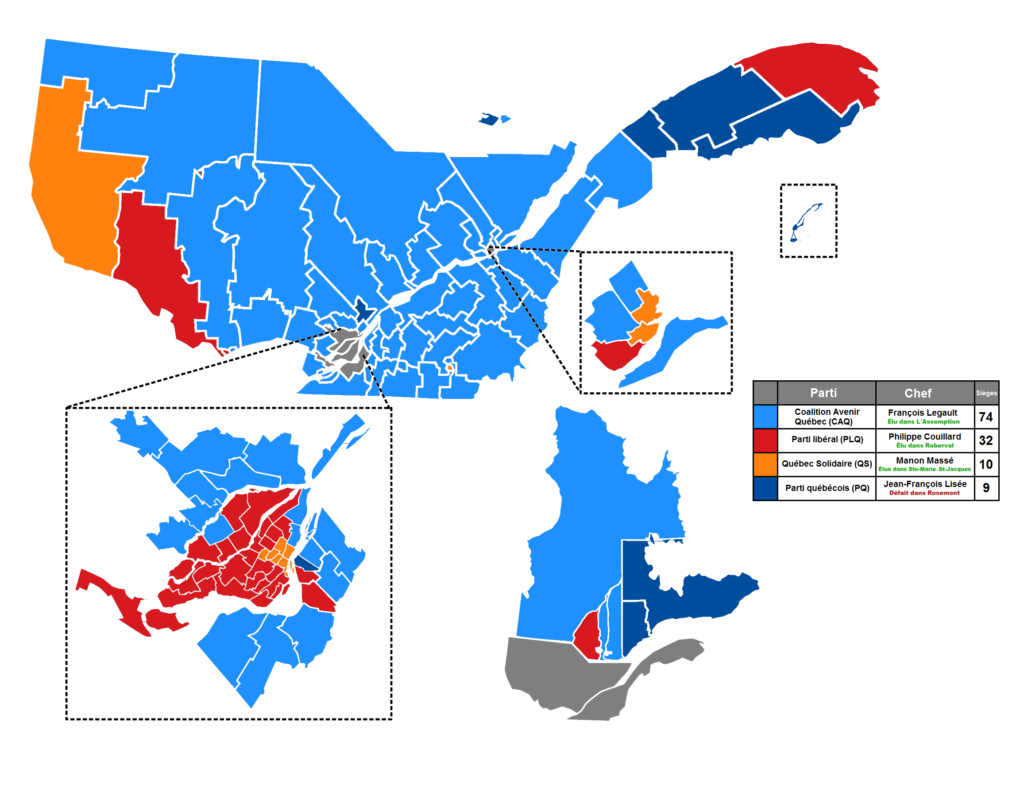
The headline outcome is straightforward. The Parti Québécois, a sovereigntist party founded on the goal of Quebec statehood, won the most seats but fell short of the threshold for a majority in the National Assembly. The incumbent CAQ was defeated.
Brand Magazine’s campaign coverage tracked the shift as it developed, from the point where polling kept the Parti Québécois in front through to the night itself, when the party won but fell short of a majority. Early seat projections pointed to an unusually severe collapse for the governing party, with reporting on election night indicating the CAQ was shut out entirely.
Precise final seat totals, popular vote shares and riding-level margins were not specified in the initial wire summary of the result and should be read from certified figures published by Quebec’s electoral authority once they are finalised.
Paul St-Pierre Plamondon’s Referendum Pledge
The defining commitment of the winning campaign was the pledge to pursue a referendum on independence. That is what separates this result from an ordinary change of government in a Canadian province: the incoming premier-designate has said he intends to put sovereignty back to Quebec voters.
The source material does not specify a date, a question wording, or a legislative timetable for that vote. Readers should treat any circulating timeline as unconfirmed until the new government tables something formal in the National Assembly.
What is clear is the political framing. A referendum pledge made in opposition is an aspiration; the same pledge made from the premier’s office becomes a governing file with a legal process, a federal counterparty and a cost attached.
Why a Minority Changes the Math on Sovereignty
Minority governments in Canada survive vote by vote. A premier without a majority needs either formal support from another party or sufficient abstentions to pass budgets and confidence measures, and that dependency shapes what can realistically be prioritised.
Several practical constraints follow from the arithmetic:
- Legislation requires partners: Any referendum-enabling bill would need votes beyond the governing caucus to pass the National Assembly.
- Confidence risk is constant: A government that cannot hold the chamber can be forced back to the polls before a long-horizon constitutional project is completed.
- Agenda competition is real: Health care, housing, cost of living and language policy all compete for the same legislative calendar.
- Opposition leverage increases: Parties that do not support independence gain influence over the pace and the framing of the debate.
None of that makes a referendum impossible. It does mean the question of when is now at least as politically complicated as the question of whether.
1980 and 1995: The Two Votes Quebec Has Already Held
Historical context helps explain why this result registered nationally within hours. Quebec has held two referendums on sovereignty. The first, in 1980, was defeated by a clear margin. The second, in 1995, was far closer, with the “No” side prevailing by less than a single percentage point.
The narrowness of the 1995 outcome is why a third campaign carries weight well beyond provincial politics. It demonstrated that the question can come close to passing under the right conditions, and it reshaped federal policy for years afterward.
That history is offered here as general background rather than as a prediction. Demographics, party systems and voter priorities in Quebec have changed substantially since the 1990s, and past referendum margins are not a forecast of future ones.
The Federal Rules That Would Govern Any New Referendum
A provincial referendum does not by itself separate a province from Canada. In the aftermath of 1995, Parliament passed federal legislation setting out conditions under which Ottawa would negotiate secession, including the requirement of a clear question and a clear majority. Quebec’s National Assembly, for its part, adopted its own legislation asserting the province’s right to determine its political future.
Those two positions have never been reconciled, and they would frame any dispute over process. Expect the legal architecture itself, not only the sovereignty question, to become a live political argument.
Readers should note that the source reporting on this election result does not address the federal government’s intended response, and no federal position has been confirmed here.
How the Result Lands Against Alberta’s Separation Debate
The timing is significant. Quebec’s result arrives while separation sentiment in Alberta has been an active part of national conversation, giving Canada two simultaneous regional challenges to the federation from opposite ends of the country and from very different political traditions.
The two movements are not equivalent. Quebec sovereignty has an established party vehicle, a decades-long electoral record and two completed referendums behind it. Alberta’s debate has been driven more by grievance over federal resource, fiscal and energy policy than by a long-standing nationalist party infrastructure.
What they share is a practical consequence for Ottawa: federal-provincial negotiations on energy, transfers, immigration and major project approvals now carry an added political charge in two of Canada’s largest provincial economies.
What Businesses Operating in Quebec Will Be Watching
For executives, investors and brand builders, the immediate question is not independence but predictability. Constitutional uncertainty tends to influence corporate decision-making through the dull channels of planning: capital allocation timing, head-office location reviews, financing costs and long-dated contracts.
The following are the general signals business audiences typically monitor in this situation, offered as market context rather than as any claim about what will happen:
- Legislative signals: Whether referendum-enabling legislation is actually tabled, and on what timeline.
- Fiscal posture: The first budget of the new government and how it treats taxation, business incentives and debt.
- Federal-provincial tone: Whether Ottawa and Quebec City move toward negotiation or confrontation on shared files.
- Currency and credit commentary: How ratings agencies and currency analysts characterise Canadian political risk in the months ahead.
- Language and labour policy: Provincial rules that directly affect hiring, service delivery and corporate operations in Quebec.
No market reaction figures are confirmed in the source material for this story, and nothing above should be read as investment advice.
The Immediate Procedural Steps in Quebec City
Following any Quebec election, the standard sequence involves certification of results, the naming of a premier and cabinet, and the opening of a new session of the National Assembly with a speech setting out the government’s programme. That programme speech is normally the first formal indication of how high the referendum file sits on the agenda.
Specific dates for the swearing-in, cabinet appointments or the return of the legislature were not specified in the available reporting at the time of publication.
Frequently Asked Questions
Does this election result mean Quebec is leaving Canada?
No. The Parti Québécois won a provincial election and has pledged to pursue a referendum. Separation would require a referendum to be held and won, followed by a negotiated process.
When will the third referendum take place?
Not specified. No date, question wording or legislative timetable has been confirmed in the reporting on this result.
What does a minority government mean in practice?
The governing party holds the most seats but not more than half, so it must secure support from other parties to pass legislation and survive confidence votes.
How did the CAQ perform?
The incumbent Coalition Avenir Québec was defeated. Election-night reporting indicated an exceptionally poor seat outcome for the party, with final certified totals to follow.
Is Quebec’s situation connected to Alberta separatism?
They are separate movements with different histories and drivers, but both have intensified national unity discussion in Canada at the same time.

The Brand Magazine Newsroom covers Canadian business, markets and policy news for brand builders and entrepreneurs. Newsroom reports are produced from published public sources such as company releases and government and regulator publications, and follow our Editorial Standards.