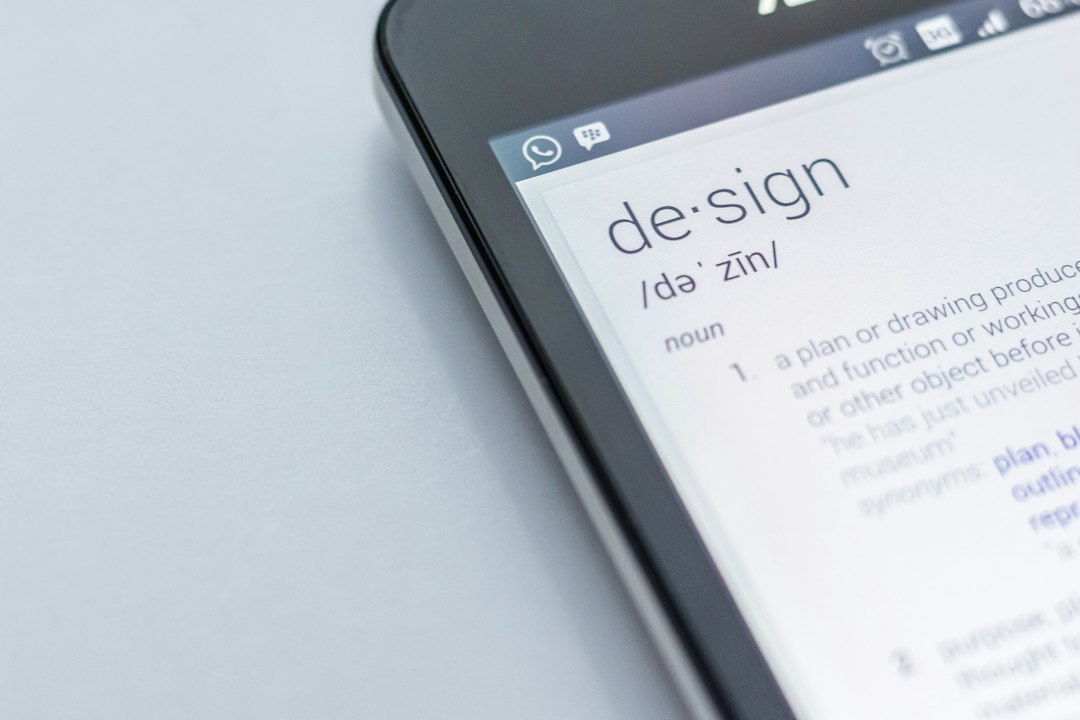
The dictionary's first meaning of 'product' is about multiplication, and it offers Canadian brands a useful way to think about what they actually bring to market.
Ask a room of Canadian marketers for a product definition and most will describe something a company makes and sells. Merriam-Webster, one of the most widely consulted English dictionaries, leads with a different idea. Its entry for “product” opens with mathematics: the number or expression you get when two or more numbers or expressions are multiplied together.
That first meaning, reviewed for this report in October 2026, can look far removed from a hardware unveiling or a retail launch. For brands preparing to put goods in front of Canadian buyers, it is a sharper lens than it first appears.
Merriam-Webster’s Product Definition Starts With Multiplication
The dictionary’s leading sense treats a product as an outcome rather than an object. Multiply 4 by 6 and the product is 24. Multiply two algebraic expressions and the product is the new expression that results. The entry also gives examples of how the word is used in a sentence, showing readers how the term behaves in ordinary writing.
The source entry confirms only the mathematical sense and the usage guidance. It does not mention any company, device, launch date, or price, and this article does not attribute any such details to it.
From a Multiplication Result to Something Made and Sold
General context: English dictionaries also record broader meanings of “product,” including something that is produced and something offered for sale. Those are the senses business writers use daily when they talk about product lines, product managers, and product launches.
The common thread across these meanings is that a product is a result. Whether it comes from arithmetic, a factory, or a software team, it is what remains once inputs have been combined. That framing is useful because launch coverage often focuses on the finished item and overlooks the inputs that made it possible.
Why the Multiplication Idea Fits Hardware Launches
The following is editorial analysis, not a claim made by the dictionary. In arithmetic, multiplication has one unforgiving rule: if any factor is zero, the whole result is zero. Hardware launches tend to work the same way.
A new device is roughly the product of several factors working together:

- Design: whether the item solves a real problem for the people expected to buy it.
- Manufacturing: whether it can be built consistently, at volume, and at a workable cost.
- Software and support: whether it keeps working and improving after the box is opened.
- Compliance: whether it meets the rules of the market where it is sold.
- Distribution: whether buyers can actually find it and get it.
A brilliant design paired with a supply chain that cannot deliver does not produce half a success. In practice it can produce close to nothing. That is why the mathematical product definition is a helpful reminder for launch teams that every factor has to clear zero.
Kotler’s Three Levels and the Language of Launch Day
Marketing theory offers its own way to break a product into parts. Philip Kotler’s well-known model separates the core benefit a customer wants, the actual item with its features and branding, and the augmented layer of warranty, service, and delivery. Brand Magazine examined that framework in detail in our look at Kotler’s definition and how it applies to today’s launches.
Put the two ideas side by side and they reinforce each other. Kotler shows the layers. The dictionary’s multiplication sense shows why those layers depend on one another: weakness in the augmented layer, such as poor after-sale support, can drag down the value of an otherwise strong core offer.
What Canadian Launch Teams Must Define Before Shelf Day
General market context: In Canada, defining exactly what a product is has practical consequences beyond marketing copy. How an item is classified can shape which rules apply to it. A few examples that launch teams commonly encounter:
- Bilingual labelling: Federal packaging and labelling rules require key information on many prepackaged consumer goods to appear in both English and French, and Quebec has its own French-language requirements.
- Radio and electronic equipment: Devices that transmit wireless signals generally need certification under Innovation, Science and Economic Development Canada standards before they can be sold, and other electronics face interference standards.
- Marketing claims: The Competition Act prohibits false or misleading representations, so performance, environmental, and pricing claims need to be supportable.
This list is a general overview and is not legal advice. Companies planning a launch should confirm their specific obligations with the relevant regulators or qualified advisers.
Terms That Get Blurred With ‘Product’ in Launch Coverage
Launch announcements often use related words loosely. The table below sets out how these terms are commonly understood in business writing.
| Term | Common meaning in business coverage | Why the distinction matters |
|---|---|---|
| Product | The overall offer a company brings to market | Can include hardware, software, and services together |
| Hardware | The physical device or equipment | Usually triggers manufacturing, safety, and certification questions |
| Device | A specific piece of hardware, often electronic | Often the focus of reviews and unboxing coverage |
| SKU | A single stock-keeping unit, such as one colour or storage size | One product can have many SKUs with different prices |
| Service | An ongoing offer, often subscription-based | Increasingly bundled with hardware sales |
When a company says it is launching a “new product,” readers can ask which of these it actually means. A refreshed colour option is a new SKU, not necessarily a new product.

Where the Definition Will Be Tested in Canadian Hardware
The idea that a product is the result of many combined inputs becomes more pressing as hardware grows more complex. Electrification is one example. Heat pumps, chargers, and battery systems combine physical equipment, software controls, installation, and ongoing service, and buyers judge them on all of it.
The economic stakes are significant. Brand Magazine has reported on a report estimating that electrifying Canada could add $3 trillion to the economy by 2050. If that kind of shift takes hold, more Canadian companies will be launching hardware whose value depends on every factor in the chain.
Reading Product Announcements With the Dictionary in Mind
For general readers following business and technology news, the product definition offers a simple test to apply to any launch headline. Instead of asking only what the new item does, it helps to ask what it depends on.
- Check availability: Is the item sold in Canada now, later, or only abroad?
- Check the full offer: Does the price include software, support, or a subscription?
- Check the claims: Are performance figures specific and supported, or vague?
- Check the weakest factor: Which input, such as supply, service, or compliance, could limit the result?
A word most people learned in grade-school arithmetic turns out to describe how modern launches succeed or stall. Every factor counts, and none can be left at zero.
Frequently Asked Questions
What is Merriam-Webster’s first definition of “product”?
It defines a product as the number or expression that results from multiplying two or more numbers or expressions together.
Does the dictionary entry mention any specific product launch?
No. The source entry covers the word’s meaning and usage only, with no companies, devices, dates, or prices.
Why does the definition matter for Canadian businesses?
How a product is defined and classified can affect labelling, certification, and advertising obligations, as well as how buyers understand what they are paying for.
Is a new colour or size a new product?
In common business usage, it is usually a new SKU or variant of an existing product rather than an entirely new product.

The Brand Magazine Newsroom covers Canadian business, markets and policy news for brand builders and entrepreneurs. Newsroom reports are produced from published public sources such as company releases and government and regulator publications, and follow our Editorial Standards.