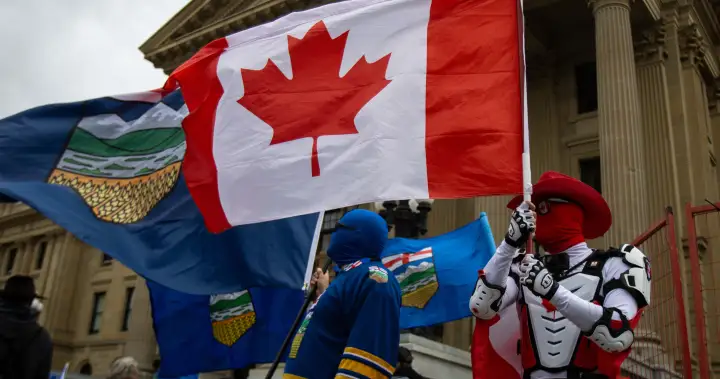
Early counts show roughly three in four Albertans backing Confederation. This report covers how the separation question got on the ballot, what drove turnout, and the nine questions still being counted.
Albertans used Monday’s Alberta referendum to deliver a clear answer on separatism. By the early hours of Tuesday, Oct. 20, preliminary results showed roughly 76 per cent of voters choosing to keep the province in Canada rather than start the legal process toward a binding vote on independence.
Voters cast their ballots on Oct. 19. Elections Alberta began reporting results late Monday night, more than three hours behind schedule after several polling stations opened late. By 1 a.m. MT, the remain side held a lead of nearly 700,000 votes. Premier Danielle Smith welcomed the early numbers, and Prime Minister Mark Carney said Albertans had “chose[n] unity.”
How the Remain Side Won Question 10
The separation question was the tenth item on the ballot. It asked voters to choose between two paths: Alberta stays in Canada, or the provincial government begins the legal steps toward a future, binding referendum on leaving Confederation. A vote for the second option would not have triggered separation on its own. It would have set the formal process in motion.
Here is where the count stood at 1 a.m. MT:
| Option on Question 10 | Votes | Approximate share |
|---|---|---|
| Remain in Canada | 1,005,641 | 76% |
| Begin process toward a second, binding referendum | 310,672 | 24% |
| Total counted | 1,316,313 | — |
These figures are preliminary and were reported while counting was still underway. Final totals may differ.
Late-Opening Polls and a 48-Hour Hand Count
Results were meant to start flowing at 8 p.m. MT, once the last ballot was cast and every polling station had closed. Late openings at several locations forced extended hours, which pushed the first numbers back by more than three hours. An Elections Alberta official later faced questions about the delays.
Provincial law requires every ballot to be counted by hand within 48 hours. Officials decided to tally Question 10 first, given the public interest in the outcome. More than 48,000 workers were hired for the count, which is running around the clock.
Why Danielle Smith Put Separation on a Ballot About Immigration and the Constitution
When the Smith government announced the referendum on Feb. 19, the ballot had nine questions. All of them dealt with immigration and constitutional matters. Independence was not one of them.
That changed in May. A Court of King’s Bench judge quashed a petition from the separatist group Stay Free Alberta. The judge ruled that the province had a duty to consult First Nations before the group could collect signatures. Smith said she disagreed with the decision.
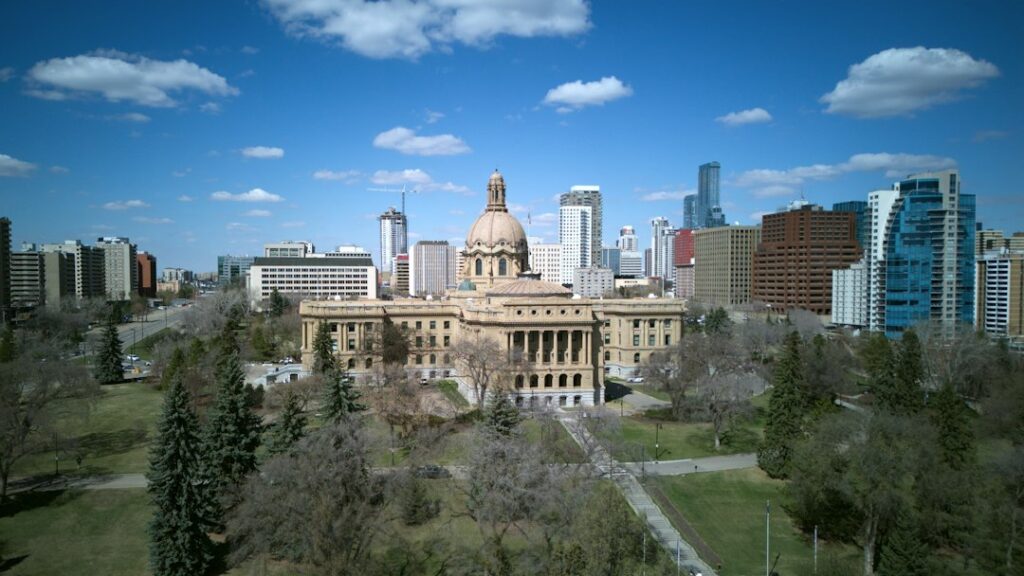
She then added the separation question to the government’s own ballot. Her argument was that the court ruling did not apply because this referendum would not “directly trigger separation.” It would only decide whether to begin the process that could lead to a later, binding vote.
Smith’s United Conservative Party did not campaign on a separation vote in the 2023 provincial election. The premier has said that frustration with Ottawa under former Liberal prime minister Justin Trudeau grew to the point where hundreds of thousands of Albertans signed petitions, some for leaving Confederation and some against. She argued that a referendum was needed to settle the question for good.
Record Advance and Mail-In Voting Before Referendum Day
Public interest was high well before polls opened on Monday. More than 1.35 million votes were cast through last week’s advance polls and special mail-in ballots combined. About 810,000 people voted that way in the 2023 provincial election.
- Mail-in ballots: Elections Alberta received 519,082 special ballots by the cut-off date.
- Growth in special ballots: use of special ballots rose about tenfold compared with the 2023 election.
- Combined early voting: more than 1.35 million votes before referendum day, against roughly 810,000 in 2023.
Elections in other jurisdictions are also changing how voters get information and services. Ottawa, for example, has brought eight years of election records and voter services into one place ahead of its municipal vote.
Polls Had Pointed to a Pro-Canada Result All Year
The outcome matched what polling had shown for months. Since the start of 2026, surveys consistently found that about 70 per cent of Albertans wanted to stay in Canada.
An Ipsos poll in January found that about three in 10 residents supported independence. When respondents were asked about the costs and consequences of leaving, though, only about half of that group said they were truly committed to going through with it. The early results suggest that support for separation held near the level polls predicted, but did not grow beyond it.
The Long Roots of Alberta’s Frustration With Ottawa
Western discontent with the federal government is not new. Many of the grievances behind the Alberta referendum go back decades:
- Grain marketing: farmers felt shortchanged by the Canadian Wheat Board’s monopoly over crop prices and sales.
- The National Energy Program: Pierre Trudeau’s policy in the 1980s is widely blamed in Alberta for wiping out jobs and investment in the oil and gas sector.
- Recent federal policy: anger over the Justin Trudeau government’s approach to energy investment and its public health restrictions during the COVID-19 pandemic.
Those frustrations fed the petition drives that eventually brought the question to a vote. Monday’s result shows that, for most Albertans, dissatisfaction with Ottawa did not translate into a wish to leave the country.
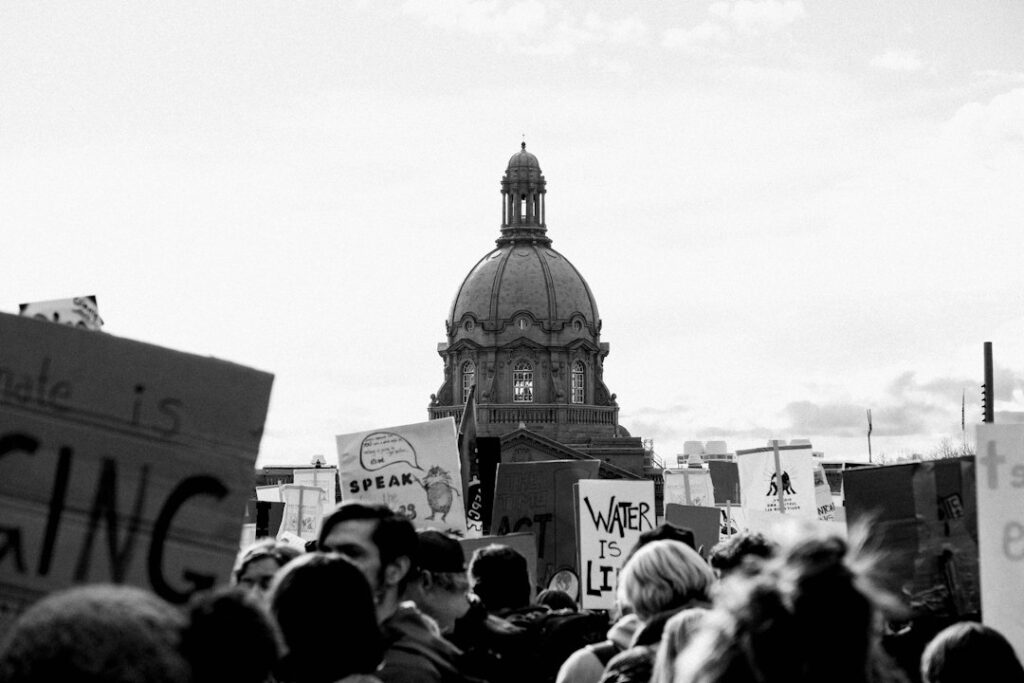
Smith and Carney Split Over the Other Nine Questions
The separation question drew most of the attention, but nine other questions were on the same ballot. Their outcome may matter more for Alberta’s relationship with Ottawa in the months ahead.
- Immigration: whether Alberta should have more say over who comes to the province to work, and whether to add more limits, possibly including fees, on some newcomers who arrive seeking health care and education.
- The Constitution: whether voters approve talks with other provinces to take powers back from the federal government, and whether the Senate should be abolished.
Smith has framed these nine questions as bargaining tools. She has said she personally voted to stay in Canada, but that she needs “yes” answers on the other questions to win a mandate to negotiate a better deal with Carney.
Carney sees it differently. He travelled to Alberta last week to rally federalist supporters and, in his words, to agree to disagree with the premier. He urged Albertans to vote against all nine of the remaining questions.
Separatist Leaders Say the Debate Isn’t Over
Smith has said many times that if the vote went the way polls predicted, she expected everyone to accept the result and move on. Leaders of the independence movement reject that view.
Separatist figure Jeff Rath has also turned his criticism toward the premier. He has said Alberta will never become independent as long as Smith, whom he called an “avowed federalist,” leads the UCP. That suggests the movement may shift its focus to the governing party itself rather than accept the referendum as the final word.
A Separation Vote Held During Trump’s Trade War
The referendum took place as U.S. President Donald Trump continues his trade war with Canada and repeats threats of annexation. That backdrop gave the question added weight, both for voters and for national leaders watching from outside Alberta. Businesses across the country are already rethinking their supply chains as trade relations with Washington shift.
The vote also came during a hard week for the province. Federal leaders gathered in Parliament to mourn four soldiers who died in the fire at CFB Wainwright, a tragedy that has weighed heavily on Albertans and the military community.
Results on the Immigration and Senate Questions Expected by Wednesday
With Question 10 counted, Elections Alberta staff are now working through the remaining questions in order, from one to nine. Officials expect results on all nine to be completed and announced by Wednesday. Exact timing will depend on when each location closed and how many ballots it received.
Those results will show whether Smith gets the negotiating mandate she asked for, or whether voters sided with Carney’s call to reject the package. Either way, Monday’s verdict on separation has settled the question at the centre of the campaign: by a wide margin, Albertans chose to remain in Canada.

The Brand Magazine Newsroom covers Canadian business, markets and policy news for brand builders and entrepreneurs. Newsroom reports are produced from published public sources such as company releases and government and regulator publications, and follow our Editorial Standards.