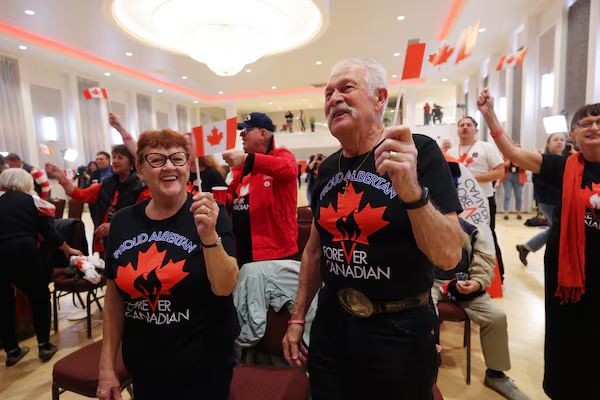
Preliminary results show a decisive vote to stay in Canada, but separatist leaders are already planning their next move inside the governing United Conservative Party.
Albertans have turned down the Alberta separation referendum push by a wide margin. Preliminary figures from Elections Alberta show roughly three in four voters choosing to keep the province in Canada after the October 19, 2026 vote. About 25 per cent backed holding a binding referendum on leaving the country, a result that ends, for now, a decades-long campaign by disaffected Albertans to form their own state.
The plebiscite was the first of its kind in Canada since Quebec’s 1995 sovereignty referendum. It took place during an ongoing trade dispute with the United States and amid repeated annexation threats from U.S. President Donald Trump. The outcome was welcomed by Premier Danielle Smith and Prime Minister Mark Carney. Separatist leaders, however, made clear their movement is not going away.
Three in Four Albertans Back Staying in Canada
By 7 p.m. MT (9 p.m. ET) on Tuesday, October 20, Elections Alberta had tallied ballots from 90 per cent of voting locations. The split at that point stood at roughly 75 per cent for remaining in Canada and 25 per cent for a binding secession vote. The numbers are preliminary, and the final count was still under way.
| Item | Preliminary figure |
|---|---|
| Voted to remain in Canada | About 75% |
| Voted for a binding separation referendum | About 25% |
| Voting locations counted (as of 7 p.m. MT, Oct. 20) | 90% |
| Ballots cast before election day | More than 1.3 million (43% of eligible voters) |
| Questions on the ballot | 10 (one on secession, nine on immigration and constitutional issues) |
| Expected time to complete full count | About two days |
The result matches what public-opinion surveys had long suggested: a large majority of Albertans want to keep the province’s 121-year place in Confederation. Our earlier report on how Alberta voters rejected separation and chose to stay in Canada covers the first wave of results on election night.
Smith, Carney and Forever Canadian Read the Vote as a Unity Mandate
Premier Smith posted late Monday that she was very pleased with the early numbers. She described the outcome as a vote for “a stronger Alberta in a united Canada.” During the campaign, Smith had said she wanted a “mandate” from Albertans when she first proposed the referendum.
In a written statement, Prime Minister Carney said Albertans and all Canadians would move forward together with renewed purpose. He called the country “greater than the sum of its parts.” Throughout the campaign, Carney had leaned on national unity and shared patriotic memory to urge Albertans to stay.
Thomas Lukaszuk, who led the pro-remain campaign Forever Canadian, told a late-night rally that Alberta would not be “the weak link in Confederation.” He said Albertans are as proud to be Canadian as anyone else in the country.
Alberta Prosperity Project Turns Its Sights on the UCP
The mood was very different at The Parlour, an Edmonton bar where the pro-independence Alberta Prosperity Project (APP) held its results event. Supporters reacted with open frustration, and some profanity, as the first numbers appeared. Separatists had run a loud campaign that drew attention in Canada and in the United States, arguing that independence would bring better fortunes and decisions made without outside interference.
Even before the count was complete, APP leaders were outlining a new strategy:
- Working through government: APP leader Mitch Sylvestre told supporters they need to get involved in government.
- Targeting the premier’s party: Lawyer Jeff Rath, another APP leader, renewed threats to remove Premier Smith through a party leadership vote. He described the next stage as an “institutional phase” aimed at taking control of the United Conservative Party of Alberta and forming government.
That shift moves the separatist fight from the ballot box into the governing party itself. It could create internal pressure for Smith even after a referendum result she welcomed.
1.3 Million Advance Ballots and a Hand Count Still Under Way
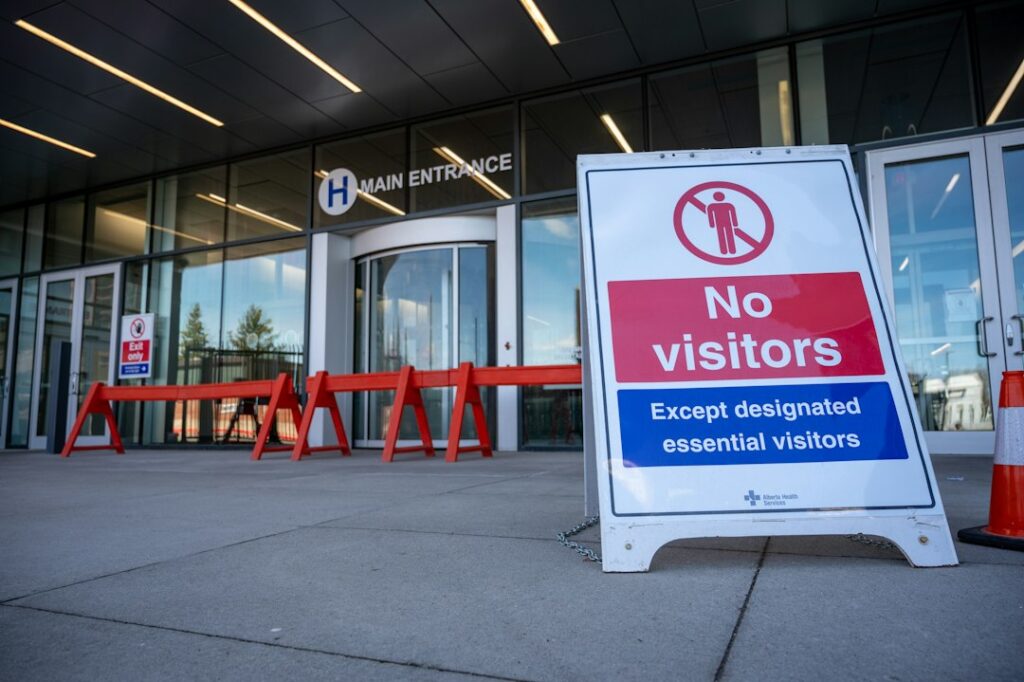
Interest in the vote was high. Before polling stations opened on Monday, more than 1.3 million people had already voted, or 43 per cent of eligible voters, according to Elections Alberta. Many more turned out on election day.
In Edmonton, turnout exceeded expectations, said Barbara Schmidt, an Elections Alberta officer who worked at several polling stations, each with long lines. People voted in community centres, schools, hotels, golf clubs, a Hindu temple, sports complexes, churches and Royal Canadian Legion halls.
Every ballot is being counted by hand. Early tallies included fewer votes for the nine questions unrelated to secession, and the full count was expected to take about two days.
From Vulcan to Gleichen: Voters Explain Their Choices
Voters’ reasons covered a wide range, from long-held grievances to deep attachment to the country.
- Roy Mears, 76, Vulcan: Mears said he first questioned Alberta’s place in Canada in the 1970s, a view that hardened during the National Energy Program, when Ottawa imposed federal control over Alberta’s energy resources. In 2015, after Justin Trudeau’s Liberals won power, he started a Facebook group called The Republic of Western Canada. He pointed to immigration as a central concern and said gaining independence would make him overjoyed.
- Carol Shaw, Gleichen: Shaw moved to Alberta from Britain in 1981. She voted in the small railway hamlet east of Calgary on a below-freezing morning and said Canada needs all of its parts, not just some of them.
- Leslie Leckie: The retired snowplow and cable ferry operator wore a pink hat with a maple leaf to vote. He rejected any idea of joining the U.S. and questioned why Albertans could not settle their differences through negotiation.
- Delena Barker, Sundre: A retired accountant and former union leader who moved from Toronto 15 years ago, Barker voted yes on every question, including the move toward separation. She said she would also support secession in any future vote and now considers herself a true Albertan.
The divide was also visible on the streets. In Edmonton, a man rollerbladed across the Walterdale Bridge over the North Saskatchewan River carrying a giant Canadian flag on a hockey stick. Near Cochrane, drivers honked at two friends flying large Alberta flags beside a highway in support of the separatist cause.
Protest Votes and Leverage Behind the 25 Per Cent
The separation tally does not map neatly onto support for independence. Some voters backed a binding referendum without any real plan to support leaving in an actual secession vote.
Sheila Taylor of Edmonton described herself as undecided until election day. She chose the separation option because, as she put it, she was fine with the prime minister running the rest of the country as he wished, as long as Alberta was left alone.
James Wocknitz, a retired drilling rig worker in Vulcan, signed the petition that helped force the vote. He doubts Alberta could ever become independent. For him, the vote was about leverage and having a say, not about leaving.
For readers trying to gauge the strength of the movement, this is the key point. The 25 per cent figure includes committed separatists, people casting a protest vote, and voters using the ballot as a bargaining tool with Ottawa.
Smith’s Nine Questions on Immigration and the Constitution
Premier Smith first proposed a nine-question referendum on immigration and constitutional matters. The secession question was added later as the tenth question. Results for the other nine questions were still being counted when the separation outcome became clear.
Critics have accused Smith of trying to appease xenophobic factions within her own party. They have also argued that some of the proposed constitutional amendments are changes Alberta has no power to make on its own. The secession question, however, carried far higher stakes and prompted competing shows of patriotism across the province on voting day.
Why the Alberta Separation Referendum Matters Beyond the Province
The vote’s significance reaches well beyond Alberta. It was Canada’s first plebiscite of this kind since Quebec voted in 1995. For context, Quebec’s referendum was decided by a very narrow margin, while Alberta’s preliminary result is far more one-sided.
The timing also mattered. The referendum took place during a trade dispute with the United States and after repeated annexation talk from President Trump. Some voters said they cast their ballots specifically to resist any break-up of the country at a time of outside pressure. For businesses watching cross-border tensions, our look at how companies are redesigning global supply chains in 2026 offers related context on the trade environment.
Politically, the result gives both Edmonton and Ottawa a clear statement of public opinion. But APP’s planned campaign inside the UCP means the debate over Alberta’s place in Canada is likely to continue within provincial politics.
A Wainwright Memorial and a Calgary Child’s Question
In Wainwright, an eastern Alberta town still grieving after a weekend grass fire killed four military members at a nearby base, residents voted near a growing memorial of flowers at the town’s war memorial. One plaque there reads “In the service of Canada.” Local resident Brandon Barss said he hoped the result would mean no further referendum is needed.
Others worried about the lasting damage of a campaign that exposed deep divisions. Calgary Mayor Jeromy Farkas recalled an elementary student on a school visit to City Hall asking him whether they were “a real Canadian.” Farkas said the question broke his heart and that no child should ever have to ask it.
With hand counting expected to wrap up within about two days of the vote, Albertans will soon have final results on all 10 questions. The verdict on separation, however, already appears clear.

The Brand Magazine Newsroom covers Canadian business, markets and policy news for brand builders and entrepreneurs. Newsroom reports are produced from published public sources such as company releases and government and regulator publications, and follow our Editorial Standards.