For decades, we designed supply chains to answer one question: where can we make this for the lowest cost? The question has changed now, and the map changes with it.
Think about a product on its way to you – like a semiconductor. For most of my career, a product’s route to your business was settled by arithmetic: you found the lowest landed cost, built the infrastructure to move it, and let scale carry the rest.
Today, that shipping arithmetic hasn’t disappeared, but something new has been added: location. Where a chip is fabricated now matters. Whether goods cross the Red Sea or the Strait of Hormuz matters. Governments increasingly care not only what a thing costs, but who controls the capacity to make it.
The global economy is quietly redrawing its own map, and it’s one we have built and rebuilt before. Rome’s Appian Way carried grain, taxes, and contracts in the legions’ ruts, infrastructure that also meant authority and reach. The Silk Road was never one road but a shifting network that rerouted with every change in who controlled the next oasis. Later, sea power, then rail and British finance, built the most integrated trading system yet seen. The thread is unglamorous but reliable: nation builders move supply chains when the economies of the world change.
Twentieth-century war and depression tore that system apart, much of it self-inflicted, from Smoot-Hawley (the 1930 Tariff Act in the United States) to the tit-for-tat tariffs that followed. Then, before the fighting even ended, forty-four nations met at Bretton Woods in 1944 and built something new: the institutions and monetary order that unlocked the supply chains to come.
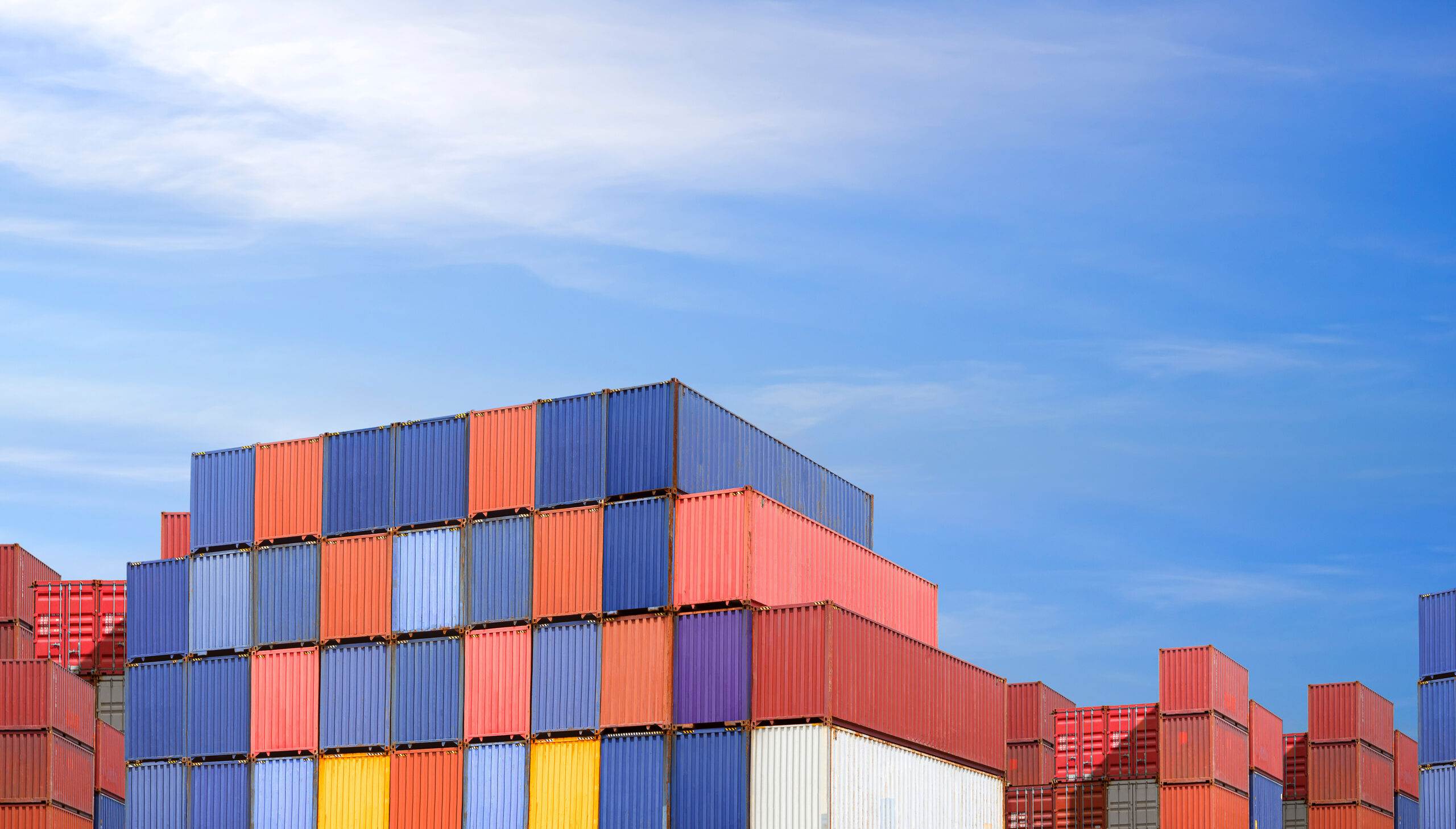
Stable geopolitics enables investment, investment enables trade, trade builds infrastructure, infrastructure enables production. That is the line supply chains run on – and we optimized it. The mechanisms that actually rewired global trade weren’t negotiated in a state capital. They were designed with a standardized steel box. The shipping container collapsed the cost of distance so completely that a factory in Shenzhen and a warehouse in Ohio felt like the same building. We became brilliant at building supply chains for a world in which geopolitical stability was as reliable as gravity.
The system we have today is not deglobalization. Global value chains still account for roughly 46 percent of world trade, barely below their 2022 peak. That is not a system falling apart, but a system changing shape. Trade now bends along political lines. Vietnam and Mexico suddenly stand in the middle of everyone else’s supply chain. The new map isn’t “China to the US” becoming “US to the US”; it is China to Vietnam to the US, or China to Mexico to the US. Globalization isn’t shrinking, it is getting more complicated. Which is why lowest cost is no longer the only metric. Today, there’s more things to think about: who owns the shipping or manufacturing technology? How many chokepoints does it cross? What qualified alternative capacity actually exists? The sharpest version, I think: where does your agility live? If the honest answer is “one supplier ten thousand kilometres away, behind three chokepoints, with no second source,” you have learned something valuable about what you’ve built.
The decade ahead comes down to five things: money, energy, materials, manufacturing, and movement. Currencies decide how transactions settle; energy, where production is viable; critical minerals, who can build a strategic industry at all; manufacturing, economic security; transport corridors, who can reach whom. Each is being redrawn at once, and supply chains are where all five connect.
I’d rather not end on geopolitics, because that is not where this gets resolved. It gets resolved by a builder, someone running procurement, or making a decision on a specific Tuesday. The question isn’t whether your supply chain is global or local. It is narrower, and harder: do the assumptions you build on still hold? Because history is consistent here: when the world changes, trade routes don’t disappear.
They move.
Stephanie Forbes is founder of The Forbes Group and author of Global Wealth, Local Impact: How Supply Chains Build Thriving Companies, Cultures, and Countries

Stephanie Forbes is founder of The Forbes Group and author of Global Wealth, Local Impact: How Supply Chains Build Thriving Companies, Cultures, and Countries