


Inside the Strasbourg announcement that would take Ottawa and Brussels beyond CETA — what was actually promised, what remains undefined, and why the EU has never created this category before.
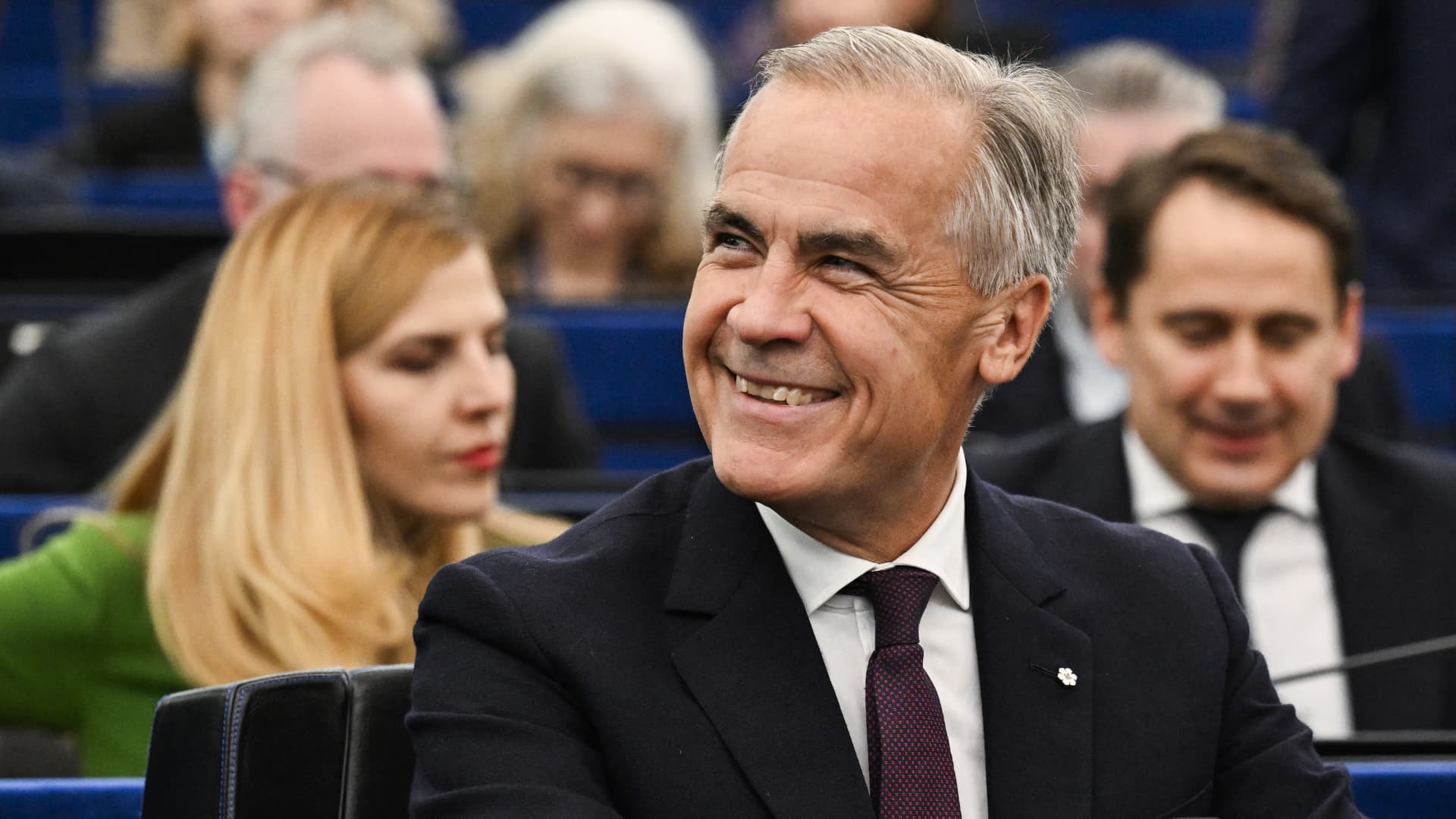
Canada has been offered an unprecedented EU associate member status, after European Commission President Ursula von der Leyen told the European Parliament in Strasbourg on Wednesday, September 16, 2026, that the bloc wants to open the door for Ottawa to become the first country ever to hold the title. The offer was made during her annual State of the European Union address, with Prime Minister Mark Carney seated in the chamber as a guest.
The announcement lands at a pointed moment. Canada is in a bitter tariff dispute with the United States and has committed to matching President Donald Trump’s duties dollar for dollar, while Carney has spent the year arguing that middle powers need to cluster together rather than negotiate alone.
What von der Leyen Actually Said From the Strasbourg Podium
Von der Leyen framed the move as an attempt to take the relationship with Canada “to the highest level possible,” telling the chamber that partnerships must be urgently reimagined. Addressing the Canadian prime minister directly, she said she would like to work with him on opening the door for Canada to become the first associate member of the European Union.
She also set out where the two sides would cooperate in practice, naming artificial intelligence, climate change, geopolitics and Arctic security as shared files, and saying the EU and Canada “see the world with the same eyes.” Arctic security in particular places the proposal next to defence and sovereignty questions rather than trade alone.
Moving Beyond CETA to a “Common Prosperity and Economic Security Space”
The two sides are not starting from zero. The EU-Canada Comprehensive Economic and Trade Agreement, better known as CETA, has been provisionally in force since 2017 and eliminated 99 per cent of all tariff lines between the parties.

Von der Leyen’s stated ambition is to graduate from that arrangement: “We will move from CETA to an alliance for the future, to create a common prosperity and economic security space.” The phrase “economic security” is doing real work there — it signals supply chains, critical inputs and strategic dependency, not simply market access. Readers following the diplomatic groundwork behind this can compare it with our earlier reporting on what Carney has actually been proposing in the Canada-EU alliance talks.
Why an EU Associate Member Category Breaks With Brussels Precedent
The significance is as much procedural as symbolic. The EU has previously been reluctant to entertain flexible membership categories at all — most recently when German Chancellor Friedrich Merz pushed earlier this year for the bloc to consider associate membership for Ukraine.
That resistance is what makes Wednesday’s language a genuine policy shift. Creating a tier that sits between a trade agreement and full accession would give Brussels a template it has so far declined to build, with implications extending well past Canada.
What that tier would contain, however, has not been spelled out. No treaty text, timeline, ratification path, institutional role or scope of obligations was set out in the address, and none is specified in the available record of the announcement.

Carney Wants an Alliance, Not Accession
Canada’s position has been consistent and narrower than the headline suggests. Carney had previously said Ottawa was keen to pursue a “unique security and economic alliance” with Europe — but not full membership.
That distinction matters for how the offer should be read. Associate status, as floated, appears designed to fit a country that wants deep integration on defined files while remaining outside the bloc’s political and legal architecture. Our earlier coverage of how Carney received the associate member offer in Strasbourg sets out the Canadian side of that reaction in more detail.
The Tariff Fight With Washington Shaping the Timing
The backdrop to all of this is the trade war between Canada and the United States. Ottawa has pledged to mirror Trump’s tariffs dollar for dollar, and the resulting uncertainty has pushed Canadian trade policy toward diversification.
Analysts reading the announcement were careful about how they characterised the motive. Berenberg chief economist Holger Schmieding called it “a big step, indeed,” and described Europe as openly forming or deepening partnerships with like-minded countries worldwide.

“It is not necessarily against the U.S., but it is clearly in favor of making us less dependent on the U.S. and less dependent on China,” Schmieding said, linking the move to what he termed an economic re-arm.
Stubb’s “Think Big” Proposal and the 51st State Jab
Wednesday’s offer did not appear in a vacuum. In early June, Finnish President Alexander Stubb argued that the EU should “think big” to project power globally, suggesting the bloc might expand toward 40 member states and naming Canada, the United Kingdom, Turkey, Norway and Iceland as potential candidates.
Stubb put it more bluntly on June 3, in a direct reference to Trump’s stated ambitions to annex Canada: “Wouldn’t it be lovely if Canada was the 28th state of the European Union rather than the 51st state of the United States?”
The “Middle Powers” Argument Carney Made at Davos
At the start of the year, Carney told delegates at the World Economic Forum in Davos that middle powers must band together to counter the rise of hard power and build a more cooperative, peaceful world. That framing has since become the organising logic of Canada’s European outreach.

Bernd Lange, who chairs the European Parliament’s trade committee, echoed it on Wednesday. “We have a situation where it is totally unpredictable what the United States are doing and we have aggressive industrial policy by China — and therefore, it’s so important that we strengthen our ties with democratic countries, and Canada is one example,” he told broadcasters.
Lange added that the EU should also build stronger economic ties with Brazil, Indonesia, Japan and South Korea, quoting Carney’s Davos formulation back at him: “you have to be strong and sit at the table, otherwise you will be part of the menu.”
The Announcement at a Glance
| Announcement | EU opens the door for Canada to become its first associate member |
| Announced by | European Commission President Ursula von der Leyen |
| Date | Wednesday, September 16, 2026 |
| Setting | Annual State of the European Union address, European Parliament, Strasbourg, France |
| In attendance | Canadian Prime Minister Mark Carney; European Parliament President Roberta Metsola |
| Existing framework | CETA, provisionally in force since 2017, eliminating 99% of tariff lines |
| Proposed framework | An “alliance for the future” and a common prosperity and economic security space |
| Named cooperation areas | Artificial intelligence, climate change, geopolitics, Arctic security |
| Timeline / legal mechanism | Not specified |
What Canadian Business Readers Should Watch
For Canadian firms, nothing changed operationally on Wednesday. CETA remains the governing commercial framework, and the associate member concept is at this stage a political offer rather than a ratified instrument.
- Scope definition: Whether associate status covers regulatory alignment, procurement, standards and mobility, or stays confined to trade and security cooperation, is the single biggest unknown.
- Member state buy-in: Any structural change of this kind involves the EU’s 27 capitals. No indication of their positions was given in the address.
- Defence and Arctic files: The explicit mention of Arctic security suggests conversations extending beyond the Commission’s trade competence.
- Climate and AI cooperation: Both were named as joint priorities, an area where Canadian research capacity is already internationally engaged, as seen in the national work behind Canada’s Changing Climate Report 2026.
- Precedent risk: If the category is created for Canada, pressure to extend it — starting with Ukraine — is likely to follow.
Carney Addresses EU Lawmakers on Thursday
The immediate next step is on the calendar. Carney was due to address EU lawmakers in Strasbourg on Thursday, September 17, the day after von der Leyen’s speech, giving Ottawa its first formal opportunity to respond to the offer in the same chamber where it was made.

Beyond that appearance, no negotiating schedule, drafting process or decision point has been announced by either side.
Frequently Asked Questions
Does “associate member” already exist as an EU category?
No. Von der Leyen’s proposal would make Canada the first associate member of the European Union; the bloc has previously resisted creating flexible membership tiers.
Would this mean Canada joins the EU?
No. Carney has said Ottawa wants a unique security and economic alliance with Europe, not full membership.
What happens to CETA?
CETA remains the existing EU-Canada free trade agreement. Von der Leyen described the goal as moving from CETA to an alliance for the future, but no replacement or amendment process was outlined.
When would associate membership take effect?
Not specified. No timeline, ratification route or legal mechanism was set out in the announcement.
Why now?
The offer comes while Canada is locked in a trade war with the United States and has pledged to match U.S. tariffs dollar for dollar, with both Ottawa and Brussels publicly seeking to reduce dependency on Washington and Beijing.


