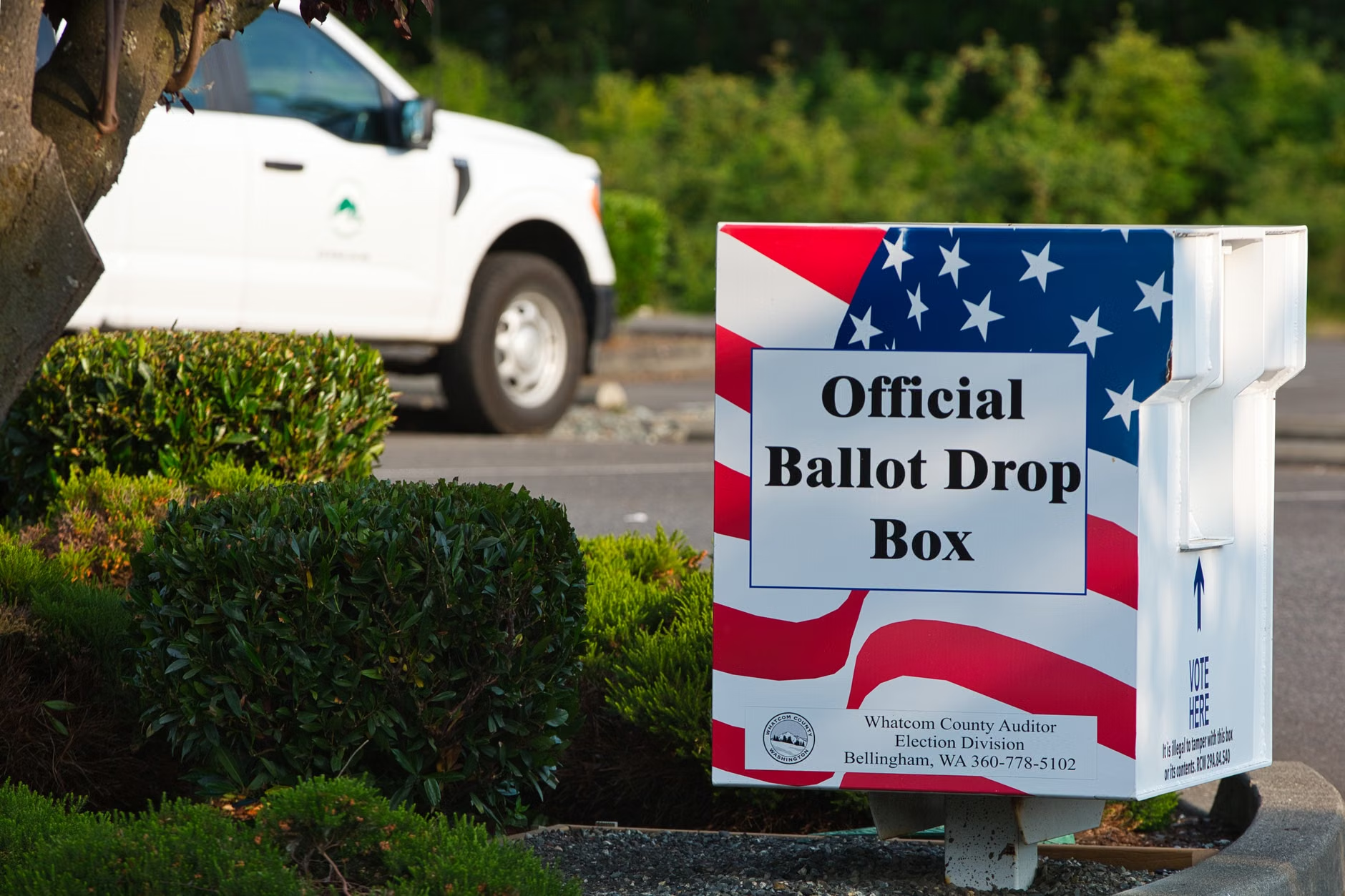
A breakdown of how 56,863 Burlington residents voted in the 2026 municipal and school board election, and what the turnout pattern shows about local democracy in Ontario.
The Burlington election results are now official, and the clearest finding is about how people voted rather than who won. The City of Burlington has declared the certified outcome of its 2026 municipal and school board election. Of 160,089 eligible voters, 56,863 cast a ballot, a turnout of 35.5 per cent.
The Ontario city spread voting across 13 days in October, from the opening of online voting on Oct. 14 to Voting Day on Oct. 26. More ballots came in online than at Voting Day polling stations, which makes Burlington a useful case study as municipalities across Canada weigh how far to go with digital voting.
How Burlington’s 56,863 Ballots Were Cast
The city reported three ways to vote, each with its own window. Online voting drew the most participation, ahead of the 24 voting locations open on Oct. 26.
| Voting method | Dates | Votes cast | Share of all ballots* |
|---|---|---|---|
| Online voting | Oct. 14 to 25 | 26,444 | 46.5% |
| Voting Day (24 locations) | Oct. 26 | 25,422 | 44.7% |
| Advance voting locations | Oct. 17 and 20 | 4,997 | 8.8% |
| Total | Oct. 14 to 26 | 56,863 | 100% |
*Shares are Brand Magazine calculations based on the city’s certified totals and are rounded to one decimal place.
The three channels add up exactly to the 56,863 total the city published. Online voting beat Voting Day by 1,022 ballots.
Online Voting Narrowly Outpaces the Traditional Polling Station
Nearly half of Burlington’s voters skipped the polling station. The 12-day online window ran from Oct. 14 through Oct. 25, closing the day before in-person Voting Day. Residents could cast a ballot from home over almost two weeks instead of on a single Monday.
In-person voting still made up a slight majority overall. Advance and Voting Day ballots together totalled 30,419, about 53.5 per cent of all votes. That split suggests Burlington voters are divided almost evenly between digital convenience and the familiar trip to a ballot box.
For other councils, the practical lesson is that online voting in Burlington did not replace in-person voting. It ran alongside it, and residents used both in large numbers. The city kept 24 Voting Day locations and two advance voting days, so voters who prefer paper ballots or in-person help still had options.
The Turnout Number: Roughly Two in Three Eligible Voters Stayed Home
A 35.5 per cent turnout means about 103,226 eligible Burlington residents did not vote. That figure comes from subtracting ballots cast from the city’s count of eligible voters. Put another way, fewer than four in ten eligible voters chose the people who will run the city and its schools for the coming term.
General context: Low turnout is a long-running feature of municipal politics in Canada. Local elections usually draw fewer voters than provincial or federal campaigns, even though city councils make decisions on property taxes, zoning, transit, roads and local services that affect residents every day. School board races often get even less attention.
The city’s announcement did not compare this turnout with earlier Burlington elections, and this article does not. Readers who want to judge whether participation rose or fell should compare certified figures from previous elections side by side, using the same eligible-voter basis.
Reading the Burlington Election Results Beyond the Headline Figure
The certified results cover both municipal offices and school board trustee positions. The city’s results portal lists candidate vote totals and outcomes for each race and offers a breakdown by voting location. The turnout and channel figures above apply to the election as a whole.
The city’s summary did not name winning candidates or give margins in its turnout announcement. Brand Magazine has not reproduced race-by-race outcomes here. Residents who want to know who won in their ward or trustee area should check the official certified tables directly, since those carry the declared, final counts.
Several features of this cycle are worth noting when reading the race-level numbers:
- New voting wards: The city’s election portal included a dedicated section on new voting wards, which points to ward changes for this election. Where boundaries moved, ward-level results may not compare directly with earlier elections.
- Location-level data: Results are available by voting location, so residents can see how individual neighbourhoods or polling sites voted, not just the citywide outcome.
- Two ballots in one: Because municipal and school board races ran together, total ballots cast do not necessarily match the number of votes recorded in any single race. Some voters may have skipped particular contests.
Why Burlington’s Voting Mix Matters Beyond Halton
Burlington’s numbers add to a wider debate across Ontario and the rest of Canada about how local elections should be run. Supporters of online voting argue it removes barriers for shift workers, people with mobility challenges, caregivers and residents who are travelling. Critics raise questions about security, verification and public trust in results that cannot be recounted the way paper ballots can.
Burlington’s data does not settle that debate, but it does show demand. When online voting was offered for nearly two weeks, more than 26,000 people used it. Whether that convenience brought in new voters, or simply moved existing voters to a different channel, cannot be determined from the totals alone.
The pattern differs from senior levels of government. Provincial and federal elections in Canada still rely mainly on paper ballots, and recent contests show how much attention final counts receive, as seen when the BC election final count handed the Conservatives a 64th seat. Municipal elections are the main testing ground for digital voting in this country, which is why individual cities’ results get close attention from election administrators.
The October Voting Calendar That Shaped the Result
The city’s schedule helps explain how ballots were distributed. Voting opened online first and closed with a single in-person day.
- Oct. 14: Online voting opens.
- Oct. 17: First advance voting day at in-person locations.
- Oct. 20: Second advance voting day.
- Oct. 25: Online voting closes.
- Oct. 26: Voting Day at 24 locations across the city.
Advance voting was the least-used option, with just under 5,000 ballots across its two days. With online voting available at the same time, residents who wanted to vote early appear to have mostly chosen to do it digitally instead of visiting an advance poll. That could shape how the city plans advance polling staff and locations in future elections.
Oct. 26, 2026, fell on the fourth Monday in October, the standard date for regular municipal elections in Ontario. Councils elected that day serve four-year terms under provincial rules.
Where Burlington Residents Can Check Certified Totals
The certified outcome, with candidate vote totals and the by-location breakdown, is posted on the city’s official election results page. Residents with questions about the results can contact the City of Burlington at 426 Brant St., by phone at 905-335-7777 or toll-free at 1-877-213-3609, or by email at city@burlington.ca.
The city closed its announcement by thanking everyone who voted. Next time, the bigger question for Burlington may be whether offering more ways to vote can raise turnout above the roughly one in three residents who took part this year.

The Brand Magazine Newsroom covers Canadian business, markets and policy news for brand builders and entrepreneurs. Newsroom reports are produced from published public sources such as company releases and government and regulator publications, and follow our Editorial Standards.