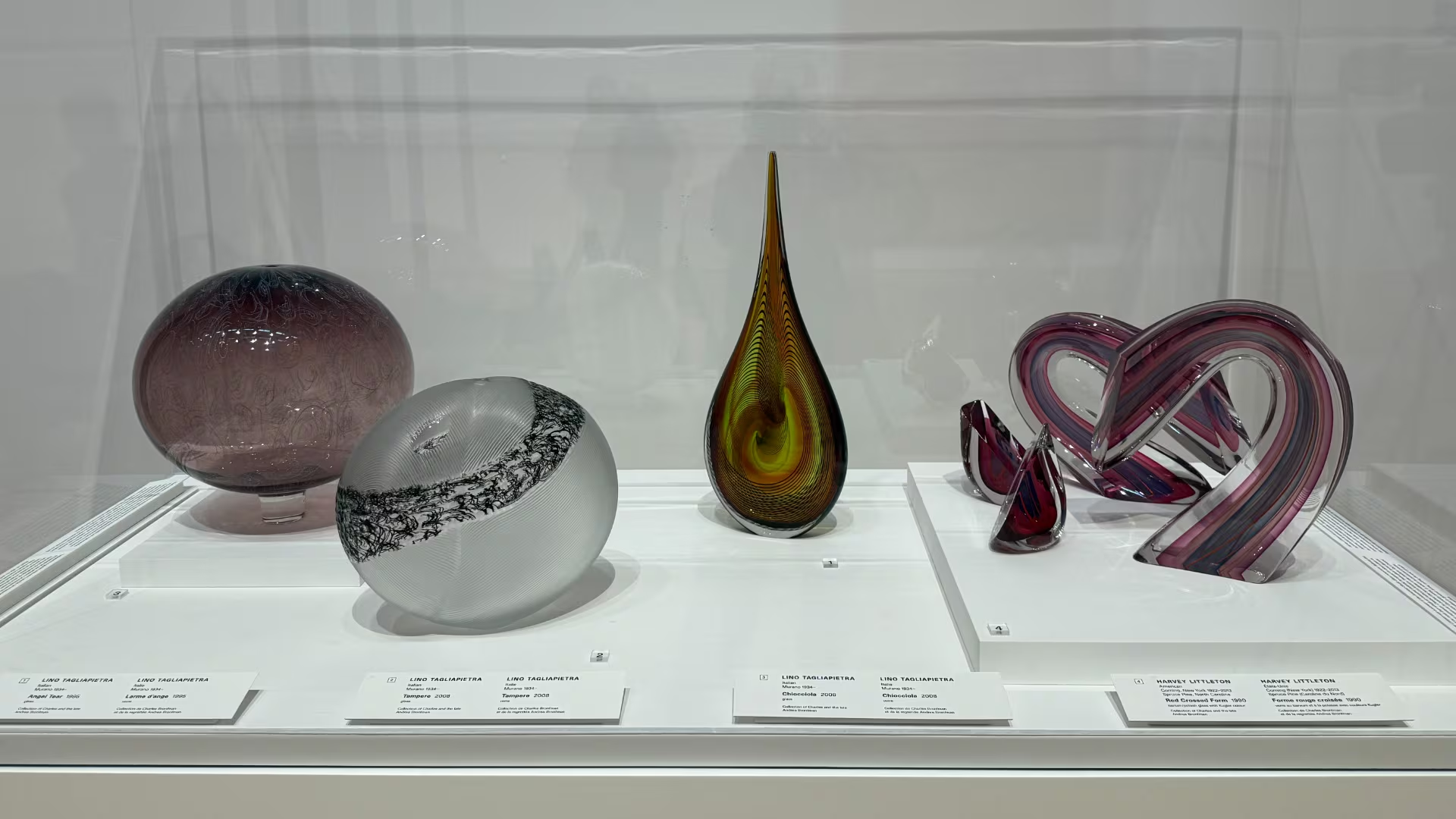
A gift of 56 glass works and an endowment from Charles and the late Andrea Bronfman is giving Ottawa's national gallery a stronger footing in decorative arts and design, and a year of programming to show it off.
The Bronfman glass donation has set off a full year of celebration at the National Gallery of Canada in Ottawa, where the institution began honouring the Bronfman family on November 20, 2026. Charles Bronfman and his late wife, Andrea Bronfman, are giving the gallery 56 works of glass art along with an endowment fund.
The gallery describes the gift as one that will significantly change its collection and open a new chapter for its decorative arts and design holdings. Pieces by two of the best-known names in modern glass, Italian maestro Lino Tagliapietra and American artist Harvey Littleton, are already on public display.
56 Works and an Endowment From Charles and Andrea Bronfman
The donation has two parts, and both matter. The first is the art itself: 56 glass works that move from private hands into the national collection. The second is an endowment fund, which gives the gallery a lasting source of money tied to the gift rather than a one-time transfer of objects.
The value of the works and the size of the endowment have not been specified. Nor has the gallery said publicly how the endowment will be spent, whether on acquisitions, conservation, research or programming.
Here is what has been confirmed so far:
| Detail | What is known |
|---|---|
| Recipient | National Gallery of Canada, Ottawa |
| Donors | Charles Bronfman and the late Andrea Bronfman |
| Number of works | 56 pieces of glass art |
| Financial component | An endowment fund (amount not specified) |
| Artists on display | Lino Tagliapietra and Harvey Littleton, among others in the gift |
| Celebration | A one-year program honouring the Bronfman family, launched November 20, 2026 |
| Full list of works | Not specified |
| Event schedule | Not specified |
Tagliapietra and Littleton Pieces Now Facing the Public
Among the first works visitors can see are pieces by Lino Tagliapietra and Harvey Littleton. Their pairing is a fitting introduction, because the two men represent different but connected traditions in 20th-century glass.
Harvey Littleton (general context): The American artist and educator is widely credited as a founding figure of the Studio Glass movement. In 1962, he led workshops at the Toledo Museum of Art in Ohio that showed glass could be melted and blown in a small furnace by an individual artist, rather than only in a factory. That idea helped turn glass from an industrial material into a medium for independent artists.
Lino Tagliapietra (general context): Born on the Venetian island of Murano, Tagliapietra trained in its centuries-old glassmaking workshops from boyhood and became one of the most respected glassblowers of his generation. He is known for sharing traditional Venetian techniques with North American studio artists, a role that helped shape the look of contemporary glass far beyond Italy.

Seen side by side, their work traces a line from European craft heritage to the North American studio approach. The gallery has not released a complete list of the other artists represented among the 56 works.
Why the Bronfman Glass Donation Reshapes Decorative Arts and Design
The gallery’s own framing, a “new chapter” for decorative arts and design, signals how it sees the gift. National museums are often best known for painting, sculpture and photography, and decorative arts can occupy a smaller corner of the building and the budget. A collection of 56 works in a single medium gives the gallery depth it can build exhibitions around.
For readers, the practical effect is straightforward. Works that may have been seen by few people are now held by a public institution and can be shown, studied and lent. A gift that arrives with its own endowment also eases a common concern for museums: the long-term cost of caring for, storing and displaying fragile objects.
Glass presents specific challenges. Large or delicate pieces need careful mounting, lighting and climate control, and conservation expertise is specialized. Funding attached to the gift could help address those needs, though the gallery has not detailed its plans.
The donation also fits a wider conversation about how Canadian institutions expand what counts as fine art. Brand Magazine has explored similar questions in its look at how Elizabeth MacKenzie’s bubble drawings make a case for art that heals, where materials and process sit at the centre of the work’s meaning.
The Bronfman Family’s Long Footprint in Canadian Public Life
The year-long program is a tribute to a family whose name is familiar to many Canadians. General context: Charles Bronfman, a Montreal-born businessman from the family behind the Seagram distilling empire, is known for his philanthropy and for cultural projects that reached a wide audience, including the Heritage Minutes short films produced through his family foundation. He was also the founding owner of the Montreal Expos.
Andrea Bronfman, his wife and partner in much of that philanthropic work, died in 2006. The gift being made in both of their names means the collection carries her legacy into the national collection as well.

Major private donations have long been one of the main ways public galleries in Canada grow their collections. Acquisition budgets rarely stretch far enough to assemble a body of work like this one through purchases alone, which is why gifts of this kind tend to be marked publicly.
Studio Glass: How a Craft Became Collectible Art
General context: Before the 1960s, most glass in North America came out of factories, designed for use rather than display. The Studio Glass movement changed that by putting furnaces in the hands of individual artists, many of them working in universities and small studios.
Over the following decades, the movement drew on European expertise, particularly from Murano, and produced a generation of artists who treated glass the way painters treat canvas. Several developments shaped that shift:
- Smaller furnaces: Artists could work independently rather than relying on industrial glassworks.
- University programs: Glass courses spread through art schools, training new practitioners.
- Exchange with Venetian masters: Visiting glassblowers taught complex traditional techniques to studio artists.
- Private collectors: Dedicated collectors built significant holdings that, over time, have moved into museums.
The Bronfman gift follows that last pattern. A collection assembled privately is now positioned to become a public reference point for the medium in Canada.
A Year of Bronfman Programming in Ottawa
The celebration launched on November 20, 2026, and is planned to run for one year. The gallery has not yet published a detailed schedule of exhibitions, talks or related events tied to the program.
For now, visitors can see works by Tagliapietra and Littleton on display. Anyone planning a trip to the gallery on Sussex Drive should check the institution’s own announcements for updates on which pieces are shown and when additional works from the 56-piece gift may appear.
What is clear is the scale of the moment for the gallery. A single donation that brings dozens of works, dedicated funding and a year of public attention is a rare event, and it puts glass, a medium often treated as secondary, at the front of Canada’s national art conversation for the year ahead.

The Brand Magazine Newsroom covers Canadian business, markets and policy news for brand builders and entrepreneurs. Newsroom reports are produced from published public sources such as company releases and government and regulator publications, and follow our Editorial Standards.