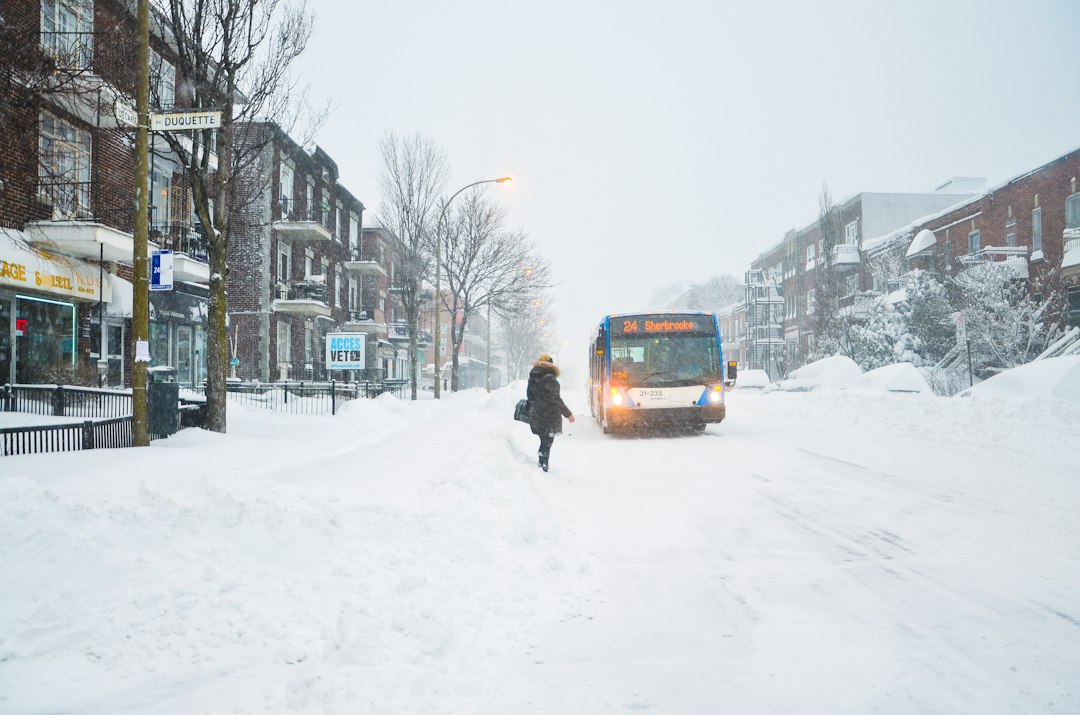
A plain-language guide to how 'extreme' is used in weather headlines and how Canadians can turn alerts into action.
Extreme weather in Canada has become one of the most repeated phrases in the country’s news cycle, attached to heat waves, wildfire smoke, floods, ice storms and late-season hurricanes alike. As another year of weather headlines winds down in November 2026, it is worth asking a simple question that shapes how Canadians respond to every alert: what does “extreme” actually mean?
The answer matters to households planning commutes, to businesses protecting supply lines, and to anyone deciding whether a warning on their phone calls for action or just attention. The word carries more than one meaning, and the gap between those meanings is where confusion tends to grow.
Two Meanings Hiding Inside the Word “Extreme”
Dictionary definitions draw a useful line. In its strictest sense, “extreme” suggests something approaching the farthest limit possible or imaginable, the outer edge of what can happen. In everyday use, it more often means something only to a notably high degree: unusual and significant, but not necessarily unprecedented.
The word also sits among a family of close relatives, including excessive, exorbitant, extravagant, immoderate and inordinate. All of them share a core idea of going beyond a normal limit. What sets “extreme” apart is that it can point toward the absolute edge, which helps explain why it lands with such force in a headline.
For news readers, this double meaning is the key. When a forecast or story calls an event “extreme,” it may mean a record-shattering outlier, or it may simply mean conditions well outside what is typical for that place and season. Both are worth taking seriously, but they call for different levels of response.
Why “Extreme Weather in Canada” Covers So Much Ground
Canada’s size and range of climates make the phrase unusually elastic. What counts as extreme in coastal British Columbia looks very different from what counts as extreme on the Prairies, in the North or in Atlantic Canada. A temperature that would pass unnoticed in one region can strain power grids, health systems and infrastructure in another.
That is the practical side of the “beyond a normal limit” definition. Weather becomes extreme relative to local norms, which is why the same reading can trigger an alert in one province and a shrug in the next. In general terms, Canadians regularly face several distinct categories of high-impact weather:
- Heat events: stretches of unusually high temperatures, particularly risky where homes and workplaces lack cooling.
- Wildfire smoke: poor air quality that can travel hundreds of kilometres from the fires themselves.
- Flooding: from spring melt, heavy rainfall or storm surge along coastlines.
- Winter storms and ice: freezing rain, blizzards and extreme cold that disrupt travel and power.
- Tropical systems: remnants of Atlantic hurricanes, whose season officially runs from June 1 to November 30, reaching the Maritimes and Newfoundland and Labrador.
Grouping all of these under a single word is convenient for headlines, but it can blur the very different risks and precautions each one involves.
Watches, Warnings and Statements: How Canadian Alerts Grade Severity
Canada’s public weather alerts are designed to do the work that a single word cannot: separate the merely unusual from the genuinely dangerous. Environment and Climate Change Canada issues alerts in tiers, and understanding the difference is one of the most useful habits a reader can build.
| Alert type | What it generally signals | Reasonable reader response |
|---|---|---|
| Special weather statement | Unusual conditions that may not meet warning criteria | Stay informed and check forecasts |
| Advisory | A specific hazard that is less severe but still disruptive | Adjust plans where the hazard applies |
| Watch | Conditions are favourable for severe weather to develop | Prepare and be ready to act |
| Warning | Severe weather is occurring or expected | Take protective action now |
For the most urgent situations, Canada’s Alert Ready system can push emergency messages to compatible mobile devices, television and radio. These alerts are reserved for threats to life and safety, so an Alert Ready message deserves immediate attention regardless of how often the word “extreme” has appeared in the news that week.
Wildfire smoke has its own tool as well. The Air Quality Health Index gives a numbered reading that helps people, especially those with heart or lung conditions, decide how much time to spend outdoors.
When Headlines Say “Extreme” but Forecasts Say “Watch”
Newsrooms and forecasters use language differently. A news story may call a storm extreme because it is newsworthy, while the official alert for the same storm sits at the watch level. Neither is wrong, but readers who rely only on the headline can either overreact or, after many alarming headlines, start tuning out.
That second risk, often described as alert fatigue, is the more dangerous one. If every rainstorm is described in the same urgent terms as a once-in-a-generation flood, the warning that truly matters can get lost in the noise. The practical fix is to treat the headline as a prompt and the official alert level as the guide to action.
Following live events well is its own skill. Our guide to how breaking news in Canada now unfolds and how to follow it well offers practical ways to separate verified updates from early speculation during fast-moving situations, including severe weather.
Attribution Science and the Question of “Is This Climate Change?”
After almost every major weather event, a familiar question follows: did climate change cause this? A growing field known as attribution science tries to answer it with more precision than a simple yes or no. Researchers compare how likely or how intense a given event would be in today’s climate against a modelled world without human-driven warming.
The results are usually expressed as changes in probability or severity rather than direct cause. That nuance mirrors the dictionary distinction above. An event can be extreme in the everyday sense, notably beyond normal, without being the absolute limit of what the climate can produce. Attribution studies help explain whether such events are becoming more frequent or more intense over time.
For readers, the takeaway is to look for what a study actually measured. Claims that an event was made “more likely” or “more intense” are specific findings, and they are more informative than broad statements that lump every storm into one category.
What Extreme Weather Means for Canadian Businesses
For the entrepreneurs and brand builders who read this magazine, weather is no longer just a seasonal inconvenience. Disruptions can close storefronts, delay shipments, interrupt staffing and push up costs for insurance and repairs. Even a business far from the event itself can feel the impact through suppliers and transport routes.
In general terms, companies that weather these events best tend to have a few things in place:
- A clear alert plan: who monitors official warnings and who decides when to close, delay or switch to remote work.
- Supplier mapping: knowing which partners sit in flood, wildfire or storm-exposed regions.
- Communication templates: ready-to-send messages for customers and staff when operations change.
- Insurance reviews: confirming what weather-related losses are and are not covered before a claim is needed.
Supply chains are often where weather risk hides. Our feature on how to design global supply chains in 2026 explores the broader push toward resilience that climate disruptions have helped accelerate.
Reading the Next “Extreme” Headline With Confidence
The word “extreme” will keep appearing in Canadian weather coverage, and for good reason. It signals that something has moved beyond normal limits. But because it can mean anything from “notably intense” to “the edge of what is possible,” the word alone rarely tells readers what to do.
A simple routine helps: read the headline, check the official alert tier for your area, and act on that. Keep notifications enabled for Alert Ready, watch the Air Quality Health Index during smoke season, and treat a warning as a cue for action rather than background noise.
Safety note: During any active weather event, follow instructions from Environment and Climate Change Canada and your local emergency officials, which take priority over general guidance in any article.
Frequently Asked Questions
What is the difference between a weather watch and a weather warning?
A watch means conditions could produce severe weather, so you should prepare. A warning means severe weather is happening or expected, so you should take protective action.
Does “extreme weather” always mean a record-breaking event?
No. In common use, “extreme” often means notably beyond normal rather than the absolute limit, so an event can be extreme without setting a record.
How do I receive emergency weather alerts on my phone in Canada?
Compatible mobile devices connected to Canadian wireless networks can receive Alert Ready emergency messages, which are reserved for threats to life and safety.
What does attribution science actually tell us?
It estimates how climate change has altered the likelihood or intensity of a specific weather event, rather than declaring it the sole cause.

The Brand Magazine Newsroom covers Canadian business, markets and policy news for brand builders and entrepreneurs. Newsroom reports are produced from published public sources such as company releases and government and regulator publications, and follow our Editorial Standards.