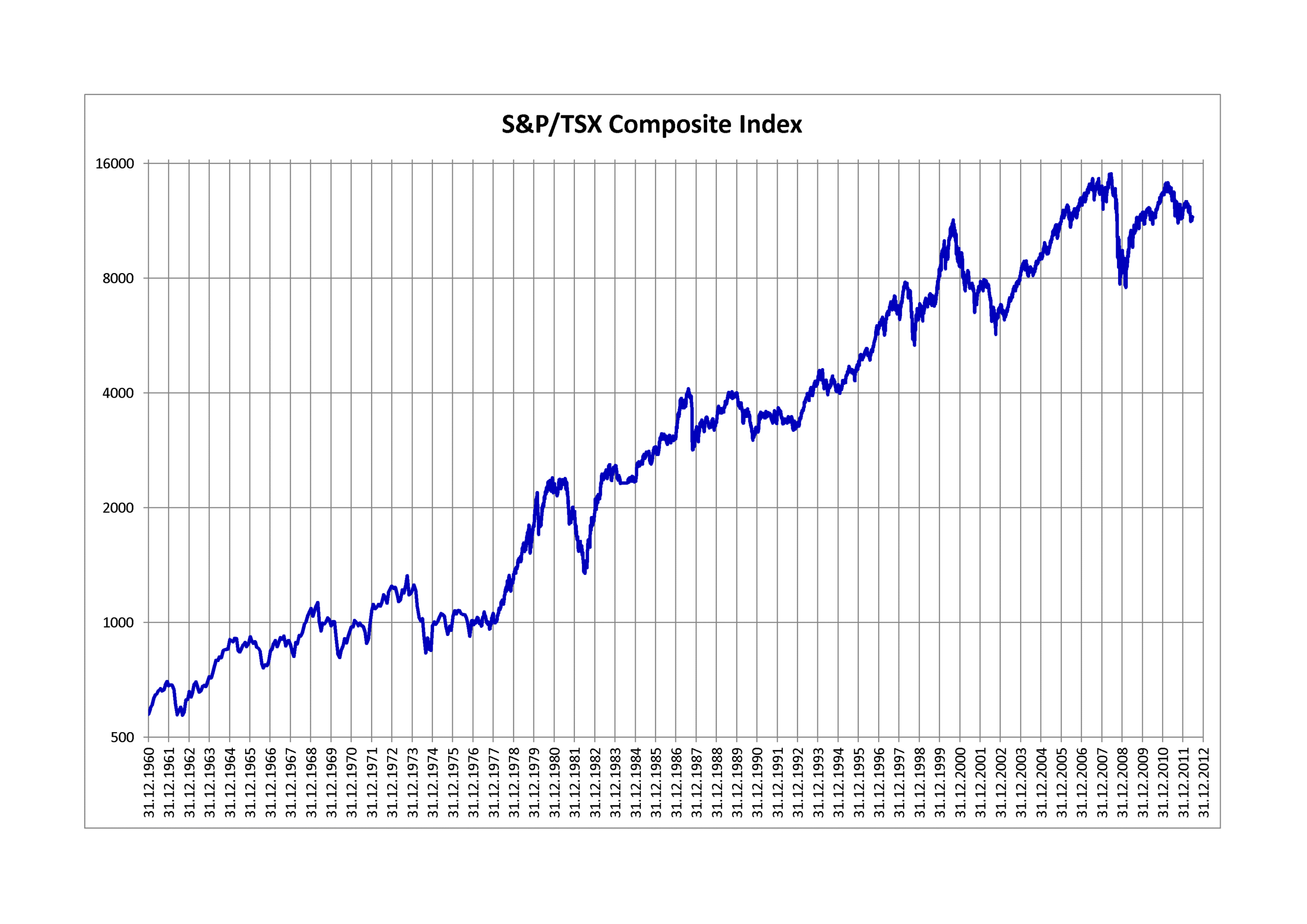
A near-flat Canadian close hid a tug-of-war between firm commodity shares and a services sector that has now contracted for four months running.
The TSX Composite closed Monday with the slimmest of gains, finishing 15.90 points higher at 35,518.55 — a move of just 0.04% that masked a day of competing pressures on Canada’s benchmark index. The market had been lower earlier in the session before strength in commodity-linked shares pulled it back above the flat line.
Behind the near-flat finish sat a discouraging domestic data point: Canada’s services sector contracted in September for the fourth consecutive month. Add lingering geopolitical uncertainty, and the result was a Canadian market that spent the day consolidating while U.S. equities ran ahead.
A 15.90-Point Close at 35,518.55
Monday’s result was, in practical terms, a stalemate. A 0.04% advance is well inside the range of daily noise, and the index ended the session roughly where it began — but the path there mattered more than the number.
The S&P/TSX Composite traded in the red earlier in the day before recovering. That intraday reversal is the detail worth noting: buyers stepped in rather than letting the weak domestic reading set the tone through the close.
For an index that has recently delivered far larger single-day swings in both directions, a quiet session is itself a signal. It suggests investors are weighing conflicting inputs rather than committing to a clear direction.
Commodity-Linked Shares Did the Heavy Lifting
The gains that rescued the session came from commodity-linked names — the resource-heavy cohort that gives the Canadian market much of its character and much of its volatility.
This is a structural feature of the TSX rather than a one-day quirk. Energy, materials and mining issuers make up a far larger share of the Canadian benchmark than they do of the major U.S. indexes, which means moves in crude, base metals and precious metals feed directly into the index level.
That weighting cuts both ways. Resource strength can offset weakness elsewhere, as it did Monday, but the same concentration has dragged the index lower on other sessions — including the day the S&P/TSX Composite slipped 81 points on materials weakness. Canadian investors effectively hold a commodity position whether or not they intend to.
Four Straight Months of Services Contraction
The domestic data was the session’s clearest negative. Canada’s services sector shrank again in September, extending its contraction to a fourth consecutive month.
Services matter disproportionately to the Canadian economy. Finance, retail, transportation, professional services, hospitality and health care together employ the bulk of the workforce — far more than resource extraction, despite the resource sector’s outsized presence on the stock exchange.
A sustained services contraction therefore speaks to domestic demand, hiring intentions and household activity in a way that a single month of weakness would not. Four months in a row moves the reading from a blip toward a trend.
It also creates an awkward split for the market: the companies that dominate the index are not the companies most exposed to the part of the economy that is weakening. That disconnect helps explain how the TSX Composite can finish higher on a day the domestic data disappoints.
How Services Weakness Feeds the Bank of Canada Debate
Soft activity data complicates the policy conversation. Markets have been actively re-pricing the odds around the central bank’s next move, with rate hike calls building ahead of the Oct. 28 decision.
A contracting services sector is the kind of print that argues against tightening, since it points to cooling domestic demand. Other indicators have pointed the other way, which is precisely why forecasters have been divided.
Equity investors watch this closely because the rate path shapes borrowing costs, bank margins, valuations for long-duration growth names and the Canadian dollar. Until the decision lands, data releases like Monday’s services reading will keep moving expectations in small increments.
Note: the figures above are market and economic data as reported, not investment advice. Index levels change continuously during trading hours.
Nasdaq’s Record Close at 27,477.31 Outpaced Canada
U.S. markets had a materially better session. The Nasdaq Composite rose 1.1% to a record closing level of 27,477.31, while the Dow Jones Industrial Average added 0.2% to finish at 51,268.37.
The gap between a 1.1% advance south of the border and a 0.04% gain in Toronto is the story of the day in one comparison. Index composition is the simplest explanation: the Nasdaq is weighted toward technology and growth, the TSX toward financials and resources.
When the market’s enthusiasm is concentrated in technology, Canada tends to participate only partially. The reverse holds when commodities lead.
| Index | Change | Close |
|---|---|---|
| S&P/TSX Composite | +15.90 points (+0.04%) | 35,518.55 |
| Nasdaq Composite | +1.1% (record close) | 27,477.31 |
| Dow Jones Industrial Average | +0.2% | 51,268.37 |
Geopolitical Uncertainty Keeps a Lid on Conviction
Lingering geopolitical uncertainty was also cited as a drag on sentiment. The specific risks were not detailed in the reporting, but the market effect of such uncertainty is familiar.
- Reduced position sizing: Investors tend to trade smaller and hedge more when headline risk is unresolved.
- Commodity sensitivity: Energy and metals prices often react first to geopolitical news, which transmits quickly into the resource-heavy Canadian index.
- Range-bound sessions: Uncertainty tends to produce choppy, directionless trading rather than sustained trends — close to what Monday delivered.
Where Monday Sits in the TSX Composite’s Recent Run
Context makes the flat close more interesting. Recent sessions have been anything but calm, including a day when the TSX Composite rose 348 points as economic resilience drew focus after a stretch of declines.
Against swings of that size, a 15.90-point move reads as a pause. The index has been moving between optimism about resilience and caution about softening domestic activity, and Monday caught it mid-argument.
At 35,518.55, the benchmark remains near the upper end of the levels it has traded around in recent sessions. The near-term question is whether commodity strength can continue absorbing weak domestic prints, or whether a fifth month of services contraction would finally force the issue.
What Canadian Investors Should Watch Next
Two threads will shape the weeks ahead for the Canadian market, based on what is currently known.
- The Oct. 28 Bank of Canada decision: Forecasters remain split, and each data release moves the probability.
- The next services reading: A fifth consecutive contraction would strengthen the case that domestic demand is genuinely slowing rather than pausing.
- Commodity price direction: With resource names supplying Monday’s gains, energy and metals prices remain the most direct lever on the index.
- U.S. technology momentum: Record closes on the Nasdaq support broad sentiment, but the TSX’s lighter technology weighting limits how much of that lift carries north.
Frequently Asked Questions
How much did the TSX Composite gain on Monday?
The S&P/TSX Composite rose 15.90 points, or 0.04%, to close at 35,518.55 after trading lower earlier in the session.
Why did the index finish higher if the economic data was weak?
Gains in commodity-linked shares offset the drag from the services contraction. Resource companies carry heavy weight in the Canadian benchmark and are not the sector most exposed to domestic services demand.
What does a services sector contraction actually mean?
It indicates activity in service industries declined compared with the previous month. September marked the fourth consecutive month of contraction in Canada.
Why did U.S. markets perform better than the TSX?
The Nasdaq Composite, weighted toward technology, climbed 1.1% to a record close of 27,477.31. The TSX has a smaller technology weighting and a much larger resource and financial component, so it participates less in technology-led rallies.

The Brand Magazine Newsroom covers Canadian business, markets and policy news for brand builders and entrepreneurs. Newsroom reports are produced from published public sources such as company releases and government and regulator publications, and follow our Editorial Standards.