New spring 2026 trial data suggest light-shifting glass helped greenhouse lettuce produce more food per litre of water, though the figures come from the company and a conference presentation rather than an independent review.
Greenhouse water-use efficiency improved by roughly 9% when hydroponic lettuce was grown beneath quantum dot-treated glass, according to new University of California, Davis trial results released on November 24, 2026, by U.S. materials company UbiQD. The New Mexico-based firm says its UbiGro glass helped plants turn each litre of water into more harvestable lettuce, adding a water dimension to earlier claims about yield.
The findings arrive as growers across North America, including Canada’s sizeable greenhouse vegetable sector, look for ways to grow more food without drawing more heavily on energy or water. The company frames the technology as passive: it changes the light coming through the roof rather than adding equipment inside the greenhouse.
What UC Davis Measured Under UbiGro Quantum Dot Glass
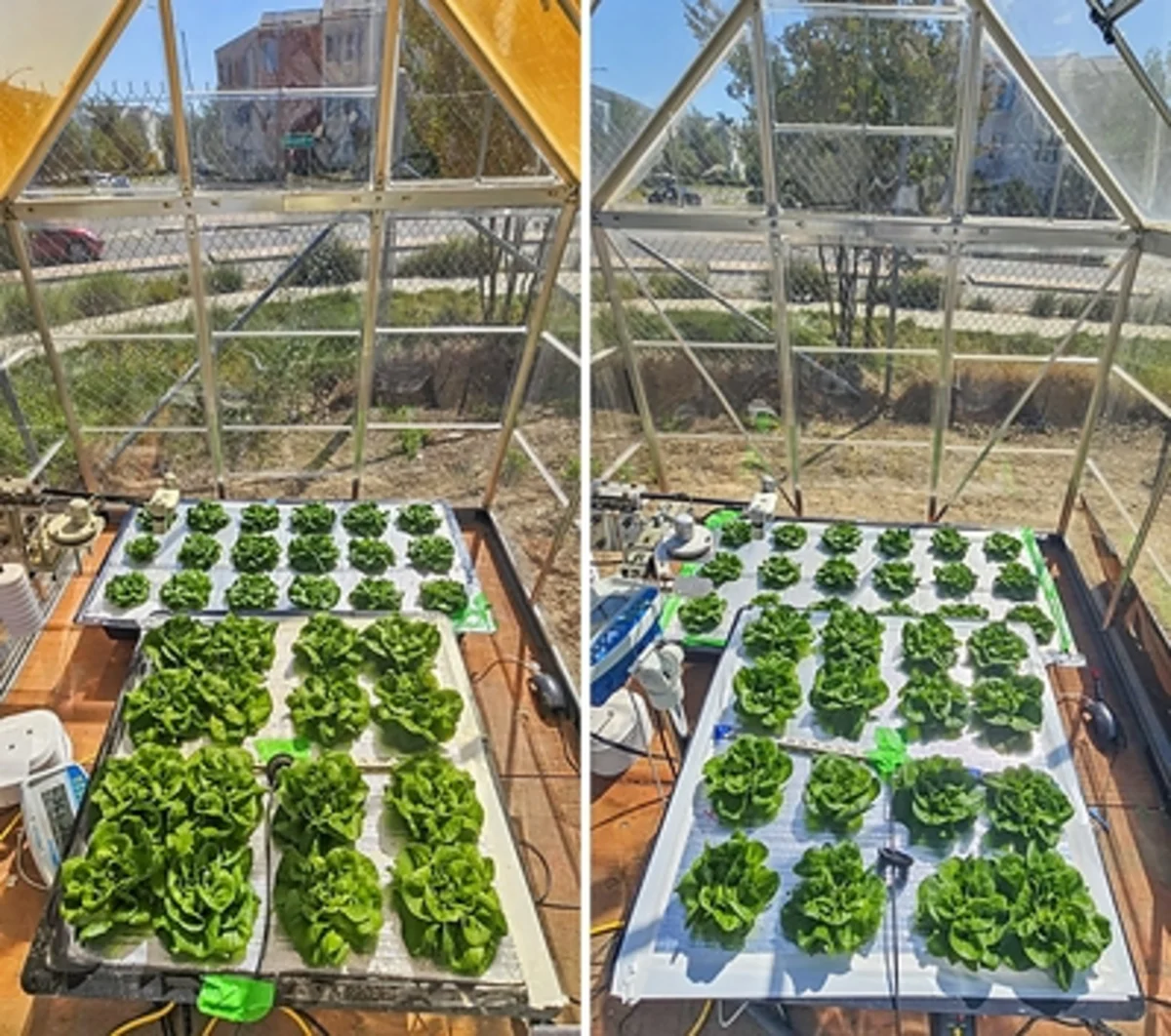
The new data come from a series of greenhouse trials run at UC Davis in spring 2026. Researchers grew butterhead lettuce in hydroponic systems, comparing plants under glass integrated with quantum dots against plants under conventional greenhouse glazing.
The headline numbers reported by UbiQD are:
- Water-use efficiency: about 101 grams of fresh lettuce biomass per litre of water under quantum dot glass, versus 93 grams per litre under standard glass, an improvement of roughly 9%.
- Yield: fresh biomass rose by 21% under the treated glass.
- Total water use: measured consumption increased by 10.6%.
The researchers also examined how solar radiation, temperature and atmospheric moisture demand shaped how much water the plants used. That work is aimed at helping growers monitor and predict irrigation needs in greenhouses fitted with this type of glazing.
Why Greenhouse Water-Use Efficiency Rose Even as Total Water Use Climbed
At first glance, a 10.6% jump in water consumption sounds like the opposite of a conservation story. The key is the ratio. Because the lettuce grew 21% more biomass while using only about 10.6% more water, output outpaced consumption, and the grams-per-litre figure improved.
That distinction matters for how readers interpret the result. The trial does not show a greenhouse using less water in absolute terms; it shows a greenhouse producing more lettuce for every litre it uses. For a grower selling by weight, that is a productivity gain. For a region managing a fixed water supply, it means more food from the same allocation.
Eric Moody, UbiQD’s vice-president of sales and marketing, put it in commercial terms, saying growers have always tracked yield but that the amount of crop produced per litre of water is becoming just as important to them.
The Winter 2025 Lettuce Trial That Set Up This Research
The spring results build on an earlier UC Davis trial conducted in winter 2025. That work was funded through the U.S. Department of Agriculture’s National Institute of Food and Agriculture under its Small Business Innovation Research (SBIR) Phase 1 program.
| Trial | Season | Crop | Reported result under UbiGro glass |
|---|---|---|---|
| USDA/NIFA SBIR Phase 1 trial | Winter 2025 | Lettuce | 37.8% more fresh biomass; about 41% higher light-use efficiency |
| Follow-up hydroponic trials | Spring 2026 | Butterhead lettuce | 21% more fresh biomass; about 9% higher water-use efficiency (101 g/L vs. 93 g/L) |
UbiQD presents the two trials as complementary, arguing that together they show modified sunlight can improve crop performance in different seasons and growing conditions. The earlier work was published in the journal Materials Today Sustainability under the title “Spectrally selective quantum dot laminated glass for photonic modulation and climate regulation in greenhouses.”
How Quantum Dot Glazing Reworks Sunlight Without Extra Energy
Quantum dots are nanoscale semiconductor particles that absorb light and re-emit it at different wavelengths, a form of fluorescence. UbiQD says UbiGro uses that effect to reshape the sunlight entering a greenhouse into a spectrum it describes as more favourable for crops.
The company’s pitch rests on simplicity. Unlike supplemental lighting or upgraded irrigation hardware, the glass draws no power and requires no change to how plants are watered or fed. “Our focus with UbiGro has been to help growers produce more with the sunlight they already receive,” chief executive Hunter McDaniel said, adding that the water results suggest optimizing sunlight could address both productivity and resource efficiency.
UbiQD was founded in 2014 and is headquartered in Los Alamos, New Mexico. It licenses technology developed at institutions including Los Alamos National Laboratory and the Massachusetts Institute of Technology, and applies its quantum dots in agriculture, clean energy and security products.
Aquifer Depletion Puts Crop-Per-Litre Thinking in Focus
The company tied the announcement to wider concerns about agricultural water. It cited recent research finding that about 70% of the groundwater used to irrigate specialty crops in the United States comes from aquifers being drained faster than they naturally recharge.
Those pressures are part of a broader pattern of climate-linked strain on food systems; extreme heat and drought feature heavily in rankings such as the Climate Risk Index tracking 2025’s most weather-battered countries. Against that backdrop, any tool that lifts output per unit of water draws attention from growers, investors and policymakers alike.
What Quantum Dot Glass Could Mean for Canadian Greenhouse Growers
The following is general industry context; UbiQD’s announcement did not mention Canadian trials, partners, availability or pricing.
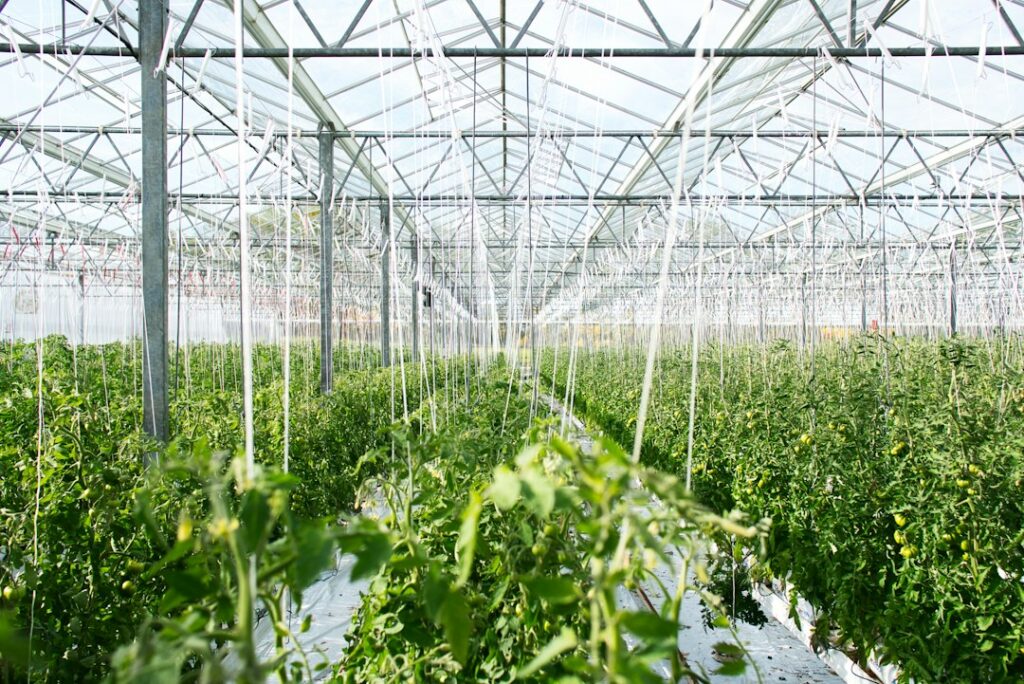
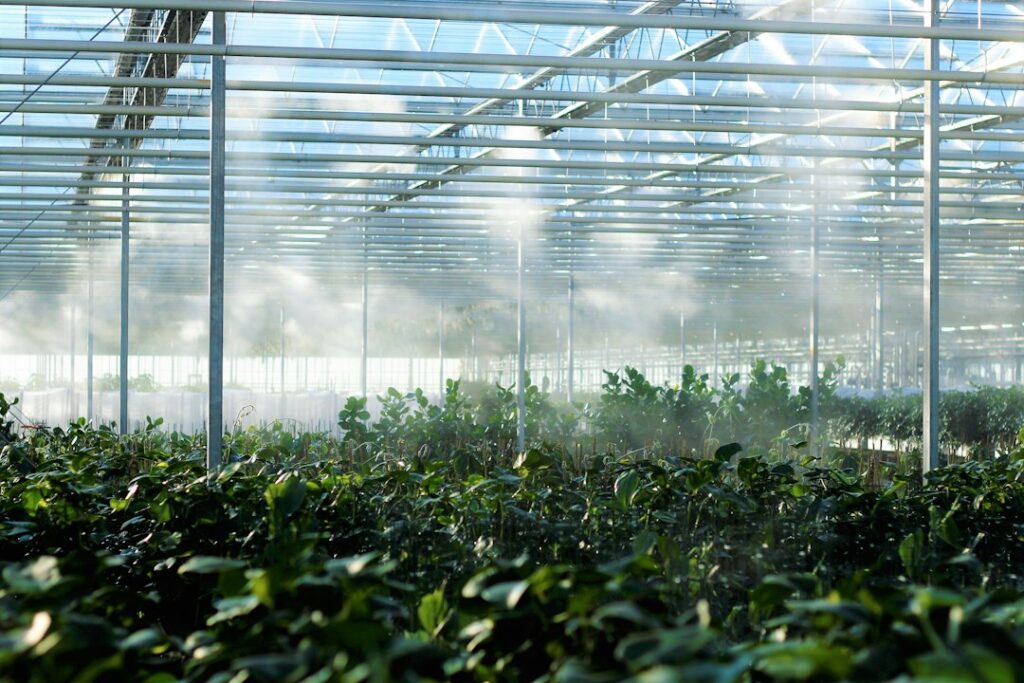
Canada has one of North America’s most developed greenhouse vegetable industries, concentrated largely in southwestern Ontario, with significant production in British Columbia and Quebec. Lettuce and leafy greens, along with tomatoes, cucumbers and peppers, are mainstays, and many operations already rely on hydroponic systems similar to those tested at UC Davis.
Several aspects of the research are relevant to Canadian operators:
- Winter light: Short, dim winter days at northern latitudes push many Canadian growers toward supplemental lighting. The winter 2025 trial’s reported 41% gain in light-use efficiency speaks directly to that constraint, though results from California may not translate to Canadian conditions.
- Operating costs: A passive glazing product that needs no electricity could appeal in provinces where energy is a major greenhouse expense, if gains hold up commercially.
- Water planning: Even where water is relatively plentiful, the researchers’ work on predicting water demand under treated glass could inform irrigation and nutrient management.
- Retrofit questions: Growers would need to weigh the cost of replacing or laminating existing glazing against expected yield gains, figures the announcement does not provide.
For now, the findings are a signal worth watching rather than a proven case for Canadian adoption. Independent trials under local light, temperature and crop conditions would be the natural next test.
Where the UC Davis Evidence Stands
Readers should note how the results reached the public. The figures were released by UbiQD in a paid press release, and the spring 2026 findings were presented at the 2026 American Society of Agricultural and Biological Engineers Annual International Meeting under the title “Crop Water Use and Evapotranspiration Estimation in Deep Water Culture Hydroponic System under Quantum Dot Glazed Greenhouse.” Conference presentations do not always undergo the same review as journal articles.
The trials also focused on a single crop type, lettuce, grown hydroponically. Whether similar gains appear in fruiting crops, soil-based systems or large commercial facilities has not been reported. That gap between controlled studies and day-to-day business practice is a familiar one, echoing a broader research-practice gap in how academic findings reach decision-makers.
Frequently Asked Questions
Did the quantum dot glass reduce water use?
No. Total water use rose by 10.6%, but lettuce output rose 21%, so more biomass was produced per litre.
What crop was tested?
Butterhead lettuce grown in hydroponic systems at UC Davis, compared against plants under conventional greenhouse glass.
Who funded the earlier research?
The winter 2025 trial was funded by the USDA’s National Institute of Food and Agriculture through its SBIR Phase 1 program.
Is UbiGro glass available to growers in Canada?
Not specified. The announcement did not address Canadian availability, distribution or pricing.

The Brand Magazine Newsroom covers Canadian business, markets and policy news for brand builders and entrepreneurs. Newsroom reports are produced from published public sources such as company releases and government and regulator publications, and follow our Editorial Standards.