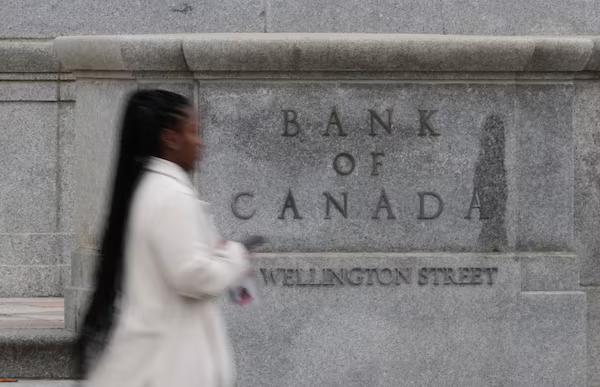
The first increase in three years is aimed at an oil-driven price shock, and it raises new questions for borrowers, savers and the loonie heading into 2027.
The Bank of Canada rate hike announced on Wednesday, Oct. 29, lifted the central bank’s benchmark policy rate to 2.5 per cent from 2.25 per cent. It is the bank’s first increase in three years. Its governing council said the move is meant to stop elevated oil prices from hardening into a lasting inflation problem.
The quarter-point increase is modest on its own. What it signals about the road ahead matters far more for households with variable-rate debt, for a housing market that was already struggling, and for savers watching GIC and savings-account rates. Here is what the decision means, and where the uncertainty lies.
Why the Bank of Canada Rate Hike Targets an Oil Shock, Not an Overheated Economy
The pressure behind this increase is narrow. It comes from energy, not from runaway consumer demand. With conflict in the Middle East disrupting oil supply, fuel costs have pushed up headline inflation for months.
Economists widely agree that interest rates are a blunt tool against a supply shock. Higher borrowing costs cool demand inside Canada, but they do nothing to move tankers through the Strait of Hormuz. That is why the Bank of Canada spent roughly eight months “looking through” the jump in oil prices rather than reacting to it.
The bank’s patience has limits. The longer oil stays expensive, the greater the risk that higher fuel costs spread into the wider economy. Freight and transport charges could rise, and businesses that have so far absorbed higher energy bills could start passing them on to customers.
Current data show little sign of that spillover into the broader Consumer Price Index basket. Even so, the bank’s new forecast has headline inflation staying above 3 per cent for most of next year. That is well above its 2 per cent target. The hike is best read as a pre-emptive strike, and economists remain divided on whether it was needed.
One Mandate: Why the Bank Treats 2 Per Cent Inflation as Non-Negotiable
The Bank of Canada has a single mandate: to keep inflation running at about 2 per cent a year. It treats that pace as the working definition of a stable currency. When it has to choose, other economic concerns come second, even if meeting the target means slowing a fragile economy.
The reasoning goes beyond the price of groceries or gas. Affordability suffers when prices outrun wages. However, the bank’s deeper concern is that steady, predictable inflation lets households and companies plan budgets, investments and wage agreements with confidence. In that view, price stability is a public good in its own right, apart from its effect on any single cost of living.
How High Could Rates Go? Markets Point Toward 3.25 Per Cent
Central banks rarely raise rates once and stop, so most observers expect further increases. The open question is how many.
Interest rate swap markets, which reflect what bond traders expect from monetary policy, are pricing in three more quarter-point increases by the end of 2027. That would take the policy rate to 3.25 per cent. Some Bay Street analysts consider that path too aggressive and expect only one or two more hikes over the next year.
| Market expectation | Detail |
|---|---|
| Current policy rate | 2.5 per cent (up from 2.25 per cent) |
| Odds of another hike in December | About 54 per cent, according to bond-market pricing |
| Next quarter-point hike | Fully priced in by January |
| Additional tightening over the next 12 months | About 75 basis points (three quarter-point hikes) |
| Implied rate by end of 2027 | 3.25 per cent, based on swap-market pricing |
These figures reflect market bets at the time of the decision and can change quickly. Much depends on forces the bank does not control, especially the price of oil and the state of trade relations with the United States.
Inside the Bank of Canada’s 2.25 to 3.25 Per Cent Neutral Range
Some readers have noted that a 25-basis-point move only returns rates to where they stood a year ago. On its own, that is a fair point.
The Bank of Canada estimates a “neutral range” for its policy rate of 2.25 to 3.25 per cent. Inside that band, rates are thought to neither boost nor restrain economic activity. Rates near the bottom lean stimulative, and rates near the top lean restrictive. The midpoint is 2.75 per cent.
At 2.5 per cent, policy is still slightly stimulative. The real significance of this decision lies in its direction. If it marks the start of a hiking cycle, even a gentle one, borrowers and the broader economy will feel the cumulative effect more than this single step.
Why 2026 Is Not a Replay of the 2022 Tightening Cycle
Memories of the last tightening cycle, which began in March 2022, are still fresh for many Canadians. The conditions now look quite different.
- Then: The economy was overheating, households had built up pandemic savings and were eager to spend, housing was booming, rates were at rock bottom, supply chains were snarled and Russia’s invasion of Ukraine set off a broad commodity shock. By the time the bank acted, inflation was already out of control.
- Now: The housing market is languishing, the job market is weak and the economy is fragile. The main source of inflation is a fairly narrow energy shock.
Because of these differences, most commentators do not expect anything like the steep, rapid increases of 2022 and 2023. One parallel stands out, though. Pandemic-era inflation was also driven at first by supply-side disruption, and it later spread across the economy. Preventing that from happening again is exactly what the bank is trying to do.
The Fed’s Pause, the Loonie and the Tariff Wildcard
The U.S. Federal Reserve held its own rates steady the same week the Bank of Canada moved. That gap matters. Canadian bond and stock markets usually take their day-to-day lead from the United States, and the value of the Canadian dollar depends heavily on the spread between Canadian and U.S. bond yields.
When Canada raised rates and the U.S. did not, the loonie rose, as you would expect.
Trade is the other big unknown. Monetary policy is set independently of trade talks, so the hike is unlikely to affect negotiations with Washington directly. Still, the outcome of those talks could shape how the decision looks in hindsight:
- If talks sour: U.S. President Donald Trump has threatened new tariffs starting in January. Fresh tariffs would hurt Canadian growth, and the bank could come to regret tightening.
- If a deal emerges: Relief for tariff-hit sectors would strengthen Canada’s growth outlook and support the case for higher rates.
Combined with the oil price, these scenarios explain why forecasts for the hiking cycle vary so widely. Businesses working through the tariff and energy fallout may find useful context in our look at how companies are redesigning global supply chains in 2026.
A Slumping Housing Market Meets Higher Borrowing Costs
For the housing market, the outlook is straightforward. An already sluggish market is likely to slow further. Higher borrowing costs tend to reduce sales and put downward pressure on prices.
For homeowners, the bigger question is which mortgage to choose as 2027 approaches.
Variable or Fixed Mortgage: The 75-Basis-Point Question
Variable mortgage rates are still well below fixed rates. Whether they remain the better deal depends on how many more hikes arrive, and on where rates go over the full term. A five-year term leaves plenty of time for conditions to change, including the possibility of rate cuts later on.
Personal finance commentators suggest a simple test. Bond markets currently expect about 75 basis points of additional tightening over the next 12 months, and variable rates would rise by the same amount. Ask whether the variable rate you are offered today is at least 75 basis points below a comparable fixed rate.
- Leaning variable: This makes more sense if you expect the economy to soften in the months ahead.
- Leaning fixed: This makes more sense if you expect inflation to keep accelerating.
- Stress-test yourself: Anyone choosing variable should be confident they can absorb several more increases.
Market forecasts can reverse quickly, so either choice carries the risk of regret.
HELOCs, GICs and Savings Accounts After the Hike
Rising rates hurt borrowers, but they can help savers. Commentators flagged several places where households should look first.
- High-interest debt first: Credit card balances carrying steep interest are the clearest candidates for paying down.
- Variable-rate credit: Home equity lines of credit, personal lines of credit and some auto loans carry variable rates. Large balances on these products are worth reviewing, and possibly paying down faster.
- Emergency cash: Keeping an emergency fund remains sensible whatever rates are doing.
- Long-term investing: Growth assets still make sense for money you will not need for five to 10 years.
On the savings side, some banks, especially online-only lenders, may raise savings-account rates in response. Most institutions rarely pass along a full quarter-point increase, so it pays to check comparison sites regularly.
GIC rates follow bond yields more closely than the policy rate. Supply, demand and competition among issuers also play a part. Because bond markets price in central bank moves ahead of time, yields had already been rising for months. They climbed sharply in early to mid-September as oil rallied, and longer-term GICs reached close to 4 per cent. That is below the roughly 5 per cent seen during the post-COVID inflation surge, but historically solid.
A practical tip: choose the GIC term you want, then watch the matching Government of Canada bond yield. It is often a good early signal of where GIC rates are heading. Small firms feeling the squeeze from higher costs may also find ideas in our guide to high-traction tactics for businesses on a tight budget.
This article is general information, not personalized financial advice. Market expectations cited here reflect pricing at the time of the decision and may have changed. Consider speaking with a qualified adviser before making major borrowing or investment decisions.
Frequently Asked Questions
What is the Bank of Canada’s policy rate now?
It is 2.5 per cent, up from 2.25 per cent, after the Oct. 29 decision. This was the first increase in three years.
Why did the Bank of Canada raise rates when the economy is weak?
The bank wants to keep high oil prices from spreading into broader consumer prices. Its forecast shows headline inflation above 3 per cent for most of next year.
Will there be another rate hike in December?
Not confirmed. At the time of the decision, bond markets put the odds of a December hike at about 54 per cent and fully expected one by January.
Does the hike affect fixed-rate mortgages already in place?
Existing fixed-rate terms do not change. Variable-rate mortgages and lines of credit typically move with the policy rate.
Are GIC rates likely to rise?
GIC rates follow bond yields more than the policy rate. Yields had already risen sharply by September, so longer-term GICs were near 4 per cent even before the hike.

The Brand Magazine Newsroom covers Canadian business, markets and policy news for brand builders and entrepreneurs. Newsroom reports are produced from published public sources such as company releases and government and regulator publications, and follow our Editorial Standards.